



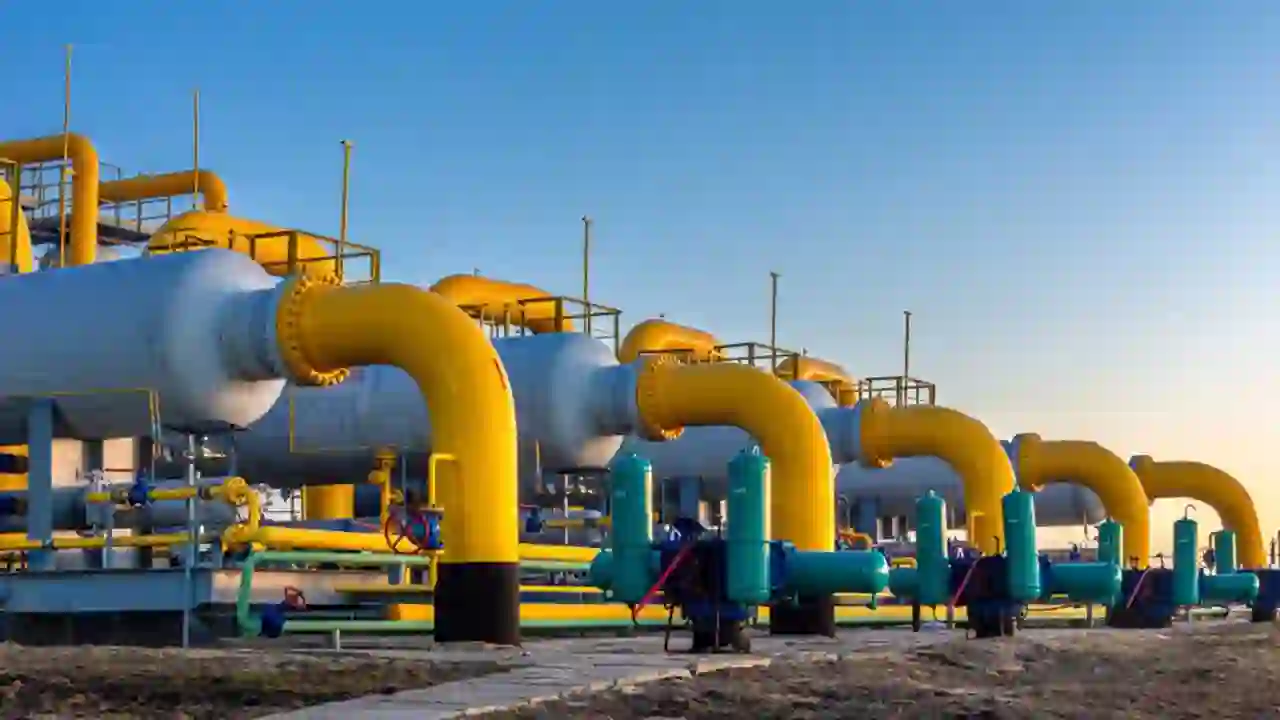
The long-anticipated Nigeria–Morocco gas pipeline project is expected to begin delivering its first gas by 2031, according to the Director General of Morocco’s National Office of Hydrocarbons and Mines, Amina Benkhadra.
Speaking in a report published by Reuters, Benkhadra revealed that an intergovernmental agreement for the $25 billion project is scheduled to be signed before the end of 2026, marking a key milestone in advancing the initiative.
She explained that once the agreement is finalised, a dedicated pipeline authority will be established in Nigeria to oversee coordination. The body will include ministerial representatives from the 13 participating countries, ensuring political supervision and regulatory alignment across the project.
The Nigeria–Morocco Gas Pipeline, also known as the African Atlantic Gas Pipeline, is a 6,900-kilometre infrastructure combining offshore and onshore segments. It is designed to transport up to 30 billion cubic metres of gas annually, with around half of that volume expected to supply Morocco and support exports to Europe.
The project has already secured backing from the Economic Community of West African States (ECOWAS), with critical preparatory work—including feasibility studies and front-end engineering design—now completed.
Benkhadra further disclosed that Morocco’s ONHYM and the Nigerian National Petroleum Company will establish a joint venture company based in Morocco to drive implementation. This entity will handle financing, construction, and overall execution of the pipeline.
Beyond its energy objectives, the pipeline is projected to enhance regional economic integration by boosting electricity generation, encouraging industrial growth, and supporting mining activities across participating nations.
She added that the project would strengthen Morocco’s role as a strategic energy link between Africa and Europe. Initial phases will connect Morocco to gas reserves in Mauritania and Senegal, while also linking Ghana to Côte d’Ivoire, before eventually extending to Nigeria’s vast gas resources.
Benkhadra noted that the project will be developed in phases, with each segment functioning independently to accelerate early returns rather than waiting for a single global investment decision.
Although funding arrangements are still being finalised, the project is attracting significant interest from investors due to its scale, phased execution model, and strategic importance.
The pipeline builds on earlier cooperation agreements signed in October 2022 by Nigeria, Morocco, Senegal, and Mauritania.
Meanwhile, Nigeria is also progressing discussions on the $20 billion Trans-Sahara Gas Pipeline, a separate 4,128-kilometre նախագ aimed at transporting gas from Nigeria through Niger and Algeria to Europe.
Both initiatives are regarded as vital to expanding Nigeria’s gas export capacity and strengthening its energy partnerships with European markets.
READ ALSO:
- Nine Escape Unhurt as Private Jet Loses Door Mid-Air After Abuja Takeoff
- Rone, Senator Gbenga Daniel, 28 Others Honoured at Megastar Man of the Decade Awards
- UK Lists Nigerian States Unsafe For Travel, Restricts Visits To Many More
- Africa’s Future Will Stall Without Young People at the Decision Table
- Anglican Church Suspends Awka Archbishop Ibezim Over Alleged ₦2bn Land Scandal
