



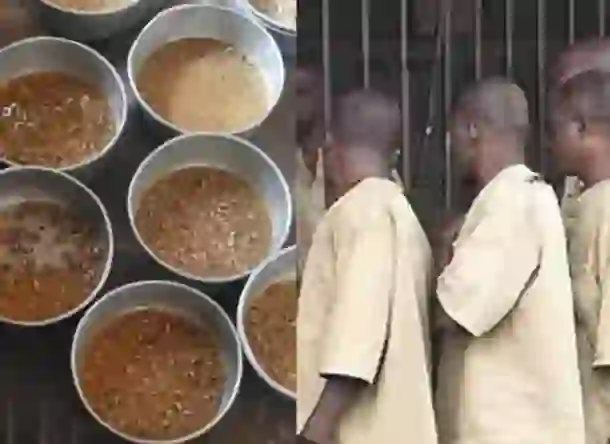
A quiet crisis is unfolding inside Nigeria’s correctional centres, where thousands of inmates say they are going hungry despite government efforts to improve feeding conditions across the country’s overstretched prison system.
Mike Okoroafor spent three years at the Kirikiri Correctional Centre in Lagos before he was discharged by the Court of Appeal on fraud charges. For him, survival in custody meant one thing: never rely on prison food alone.
“The first week I relied on prison food, my body began to weaken. By the second week, I made up my mind never to depend on it again. That was when I realised that if you don’t find alternatives, you can’t survive,” he said.
His experience is far from unique. Interviews with former and current inmates point to a feeding system buckling under the weight of overcrowding, poor funding, weak oversight, and persistent allegations that food meant for inmates is being diverted and resold.
A system under pressure
Nigeria’s correctional facilities are housing far more inmates than they were built for. Figures from the National Bureau of Statistics show the country’s prison population has climbed past 80,000, with roughly 65 per cent of those still awaiting trial.
That imbalance has placed severe strain on feeding operations. Kitchens designed to serve a few hundred inmates now struggle to feed thousands, often with outdated equipment and limited resources, resulting in meals that fall short on both quality and quantity.
What’s on the menu — and what’s wrong with it
Meals across custodial centres typically follow a fixed pattern: pap, beans, or tea and bread for breakfast; rice and stew, or yam and eba with soup for lunch; and a repeat of earlier meals for dinner. Contractors supply the food, which is then prepared inside the prisons by selected inmates.
But former inmates describe a system where the food barely sustains life.
“The food is just routine, not nutrition. It is cooked to fill space, not to sustain health,” said Tunde Oyedele, who was once held at Kirikiri.
He recalled beans so poorly sorted that stones made up nearly half of each serving. “Eating beans there is like chewing stones. Sometimes the stones are almost half of what you’re given. You spend more time removing stones than eating,” he said, adding that rice served in the facility is often undercooked, forcing some inmates to wash and recook their portions if they can afford pepper or oil.
Another former inmate, Adam Aboh, blamed poor preparation methods rather than just insufficient quantity. He said beans are typically cooked overnight and diluted with water the next morning to stretch across more inmates, leaving the meal watery and bland — “even a hungry man would struggle to swallow” it, he said.
Hunger takes a toll on health
For many, poor feeding has translated directly into illness. Joyce Edeh, formerly held at the Kirikiri Female Correctional Centre, said she was frequently treated for stomach pain, weakness, and diarrhoea linked to what she ate in custody.
She said inmates without external support are the most vulnerable to malnutrition. “When you don’t have anyone bringing you food or money, you are forced to depend on what is available. And what is available is not enough to keep you healthy,” she said.
Government raised feeding allowance, but inmates say little has changed
About two years ago, the Federal Government raised the daily feeding allowance per inmate from under N700 to N1,500, a move seen as a response to rising food costs. But inmates say the increase has done little to improve actual conditions on the ground.
One inmate alleged that less than half a bag of beans is sometimes used to prepare breakfast for more than 2,000 people, leaving everyone with portions too small to satisfy hunger. Another inmate, identified only as Adegbite, said many avoid official meals altogether. “Not many people rely on prison food. Those who do are mostly people who have no other option. You can’t eat that kind of food and survive,” he said.
Allegations that food is being diverted
Several inmates alleged that food supplies delivered to prisons rarely match what ends up being cooked, with a portion reportedly diverted and resold — sometimes back to inmates themselves.
One female inmate said officials asked to buy food items on behalf of inmates would return suspiciously quickly, suggesting the items had been pulled from prison stores rather than purchased from the market. “It’s a common practice and they can’t deny it,” she said.
How inmates cope
To survive, inmates have developed informal systems. Some rely entirely on prison meals and NGO donations; others cook their own food when they can access ingredients; and a smaller, more privileged group can afford better meals through prison canteens or external vendors.
Makeshift cooking setups — small stoves, pots, and utensils — are common in cell corridors, despite official restrictions. Authorities are said to be aware of the practice but tolerate it. “If they stop us from cooking, there will be serious problems. People cannot survive on official food alone,” one awaiting-trial inmate said.
Support from NGOs and family members, while helpful, remains too irregular to meet the needs of the wider inmate population.
A divide between “VIP” and ordinary inmates
Feeding conditions have also exposed inequality within the system. Inmates with financial means can buy from an internal staff canteen, while the majority — especially those in overcrowded cells — have no such access.
Inspections don’t tell the full story, inmates say
Some inmates allege that food quality improves dramatically whenever senior officials are scheduled to visit, creating a false impression of normal conditions. “They cook special meals when they know visitors are coming. The food looks good, the environment is clean, everything is arranged,” one female inmate said, adding that unannounced visits would reveal a very different reality.
Rights groups demand reform
Human rights advocates say the crisis points to deep accountability failures within the correctional system. Executive Director of the Rule of Law and Accountability Advocacy Centre (RULAAC), Okechukwu Nwaguma, called on the Federal Government, through the Ministry of Interior, to introduce strict, real-time monitoring of feeding processes across correctional facilities, including independent verification of both the quality and quantity of meals served to inmates.
READ ALSO:
- Zamfara @ 30: Dauda Lawal, Colonel Yakubu Commission Remodelled Secretariat in Gusau
- Tinubu, Dignitaries Storm Premiere of MKO Documentary as Nigeria Marks 66th Independence
- PRP condemns Borno arrests, says Nigerians must be free to express political views
- Independence: Gov Mbah Grants Pardon, Reduces Sentences of 13 Enugu Inmates
- Trump threatens to hit Iran “very hard” over flydubai cockpit attack
