



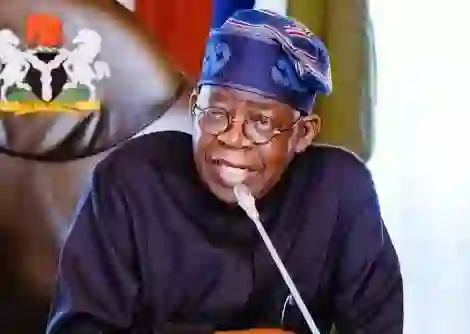
President Bola Tinubu has asked the House of Representatives to approve the terms and conditions of the N10.79tn external borrowing already provided for in the 2026 Appropriation Act.
In a letter to Speaker Tajudeen Abbas, read at plenary on Wednesday, the President requested authorisation to raise $7.71bn, calculated at the budget exchange rate of N1,400 to the dollar, to help finance part of the federal government’s budget deficit.
Tinubu said the request complied with Sections 21(1) and 27(1) of the Debt Management Office Establishment Act, 2003, which require the National Assembly to approve the terms of external loans.
He explained that the N10.79tn is part of the N29.22tn new borrowing in the 2026 budget, made up of N18.28tn in domestic loans and N10.79tn in external financing.
According to the President, the government will explore several options, including multilateral and bilateral lenders, commercial banks, the International Monetary Fund and Eurobond issuance. He said the emphasis would be on Eurobonds because they can be concluded faster.
The proceeds, he said, would fund projects and programmes in defence and security, transportation, agriculture, power, education and health. He added that the loans would boost Nigeria’s external reserves and support the naira, since the funds would be received by the Central Bank of Nigeria on behalf of the Federal Government.
Responding, Abbas clarified that the President was not seeking approval for a new borrowing plan, as the National Assembly had already approved the amount in the 2026 budget. He said the House was only being asked to approve the terms and conditions of the loans, as the law requires.
The Speaker also noted that the request was separate from Tinubu’s proposal for additional borrowing, which would be considered on its own merits.
The 2026 budget provides for a deficit of N31.55tn, with N29.22tn in new borrowing earmarked as part of the financing plan.
The request comes amid criticism of the government’s borrowing plans. The Nigeria Labour Congress (NLC) has questioned the need for more foreign loans, given higher government revenue since the removal of the petrol subsidy.
Tinubu has defended the strategy, arguing that Nigeria needs long-term investment in infrastructure to achieve its goal of a $1tn economy by 2030.
READ ALSO:
- Neither constitution nor Anthem Act bans ‘Arise, O Compatriots’ – Onoh
- “Makinde will run into exile after 2027,” Fayose claims
- INEC debunks viral claim that BVAS can be remotely logged out during voting
- Abia Gets N1.04bn BOI Funding To Boost Small Businesses
- Nigeria Re-elected To ITU Council For 2027–2030 Term
