



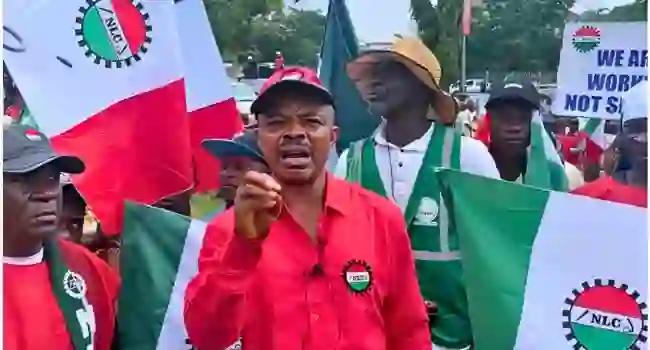
The Nigeria Labour Congress (NLC) has urged the Federal Government to fully implement its October 27 agreement with organised labour, including payment of the N70,000 transport allowance and the inauguration of the Tripartite National Minimum Wage Negotiation Council.
NLC President Joe Ajaero made the call on Tuesday in Abuja at the opening of the 2026 NLC Harmattan School, held at the Public Service Institute under the theme “Organising in the Context of Socio-economic Transformation.”
Ajaero said workers expect the government to honour every provision of the agreement, including the transport allowance and a scheduled monitoring meeting. He said the benefits should be paid within the month.
He also appealed to state governments and private sector employers to comply with the agreement, saying honouring negotiated commitments is necessary to build confidence and keep industrial relations stable.
Warning over division
Looking ahead to the new national minimum wage negotiations, Ajaero alleged that some interests were trying to weaken organised labour by exploiting differences among unions and workers.
He said such groups could spread misinformation and stoke conflict within the movement to undermine labour’s position before talks begin. He urged workers to stay united and resist attempts to divide them, saying solidarity would be crucial to winning better wages and working conditions.
Cost of living
The NLC president said rising living costs, shrinking purchasing power, insecurity, unemployment and growing poverty had made workers’ education and collective organisation more important. Many workers, he said, are struggling with higher spending on food, transport, housing, healthcare and education.
He argued that wages should be judged by whether they provide a decent standard of living, not by the amount paid. He added that economic reforms should be assessed not only by macroeconomic indicators but also by their impact on workers, pensioners, unemployed youths, small business owners and vulnerable households.
“The central issue,” he said, is whether Nigerians can live decently on their earnings.
2027 elections
Ajaero called for issue-based campaigns ahead of the 2027 general elections. He urged political parties and candidates to state clearly where they stand on employment, wages, social protection, education, healthcare, security, food production, infrastructure, taxation and workers’ welfare.
He warned against reducing the polls to personality contests, slogans, ethnic considerations or unfulfilled promises, and urged the Independent National Electoral Commission (INEC) to ensure transparency and maintain a credible voters’ register.
Workers, he said, are not merely an electoral bloc but active citizens who contribute to the economy, and they have the right to scrutinise political programmes and demand accountability from candidates. He added that unions must also promote democracy, social justice, equality and human dignity.
Workers’ education
Ajaero said workers’ education should give union members a better grasp of economic policy, labour laws, taxation, social protection, democratic governance, climate change and technological shifts affecting employment. He noted that artificial intelligence, automation and digital platforms are reshaping traditional employment relationships, requiring unions to improve their organising methods and leadership capacity.
He urged participants to focus on developing practical solutions to workers’ problems rather than attending only to collect certificates, and called for stronger partnerships between unions and civil society organisations.
ILO calls for stronger workers’ organisations
Also speaking, Dr Vanessa Phala, Director of the International Labour Organisation (ILO) Country Office for Nigeria, Ghana, Liberia and Sierra Leone and Liaison Office for ECOWAS, called for stronger workers’ organisations, collective bargaining and social dialogue so that economic growth translates into better living and working conditions.
She said rising living costs, inequality, unemployment and underemployment continue to erode Nigerian workers’ purchasing power. A living wage, she said, goes beyond the statutory minimum and should give workers a dignified livelihood and a route out of poverty. She linked it to income, social protection, collective bargaining, public services, productivity, economic development and fair distribution of national wealth.
Phala urged unions to adapt their organising strategies to cover informal sector workers, platform-based employment, outsourced jobs and other emerging forms of work. She singled out young people and women as groups needing greater attention, and called for better representation and protection for informal workers, who often face unstable earnings, limited social protection and weak collective representation.
Economic growth, she stressed, must go hand in hand with social justice, with job creation, workplace rights, social protection and dialogue essential to sustainable development.
READ ALSO:
- NUPRC boss: Education, research key to Nigeria’s 3mbpd oil goal by 2030
- NLC Presses FG to Pay N70,000 Transport Allowance, Warns Against Moves to Divide Workers
- LASCOPA Urges Lagos Residents To Report Artisans Who Abandon Jobs After Payment
- Banditry, Kidnapping Have Made Journalism a Deadly Profession in North-West, NUJ Warns
- United Nigeria Airlines Begins Jos Flights, Promises to Sustain Routes
