




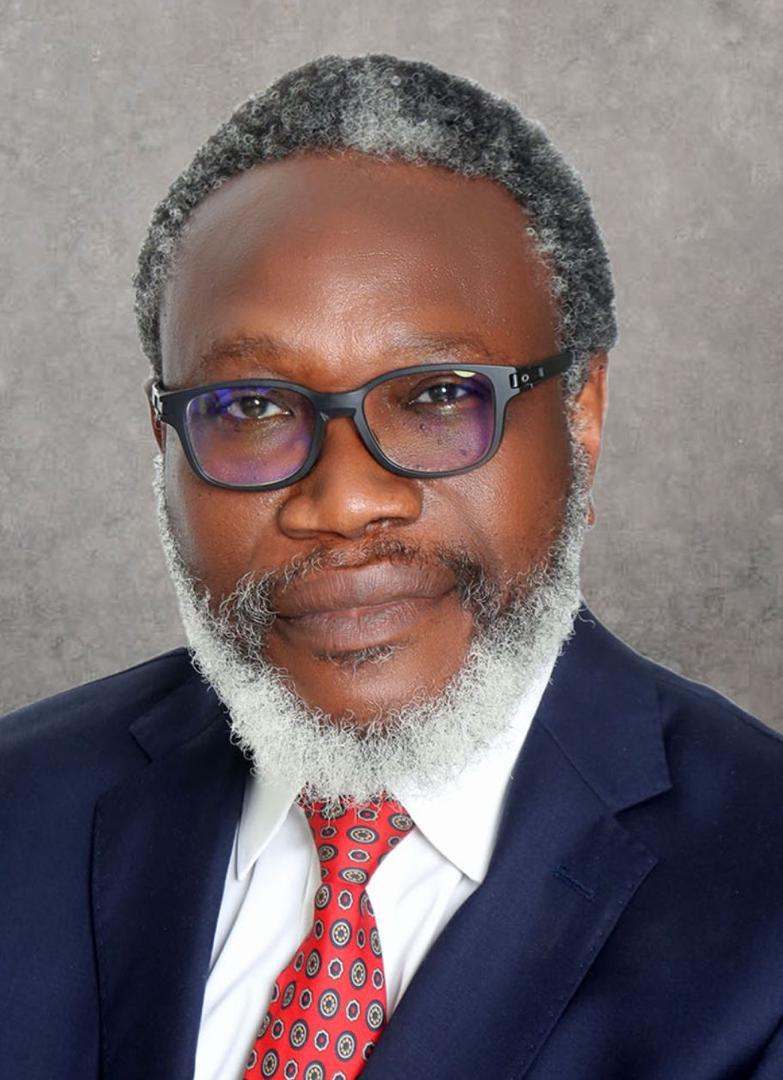
By Prof. Adesoji Adesugba
“A photograph is a moral decision taken in an instant.” — Salman Rushdie
Beginnings in Lagos
I was born at 18 Idoluwo Street, Lagos Island, in a crowded “face-me, I face-you” building. There, I first encountered photography through Fagbohun Photos, the neighborhood photographer. My father, a war veteran and journalist, believed that a life worth living was a life worth recording. From infancy, I had a photographic trail.
When we moved to Surulere in the 1960s, Lagos gave me its own folk hero of photography: Ringo Star. Riding a bicycle with a bell, children chased him chanting in Yoruba:
“Ringo Star, wa dele!
To ba dele nko, wa sun ta!”
Ringo turned photography into theatre. He taught me that the photographer was not only a recorder but also a performer, a conjurer of moments.
First Cameras, First Lessons
By my early teens, I was experimenting with my own cameras. I captured my brother Dayo, my adventurous schoolmate Ayo Akinjobi, and eventually my high school class in a group photograph in 1975. Some classmates declined, dismissing it as trivial. Today, the image stands as a relic of youth — and those absent remain absent, punished by their refusal.
In 1996, my path crossed with the great Nigerian photographer Don Barber. In his studio, under the soft glow of red light, I discovered the alchemy of the darkroom. Don taught me patience, precision, and philosophy. “You don’t fail when a print spoils,” he told me. “You just learn what darkness does without discipline.” His words have remained with me, long after the chemicals faded.
The World Through the Lens
As my career took me across the world, my camera became my constant witness.
In Paris, I was drawn repeatedly to the Eiffel Tower — especially at midnight, when the lights erupted in golden brilliance. I photographed the Tower from every angle, the River Seine flowing beneath its glow, and the endless motion of the metro. The streets of Montmartre, alive with artists and musicians, gave me portraits of strangers who still seem to breathe on paper.
In China, I captured the majesty of the Great Wall, stretching across mountains like an ancient scar. My student days at Beijing Normal University gave me quiet frames of courtyards and classmates. Guangzhou’s markets bustled with colours, Xiamen’s gardens unfolded like paintings, Shanghai’s skyline shimmered in neon, and Hong Kong pulsed with restless energy.
London gave me the bridges and the Thames, the sweep of Buckingham Palace, the stern face of Big Ben, and the rush of Oxford Street crowds. In Switzerland, I stood at the baths of Baden, steam curling into alpine air, and at the lake in Geneva, where swans cut silent paths through mirrored water.
But my lens was not limited to Europe and Asia. I carried it home and across Africa.
In Ogbagi, I turned my camera toward the ancient hills, capturing their quiet permanence. In Accra, I sought the restless glow of nightlife. In Lagos, I wandered from Marina to Balogun, documenting chaos and charm. In Nairobi, I framed the modern skyline before leaving for a Tanzanian safari, where giraffes, elephants, and lions etched themselves into my archive.
In South Africa, I entered the ghettos, where children danced against the backdrop of corrugated iron. In Zambia, Zimbabwe, and The Gambia, I found stories in marketplaces and riverbanks. And at home in Ibadan, Katsina, Enugu, and Abuja, I documented city streets, university halls, and even the intimacy of local restaurants.
Every place, every city, every street was more than geography. It was memory, waiting to be frozen.
The Digital Collapse
Like many in the early 2000s, I embraced digital photography. My archive swelled with thousands of images from these journeys. Trusting the new age, I stored them in Yahoo Photos.
Then came September 2007. Yahoo Photos shut down, erasing everything not migrated. Years of travel, thousands of frames, an entire portion of my life — gone. Logging in to find absence was like losing a second childhood.
The loss silenced me. For weeks, I could not touch a camera. Susan Sontag once wrote: “All photographs are memento mori.” That day, the death I mourned was my own memory.
Returning to Light
I retreated to phone cameras, photographing family and friends, surviving on the small comforts of pixels. But Don Barber, my mentor, never let me drift too far.
Recently, with his encouragement, I acquired the Sony Alpha a7 III, a mirrorless marvel carrying the legacy of my beloved Minolta. With it, I return to the lens — wiser, more deliberate, more protective of what I create.
Conclusion
My odyssey in photography is not a straight line but a spiral — beginnings, experiments, triumphs, losses, rebirths. From the chants of Ringo Star in Surulere to midnight photographs of the Eiffel Tower, from ruined negatives in Don’s darkroom to the digital void of Yahoo Photos, each moment has taught me that photography is not permanence but faith.
Faith that the moment matters. Faith that memory, though fragile, can be guarded. Faith that even when images vanish, the act of seeing remains.
And so, once more, I lift the lens.
⸻
Author Bio
Adesoji Adesugba is a professor, economic policy expert, and cultural essayist. A lifelong photographer, he has documented life from Lagos to Paris, Beijing to Cape Town, and is currently working on a memoir exploring leadership, creativity, and memory through art, literature, and photography.
