


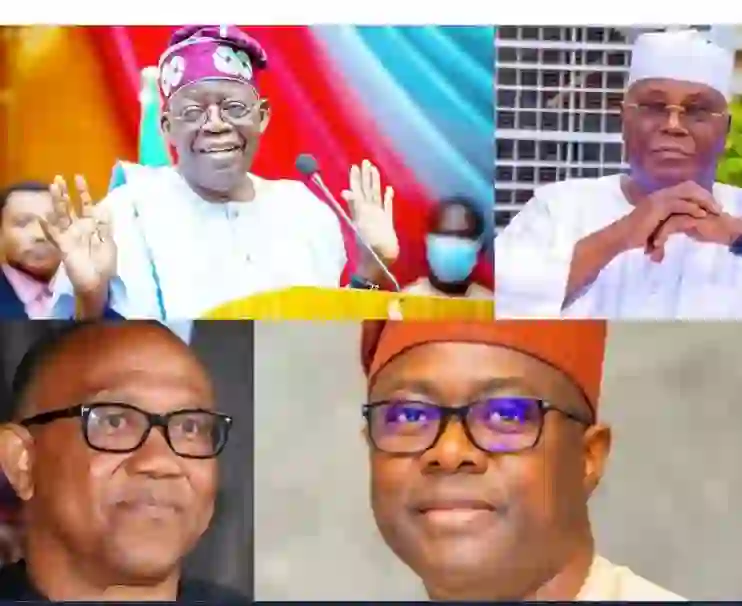
With roughly eight months to the next general election cycle, Nigeria’s 2027 presidential contest is gradually evolving into a struggle defined less by individual candidates and more by the political structures, alliances and influential figures backing them.
Across Abuja and state capitals, governors are deepening consultations behind closed doors. Former office holders are quietly rebuilding old alliances. Political financiers are reactivating dormant networks, while youth movements and civil society groups are reorganising their digital and grassroots machinery. The central question is no longer just who is running—but who truly has the machinery to win.
The emerging contest is shaping up as a battle between structure and sentiment, incumbency and coalition politics, and institutional power versus public frustration.
At the centre of it all is President Bola Ahmed Tinubu, surrounded by one of the most expansive political networks in the country. On the other side lies a fragmented opposition driven by economic discontent but weakened by competing ambitions and unstable alliances.
Tinubu: Incumbency and the Power of Structure
President Bola Ahmed Tinubu enters the political arena with a dominant national structure anchored by the ruling APC.
His support base includes a significant number of governors, federal appointees, lawmakers, and entrenched political networks across the Southwest and beyond. This machinery gives him a strategic advantage in mobilisation, logistics, and electoral coordination.
Governors remain especially critical in Nigerian elections due to their control over state-level party structures, grassroots mobilisation networks, and political patronage systems. Within the ruling party, most state executives are either aligned with or strategically cooperative with the presidency.
Beyond formal structures, Tinubu also benefits from incumbency advantages, including influence across federal institutions and sustained engagement with key business interests.
While opposition figures often question the neutrality of state institutions, there is no verified evidence of institutional compromise. However, perceptions of incumbency advantage remain strong in political discourse.
Regional dynamics also play a role. Some political actors in the South argue that power should remain in the region beyond a single term, potentially reinforcing Tinubu’s political positioning.
Atiku: The Veteran Network Builder
Former Vice President Atiku Abubakar remains one of the opposition’s most established figures, deeply embedded in Nigeria’s political elite networks.
Over decades, Atiku has built relationships across party lines, regional blocs, and business circles. His influence is reinforced by experienced political operatives and former office holders who understand national coalition building.
Politicians such as David Mark, Aminu Tambuwal, Dino Melaye, Rauf Aregbesola, Emeka Ihedioha, Liyel Imoke, and Dele Momodu have at various points been associated with opposition realignments linked to Atiku’s political orbit or broader coalition discussions.
His strength lies in elite negotiation capacity and national reach. However, critics argue that his appeal is stronger among political elites than among younger voters seeking generational change.
Regional zoning debates also complicate his path, as sections of the South remain resistant to another Northern presidency, making coalition arithmetic more complex.
Obi: Emotion, Youth Energy and Digital Mobilisation
Peter Obi remains one of the most influential figures in contemporary Nigerian politics, powered largely by emotional public support and grassroots enthusiasm.
His support base—widely referred to as the Obidient movement—includes young voters, urban professionals, diaspora supporters and reform-minded Nigerians dissatisfied with traditional political structures.
Peter Obi draws strength from public frustration over economic hardship, inflation, and governance concerns. In many urban centres, his appeal is symbolic, representing restraint, accountability, and a break from elite politics.
However, Obi’s major limitation remains structural. Unlike Tinubu, he lacks extensive governor networks, entrenched party machinery, and nationwide political operatives capable of sustaining election-day coordination.
Political analysts often note that while Obi can energise voters, converting that enthusiasm into electoral dominance requires stronger institutional backing.
This has increased attention on potential alliances, particularly involving figures like Rabiu Musa Kwankwaso, whose grassroots strength in the North could prove decisive.
Kwankwaso: The Northern Mobilisation Force
Rabiu Musa Kwankwaso remains one of the most strategically important actors in Northern politics due to his strong grassroots network under the Kwankwasiyya movement in Kano and the Northwest.
His political strength lies not just in votes but in structured mobilisation capacity, which is critical in determining turnout and electoral performance in key Northern states.
Because of this, multiple opposition formations continue to explore his relevance in broader coalition discussions. However, balancing alliances between ideological differences and regional expectations remains a challenge.
Makinde: Quiet Power in the Southwest
Oyo State Governor Seyi Makinde represents a quieter but increasingly watched political alternative within the South.
His appeal is rooted in governance performance, moderate political positioning, and technocratic branding. Within elite circles, he is sometimes viewed as a potential Southern alternative outside Tinubu’s dominant Southwest structure.
Makinde’s supporters highlight his administrative record and appeal to professionals and moderate reformists.
However, his national political machinery remains limited compared to leading contenders. He lacks widespread federal alliances, strong Northern penetration, and a broad national movement.
This raises concerns within opposition circles about vote splitting in the South if multiple Southern candidates emerge.
Amaechi: Experienced but Crowded Out
Rotimi Amaechi, former Rivers State governor and ex-Minister of Transportation, remains a seasoned political actor with national experience and strong elite connections.
He maintains support among segments of the South-South political class and technocratic circles, as well as remnants of his APC-era networks.
However, his political space is increasingly constrained by stronger emotional movements in the South, Tinubu’s entrenched structure in the Southwest, and Atiku’s Northern establishment base.
Adebayo: Ideology Without Machinery
Adewole Adebayo of the SDP continues to position himself as a principled outsider offering ideological alternatives to mainstream politics.
His appeal resonates among politically conscious urban voters and critics of Nigeria’s dominant political elite.
However, the absence of strong electoral machinery, governors, and nationwide structures significantly limits his competitiveness in a presidential race dominated by organisation and resources.
Opposition Coalitions: Unity vs Ambition
Attempts to build a unified opposition platform—particularly through coalition arrangements involving the ADC and other groupings—have repeatedly faced internal disagreements.
While shared dissatisfaction with the ruling party exists, rival ambitions and leadership disputes continue to weaken cohesion.
Emerging alignments such as the NDC coalition attempt to bridge gaps between major opposition figures, but success will depend heavily on discipline and compromise.
PDP: A Declining Giant
The People’s Democratic Party (PDP), once Nigeria’s dominant political force, continues to struggle with internal divisions, factional disputes, and weakening national influence.
Although figures such as Senator Sandy Onor remain active within its structures, the party increasingly operates as fragmented blocs rather than a unified electoral machine.
Its decline has contributed to the migration of politicians into newer coalition platforms, further reshaping Nigeria’s opposition landscape.
Conclusion: Structure vs Frustration
As 2027 approaches, Nigeria’s presidential contest is shaping into a broader struggle between entrenched political structures and rising public frustration.
The ruling APC, led by President Tinubu, controls deep institutional and political machinery. The opposition, meanwhile, commands widespread public dissatisfaction but remains divided across competing personalities and coalitions.
Ultimately, the defining question is whether emotional momentum and coalition-building can overcome established political structure before election day—or whether fragmentation will once again determine the outcome.
READ ALSO:
- Tinubu Celebrates Governor Dauda Lawal On His Birthday, Lauds Zamfara Reforms
- Sanwo-Olu: Lagos Set to Become Africa’s Innovation Capital as $80bn Tech Commitments Roll In
- Ribadu Not Linked to Illegal Arms Importation — NCCSALW DG Kokumo
- Marwa Orders NDLEA to Hit Drug Cartels Where It Hurts
- OPay Denies Shutdown Rumours, Says DSS, Police Probing Viral Claim
