



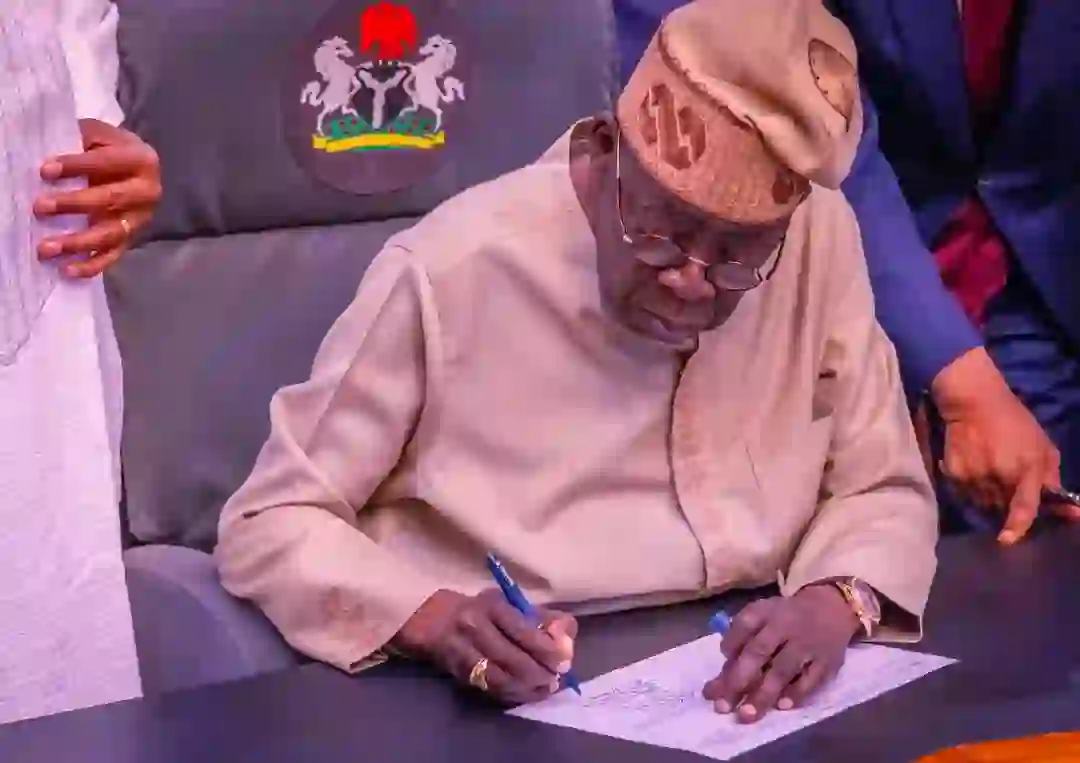
President Bola Tinubu on Friday honoured 51 prominent Nigerians, including journalists, retired military officers and pro-democracy activists, for their roles in the struggle that restored civilian rule, as the nation marked 27 years of unbroken democracy.
In a nationwide broadcast for the 2026 Democracy Day, Tinubu paid tribute to the late Chief M.K.O. Abiola, winner of the annulled June 12, 1993 presidential election, describing him as a symbol of a mandate that cut across ethnic and religious lines. The President said that despite its imperfections, Nigeria’s democracy remains the country’s best path to development.
Among those honoured are NADECO leaders Chief Ayo Opadokun, Chief Ralph Obioha, and Dr Arthur Nwankwo (posthumously); media figures Lade Bonuola, Femi Kusa, Sir Ademola Osinubi, and Dele Alake; and activists Dr Joe Okei-Odumakin, Richard Akinnola, and Prof. Sylvester Odion-Akhaine. Retired military officers who opposed past dictatorships, including Col. Sambo Dasuki, Col. Lawan Gwadabe, Major-General Ishola Williams, and the Etsu Nupe, Brigadier Yahaya Abubakar, were also recognised as “soldier-democrats.”
In a separate institutional honour, Tinubu approved the renaming of the Institute of Petroleum Studies, Kaduna, as the General Shehu Musa Yar’Adua University of Geological Sciences and Engineering Technology, in tribute to the late General’s role in Nigeria’s democratic transition.
Security and economy
Turning to the recent abductions of students in Oyo and Borno states, Tinubu said “democracy without security is a mirage,” disclosing that the 2026 budget allocates a record N5.41 trillion to defence and that over 50,000 new police officers are being recruited.
He issued a stern warning to armed groups: “To bandits, kidnappers, and sponsors of terror: Surrender or face the full force of the Nigerian State. These windows of surrender will not remain open forever.” He added that terror-related deaths have fallen by 81% since 2015, with more than 13,000 terrorists neutralised in the past year and over 124,000 fighters and dependents surrendering through Operation Safe Corridor since 2023.
On the economy, the President defended his reform agenda as necessary to stabilise public finances, pledging that the next phase of governance would focus on making “democracy felt in the pocket” through lower inflation and increased local production.
Power sector reforms, local government autonomy
Tinubu announced that the Presidential Power Sector Task Force has been authorised to raise a N4 trillion bond to clear legacy debts in the electricity sector, adding that the Electricity Act — which devolves power generation to states — is already showing results.
He also reaffirmed his push for full financial autonomy for Nigeria’s 774 local government areas, linking the collapse of grassroots governance to rising insecurity in rural communities.
Ahead of the upcoming governorship elections in Ekiti and Osun, Tinubu urged political actors and institutions to safeguard democratic norms, declaring: “The generation of our founding fathers secured independence — the generation of June 12 secured democracy. Our generation must secure prosperity.”
READ ALSO:
- Nine Escape Unhurt as Private Jet Loses Door Mid-Air After Abuja Takeoff
- Rone, Senator Gbenga Daniel, 28 Others Honoured at Megastar Man of the Decade Awards
- UK Lists Nigerian States Unsafe For Travel, Restricts Visits To Many More
- Africa’s Future Will Stall Without Young People at the Decision Table
- Anglican Church Suspends Awka Archbishop Ibezim Over Alleged ₦2bn Land Scandal
