



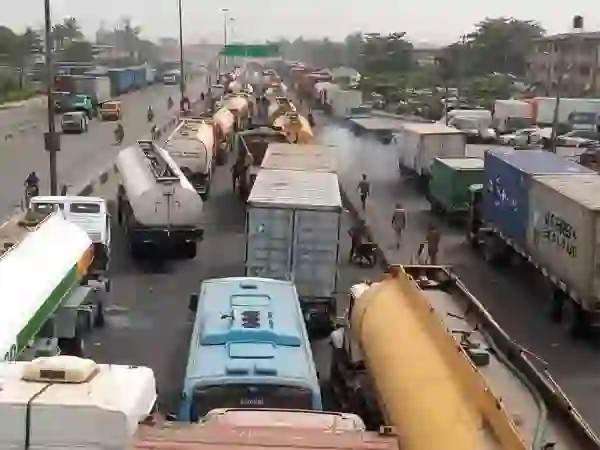
Oil marketers, tanker owners, transport unions and enforcement agencies are trading blame over the gridlock still choking Lagos‘ Apapa and Kirikiri corridors, as businesses count losses and residents endure another round of a crisis that refuses to end.
A Vanguard investigation found that thousands of commuters, traders and residents in the industrial belt continue to pay the price for congestion rooted largely in the way petroleum products move from depots to the market.
At issue: marketers and tanker operators loading fuel at depots have spilled their operations onto public roads, turning major highways into makeshift truck parks. Stakeholders point to poor logistics planning, too few holding bays, reckless roadside parking and corrupt enforcement as the core problems.
The fallout is familiar — grinding traffic, higher transport costs, wrecked roads, delayed cargo clearance at the ports, and businesses and residents left to absorb the damage.
Depots overwhelmed, roads take the strain
Hundreds of tankers queue daily along roads linking Apapa, Kirikiri, Coconut and Tin Can Port, waiting to load at nearby depots. Rather than wait inside holding bays, many drivers park for kilometres along the road, squeezing multi-lane roads down to single file.
Marketers with depots in the area include TotalEnergies, Conoil, Bovas Oil, Rahamaniyya, Obat Oil, Techno Oil, Aiteo, MRS Oil, Ardova, NIPCO, Integrated Oil & Gas, Folawiyo Energy, Matrix Energy, Eterna and Northwest Petroleum. Traffic flows relatively freely around the Naval Base end of Apapa, home to NIPCO and TotalEnergies — but the Mile 2-Kirikiri stretch remains a chokepoint.
Some depots do have holding bays, built years ago to meet regulatory demands, but these facilities have long been outpaced by the volume of tankers now competing for space. Stakeholders also allege that existing bays sit underused because some marketers, drivers and enforcement officials profit more from roadside operations, where informal payments running into millions of naira reportedly change hands.
The National Association of Road Transport Owners (NARTO) lays the blame squarely on tank farm operators, accusing them of admitting more trucks than their facilities can hold.
NARTO National Secretary Aloga Gbogo told Vanguard that Apapa hosts over 60 tank farms, each capable of loading roughly 300 trucks a day — far short of what’s needed. He said depots sometimes collect payment from 500 or 600 trucks when they only have capacity for 300, leaving the rest stranded on the road, already paid up and waiting.
“Is that situation not enough to cause traffic gridlock?” Gbogo asked, noting that Apapa is also home to major manufacturers like Dangote, BUA and Honeywell.
Another NARTO official, Alhaji Inuwa Mohammed, pointed to the success of the Electronic Call-Up System at the Lekki Deep Sea Port, where operators were integrated into the system from day one. He said NARTO had offered to join Apapa’s own call-up platform at no extra cost, but the proposal was blocked by Truck Transit Parks (TTP), which runs the system.
The Ports Authority Police (Western Command) denied responsibility for the gridlock, arguing the root causes fall outside its mandate. Command spokesman ASP Isaac Hundeyin said the Mile 2-Apapa Wharf stretch isn’t under the unit’s jurisdiction, though it works with the Lagos Police Command, the Nigerian Ports Authority and transport unions to manage the situation.
“The police cannot provide loading bays or transit truck parks,” Hundeyin said. “Those are the responsibilities of terminal operators and the Nigerian Ports Authority. Our physical presence is to manage traffic and deter crime — we cannot solve infrastructure problems that belong to private operators.”
On claims that some officers profit from the disorder, Hundeyin insisted police wouldn’t deliberately worsen conditions for the public, adding that disputes typically involve unions and terminal operators rather than his officers.
Efforts to reach the Depot and Petroleum Products Marketers Association of Nigeria (DAPPMAN) through its Executive Secretary, Olufemi Adewole, were unsuccessful. Calls went unanswered.
The situation stands in sharp contrast to the Lekki Deep Sea Port corridor, where dedicated truck parks and full compliance with the electronic call-up system have kept traffic moving smoothly — a model Apapa operators have largely resisted adopting, according to stakeholders who say that resistance is central to why the gridlock persists.
IPMAN’s National Public Relations Officer, Chinedu Ukadike, did not respond to inquiries either. Similarly unreachable were AIG Okunade Ronke Nurat (Maritime), CP Oluwatoyin Agbaminoja (Ports Authority Western Command) and the Nigerian Ports Authority.
The Major Energies Marketers Association of Nigeria (MEMAN), representing 11 Plc, TotalEnergies Marketing Nigeria, Conoil, Ardova, NNPC Retail and MRS Oil, denied its members were responsible for the roadside congestion.
MEMAN Chief Executive Clement Isong said in an email response that member depots maintain designated holding areas backed by automated call-up systems that regulate truck movement and prevent unnecessary queuing.
Isong called for collective action going forward: strengthening the electronic call-up system, expanding holding bays, ensuring only trucks with valid loading tickets enter depot corridors, enforcing strict rules against roadside parking, and sustained engagement with drivers and operators on compliance.
READ ALSO:
- Governor Dauda Lawal Signs Peace Accord Ahead of 2027 Elections, Reaffirms Commitment to Peaceful Poll
- Gunmen kill NSCDC officer, abduct businessman in Plateau community
- NYSC abduction: Court remands five suspects in DSS custody
- Lekki shooting: Atiku asks APC, six years on, “Who gave the order?”
- Maysol of Lagos Set to Host Agiliti Inter-Street Football Competition 2.0
