



Nigeria has failed the United States’ minimum fiscal transparency requirements for the second year running, with the U.S. Department of State saying the country made no significant progress in managing and disclosing its public finances in 2025.
The department’s 2026 Fiscal Transparency Report, released Tuesday, assessed 139 governments and the Palestinian Authority. Only 73 met the minimum standard. Of the 67 that didn’t, 14 showed significant progress. Nigeria was among 53 countries marked as making none.
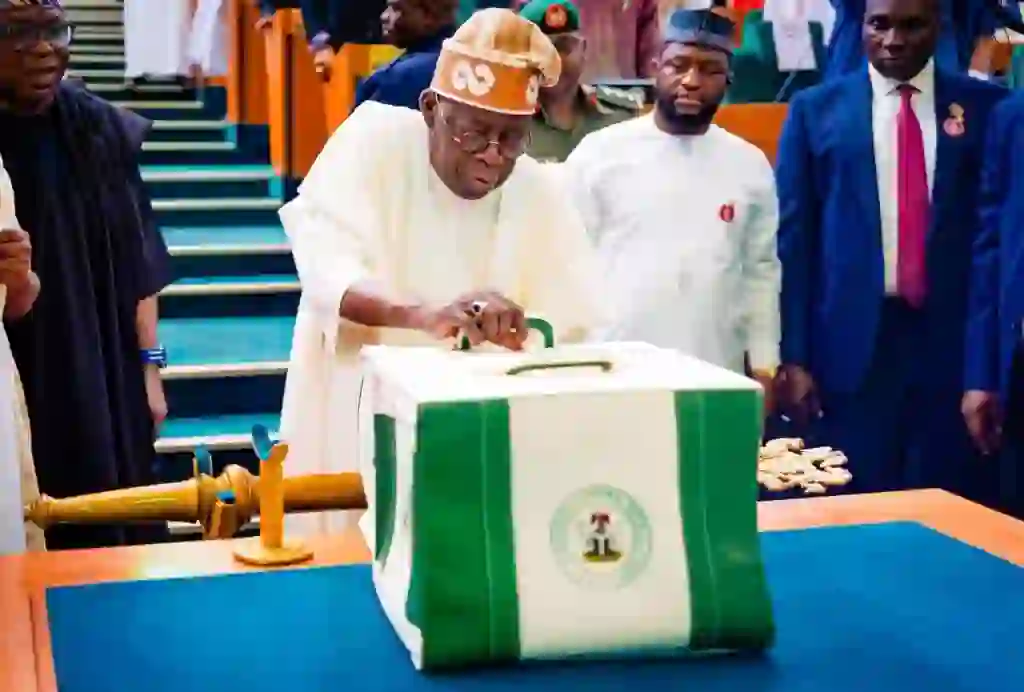
The verdict lands as Nigerians complain about poor budget implementation, with the federal government simultaneously running three budgets — 2024, 2025 and 2026.
The assessment covered January 1 to December 31, 2025, drawing on data from the U.S. Embassy in Abuja, other federal agencies, international organisations and civil society groups.
Budget vague, figures don’t add up
The report said Nigeria’s national budget remained vague on both revenue and expenditure, faulting the government for failing to give a complete picture of its finances.
“Budget documents did not provide a substantially complete picture of the government’s revenues and expenditures, or break down expenditures to support executive offices in the budget,” the report said.
A substantially complete budget, according to the report’s standard, should break down income and spending by ministry, detail revenue by source — oil and non-oil — and disclose allocations to state-owned enterprises and special accounts. Nigeria’s documents fell short.
The department also flagged a credibility gap between planned and actual spending, noting that actual revenues and expenditures did not reasonably match the enacted budget.
That marks a decline from 2025, when the U.S. said Nigeria’s budget documents were “substantially complete” and “generally reliable.”
The report acknowledged Nigeria published its enacted budget and end-of-year report online, but said the government failed to release its executive budget proposal within a reasonable period — at least one month before the fiscal year begins, under U.S. criteria, to allow public debate.
Audit office lacks independence
The report also criticised Nigeria’s Office of the Auditor-General of the Federation, saying it fails to meet international independence standards and does not publish substantive audit reports, despite having access to the full executed budget.
Procurement and contracts hidden
The U.S. said Nigeria’s procurement processes remain opaque, with no public information on contracts. On natural resources, the report credited Nigeria for following its own legal criteria for awarding licences, but noted that details of concessions — location, resource, duration, awardee — aren’t published after decisions are made.
The 2026 report also introduced a new requirement: governments must now publicly disclose terms of sovereign loans, including liabilities and collateralised assets. Nigeria published debt obligation data, including major state-owned enterprise debt, but the department didn’t assess whether its loan terms meet the new standard.
The positives
The report credited Nigeria for making its enacted budget and end-of-year report publicly accessible, for disclosing debt obligations, and for maintaining a sovereign wealth fund with a sound legal framework and transparent funding disclosures. None of it was enough to clear the minimum threshold.
Washington urged Nigeria to publish its executive budget proposal on time, break down revenue and expenditure by ministry, match actual spending to the approved budget with explanations for major deviations, strengthen the Auditor-General’s independence, publish audit reports, and make procurement contracts public.
Globally, 67 governments missed the standard, including major economies like China, Egypt, Saudi Arabia, Pakistan and Ukraine. Only 14 of them — including Bangladesh, Ethiopia, Lebanon and Senegal — showed meaningful progress. Nigeria was grouped with Algeria, Angola, Uganda, Tanzania, Mali and others as making none.
The finding comes amid domestic controversy over 2026 budget line items, including separate allocations for mosque and church construction, duplicated road and school projects across agencies, and unbroken lump sums like “special presidential interventions.”
Presidency responds
Special Adviser to the President on Media and Public Communication, Sunday Dare, said fiscal transparency remains a government priority and that reforms are ongoing. He argued the report shouldn’t be read as a full assessment of Nigeria’s financial management, pointing to the Open Treasury initiative, debt disclosures and digital procurement reforms as evidence of progress.
BudgIT: budget vague on implementation
BudgIT Country Director Vahyala Kwaga agreed with the U.S. findings, saying Nigeria’s capital budget in particular lacks clarity on implementation. He said the Auditor-General’s office lacks independence over both its investigative scope and personnel, and that President Tinubu has yet to sign an audit amendment bill meant to replace 1956 legislation. Kwaga also said debt sustainability analyses haven’t been published since 2023, and that procurement remains opaque — tenders are announced but bid-opening details and evidence of competitive bidding are not.
PFIPC probe: House committee fails to sit as scheduled
Separately, the House of Representatives Ad hoc Committee investigating the Presidential Foreign Investment Promotion Council, PFIPC, failed to hold its scheduled sitting Wednesday, despite having adjourned its last hearing to that date.
Neither the committee nor its chairman, Yusuf Gagdi, explained the postponement.
The PFIPC scandal centres on an organisation that allegedly functioned as a federal agency without ever being established by law or executive order. It surfaced after N1.3 billion was found allocated to it in the 2026 Appropriation Act, prompting the House to set up a 12-member committee under Gagdi.
The probe has since expanded to cover allegedly forged documents, unauthorised office space, misuse of government vehicle plates, and attempts to gain recognition from several ministries.
Accountant-General Shamseldeen Ogunjimi told the committee his office processed a budget code for the council based on a letter purportedly from the State House — which he later confirmed was never issued by the Presidency. The committee says it has uncovered 29 allegedly forged documents linked to the council, traced to the State House, the Civil Service office, the SGF’s office and the Finance Ministry.
Head of Civil Service Didi Esther Walson-Jack admitted insufficient due diligence was done in processing the documents. Gagdi said the purported appointment letter of self-styled Director-General Adeniyi Adeyemi was confirmed fake by multiple agencies.
Adeyemi’s appearance before the committee remains unresolved. Police say he is being held under a court order and cannot be produced without judicial authorisation, despite the committee’s 48-hour ultimatum to the Inspector-General of Police.
READ ALSO:
- Dominion City Unveils 2026 Next Level Conference, Bringing Global Voices Together to Empower Leaders for All-Round Dominion | By Blaise Udunze
- Zamfara @30: A State Reborn under Governor Dauda Lawal | By Oladapo Sofowora
- Nigeria @ 66: ‘The Nation’s Destiny Begins in Our Communities’ — Oba Makama
- Amaechi vows to resign if Nigeria doesn’t change within one year of ADC taking power
- Tinubu Deserves a Second Term, Lagos City Boy Director Tells Nigerians
