


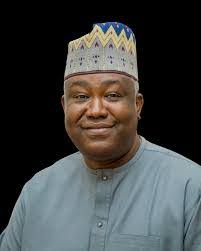
The presidential candidate of the Accord Party, Gbenga Olawepo-Hashim, has pledged to push Nigeria’s crude oil production to at least four million barrels per day within 24 months of taking office in 2027.
Speaking on Channels Television’s Politics Today, Hashim unveiled his Energy First Presidential Agenda, which he said would prioritise reactivating dormant oil wells rather than channelling scarce public funds into projects with uncertain returns.
He disclosed that about 3,000 wells already drilled but currently inactive would be the focus of the plan, arguing that existing infrastructure and discovered assets could quickly lift output if backed by the right investment and technical support.
“We have oil wells that have already been drilled, assets that have already been discovered and infrastructure that have already been built. Our first task is to put these assets back to work for Nigeria,” he said.
Hashim contrasted this approach with big-ticket infrastructure spending, singling out the Lagos-Calabar Coastal Highway as an example of a project unlikely to generate government revenue for two decades — unlike investment in idle oil assets, which he said could yield returns far sooner.
Nigeria currently produces about 1.5 million barrels of crude per day, meaning Hashim’s four-million-barrel target would represent an increase of roughly 2.5 million barrels daily.
According to him, Nigeria’s problem is not a shortage of oil reserves but underutilisation of assets already in place.
“The question is not how much oil Nigeria has underground. The question is why we are not producing the oil that our existing assets are capable of producing,” he said.
Hashim explained that each inactive but viable well would be evaluated to determine the cause of its downtime, with targeted interventions — including well repairs and workovers, artificial lift systems, gathering facility repairs, pipeline rehabilitation, and improved evacuation arrangements — deployed accordingly.
He said the 3,000 idle wells represent a significant loss of Nigeria’s productive capacity, and pledged to set up a National Production Recovery Dashboard to track every investment, intervention, and additional barrel produced under the programme.
READ ALSO:
- Abuja Building Collapse: FCT Police Reveal New Details on Wuse Zone 4 Incident
- Osun PDP Guber Candidate Disowns Petition Against Adeleke
- Italian priest quits ministry, weds Kenyan woman in traditional Baringo ceremony
- El-Rufai Slams Defence Minister Musa With N10bn Defamation Suit, Demands Public Apology
- NAFDAC: We Can’t Fully Regulate Unbranded Palm Oil, Fufu in Open Markets
