



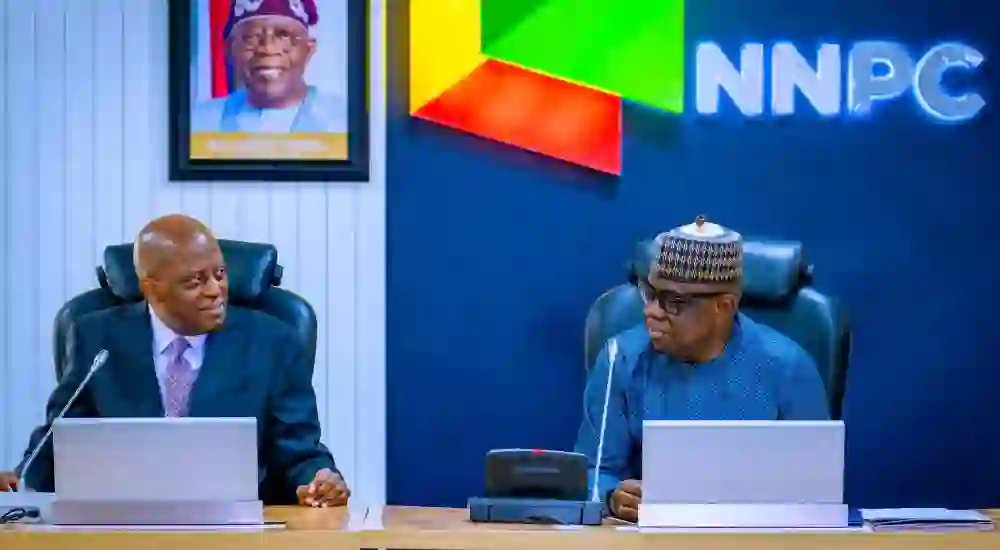
The Central Bank of Nigeria (CBN) and the Nigerian National Petroleum Company Limited (NNPC) have signed a new Memorandum of Understanding (MoU) to improve the monitoring of oil and gas revenues, increase foreign exchange inflows and ensure that proceeds are properly remitted to government accounts.
The agreement was signed on Wednesday at the CBN headquarters in Abuja. It is also expected to support energy sector financing, introduce automated payment systems and strengthen compliance with financial regulations.
At the signing ceremony, CBN Governor Olayemi Cardoso said the partnership would improve how proceeds from oil and gas operations are handled and settled, given their importance to government revenue and the stability of the foreign exchange market.
He said the apex bank, which manages key foreign currency accounts of the NNPC, is responsible for ensuring that petroleum earnings are moved securely and promptly into the Federation Account and other designated government accounts.
Cardoso added that steady oil revenue receipts were essential to monetary stability, particularly in times of economic uncertainty. According to him, closer coordination between the two institutions on account management, fund transfers and liquidity support would boost macroeconomic stability by improving the government’s revenue position and ensuring a steady supply of foreign exchange.
The areas covered by the agreement include hydrocarbon asset monetisation, faster operational approvals, automated payment processes, cybersecurity, regulatory coordination and information sharing, the governor said.
He also disclosed that the CBN would work to attract international financial institutions to provide funding structures that can support the development of Nigeria’s natural gas resources.
However, Cardoso clarified that the MoU was meant to formalise an existing working relationship, as the CBN, NNPC and other industry stakeholders had previously held regular engagements to resolve operational challenges.
CBN Deputy Governor, Operations, Emem Usoro, said Nigeria’s gross external reserves had risen above $55 billion, driven by higher crude oil production and steady diaspora remittances.
She expressed optimism that the agreement would sustain the growth of the reserves through stronger export earnings and improved foreign exchange receipts. Usoro added that it would provide a more structured framework for managing international trade transactions, energy financing, liquidity support and financial risks.
NNPC Group Chief Executive Officer, Bashir Ojulari, said the collaboration would promote financial accountability and allow the national oil company to raise funds by leveraging its assets and balance sheet.
He said the framework would set up joint steering and technical committees to oversee implementation and measure progress against agreed performance targets. He stressed that the partnership was meant to deliver practical results and not to serve as a ceremonial arrangement.
NNPC Group Chief Financial Officer, Adedapo Segun, said the agreement would replace the previous practice in which both institutions handled financial matters through irregular engagements and individual transaction-based arrangements. He described the old approach as inadequate for the country’s financial and energy sector needs.
According to Segun, closer collaboration would also help attract the investments needed to raise Nigeria’s crude oil production from about 1.8 million barrels per day to three million barrels per day.
He added that NNPC would ensure that domestic payments, contractor settlements and foreign exchange transactions comply with CBN regulations, as part of efforts to strengthen the naira and reduce excessive reliance on foreign currencies.
Segun further said both institutions had agreed on implementation schedules, working groups and accountability measures, with NNPC Group Treasurer, John Etukudo, assigned to coordinate the company’s responsibilities.
The latest agreement comes about two years and nine months after the NNPC board approved the transfer of a substantial portion of its dollar earnings and banking transactions to the CBN in February 2024.
At the time, the company’s former Group Chief Executive Officer, Mele Kyari, said the decision was taken in line with the board’s directive on maintaining safe cash exposure limits with commercial banks.
Under that arrangement, the CBN was also expected to set up a dedicated department and a digital platform to manage NNPC’s financial transactions.
The move followed a directive by President Bola Tinubu that proceeds from crude oil sales be paid to the apex bank for verification and documentation.
READ ALSO:
- Trump, Xi, Putin Hold First Trilateral Summit, Discuss Nuclear Arms Cuts
- “Holy Ground, Unholy Hardship and Tinubu’s 2027 Headache.” | By Blaise Udunze
- Irresponsible Communication Endangers Democracy, Lives, Says Okonkwo
- 2,560 Kano Inmates Regain Freedom Through Legal Aid Council Intervention
- INEC Deploys 186,277 BVAS Machines To States Ahead Of 2027 Polls
