



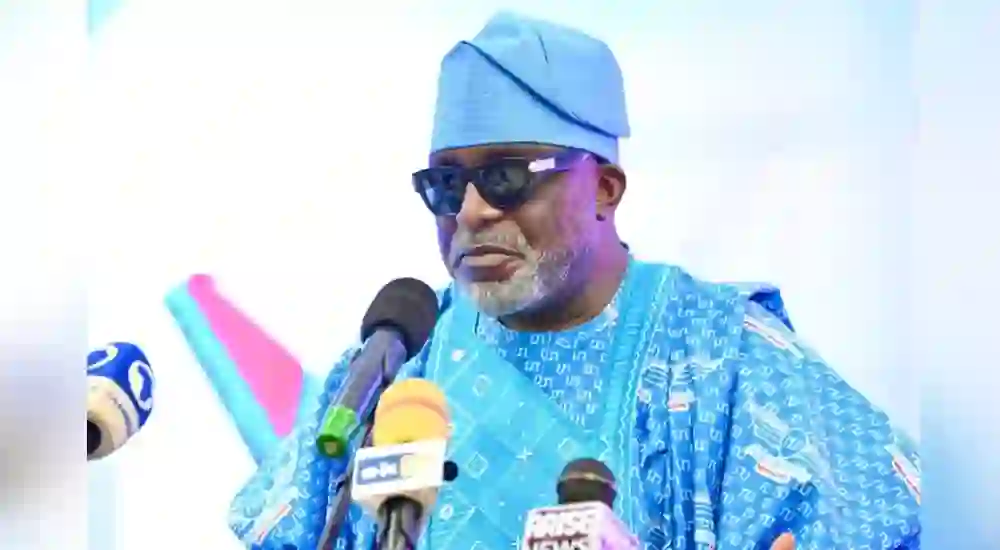
The Founder and Chief Executive Officer of United Nigeria Airlines, Obiora Okonkwo, has cautioned that careless communication endangers both democratic stability in Africa and human lives.
Okonkwo spoke on Thursday at the ongoing World Public Relations Forum in Abuja. He said peace, democracy and development cannot thrive where truth is compromised, information is manipulated and public trust is eroded.
“In an age of unprecedented information flow, the credibility, integrity, and social value of what we communicate are as important as the freedom and the platforms through which we communicate,” he said.
He argued that the effect of public messaging depends largely on the values, professional standards and sense of responsibility behind how information is produced, distributed and consumed.
“Communication can build bridges or deepen divisions, enlighten citizens or manipulate them, strengthen democratic institutions or weaken confidence in them,” he said.
Lessons from Rwanda
Okonkwo pointed to the 1994 Rwandan genocide as perhaps the most tragic example of what irresponsible communication can cause. He noted that the radio station RTLM spread ethnic hatred, dehumanisation and incitement to violence, creating an atmosphere in which neighbours turned on one another.
He added that the International Criminal Tribunal for Rwanda later established the criminal responsibility of media figures for inciting genocide, showing that communication is not always innocent.
“In the hands of irresponsible actors, the microphone can become as destructive as a very dangerous weapon,” he said.
Nigeria’s 2023 election and COVID-19
On recent examples, the aviation chief cited Nigeria’s 2023 presidential election. He said social media aided political mobilisation but also fuelled the spread of unverified claims, fabricated results and divisive ethnic and political narratives, as documented by the European Union Election Observation Mission.
He also referred to the COVID-19 pandemic, when the World Health Organization identified an “infodemic”, an overwhelming flood of information, including false and misleading content, that left populations confused.
Lessons from aviation
Drawing on his experience in the Nigerian aviation sector, Okonkwo stressed the importance of truthful communication in managing corporate reputation.
He described aviation as a high-trust industry in which disruptions, flight delays, cancellations and safety incidents can quickly trigger public anxiety and reputational damage.
According to him, timely, factual and transparent communication can curb speculation, correct misinformation and sustain stakeholder confidence, while evasive statements or concealment of facts can turn manageable operational problems into a reputational crisis.
“I have come to appreciate that truthfulness is not the enemy of reputation management; it is its most sustainable foundation,” he said.
“A corporate leader’s responsibility therefore goes beyond defending an organisation or protecting a favourable image.
“It involves communicating facts accurately, protecting legitimate institutional interests, and sustaining public trust through honesty, accountability, and transparency.”
Scale of disinformation
Okonkwo cited a 2024 analysis by the Africa Centre for Strategic Studies, which documented 189 disinformation campaigns across at least 39 African countries, nearly four times the number recorded in 2022.
He also referenced UNESCO’s 2024 survey of digital content creators, which found that 62 per cent did not carry out rigorous fact-checking before sharing information, while 73 per cent wanted training. He added that the Reuters Institute’s 2024 Digital News Report showed widespread concern in African markets about telling real information from fake online.
Call for self-regulation
Against this backdrop, Okonkwo outlined three interconnected responsibilities for firms, beginning with self-regulation.
He urged journalists, public relations practitioners, advertisers and corporate communicators to accept that their power to shape public opinion carries a duty to uphold professional integrity. Self-regulation, he said, must go beyond codes of conduct to include credible enforcement, accountability, continuous professional education and an uncompromising commitment to accuracy, transparency and the public interest.
“Public relations in particular must resist being reduced to propaganda,” he warned.
Okonkwo added that while the power of a global voice is undeniable, its true strength lies in the responsibility with which it is used.
“In a world increasingly shaped by information, Africa and the rest of the humanity must ensure that communication informs rather than misleads, builds bridges rather than creates divisions, and advances truth rather than amplifies falsehood,” he said.
“Ultimately, the value of our voices will be measured not merely by how widely they travel or how loudly they resonate, but by the positive impact they make on society and humanity.”
READ ALSO:
- Trump, Xi, Putin Hold First Trilateral Summit, Discuss Nuclear Arms Cuts
- “Holy Ground, Unholy Hardship and Tinubu’s 2027 Headache.” | By Blaise Udunze
- Irresponsible Communication Endangers Democracy, Lives, Says Okonkwo
- 2,560 Kano Inmates Regain Freedom Through Legal Aid Council Intervention
- INEC Deploys 186,277 BVAS Machines To States Ahead Of 2027 Polls
