



By Dr. E.F. Egbere
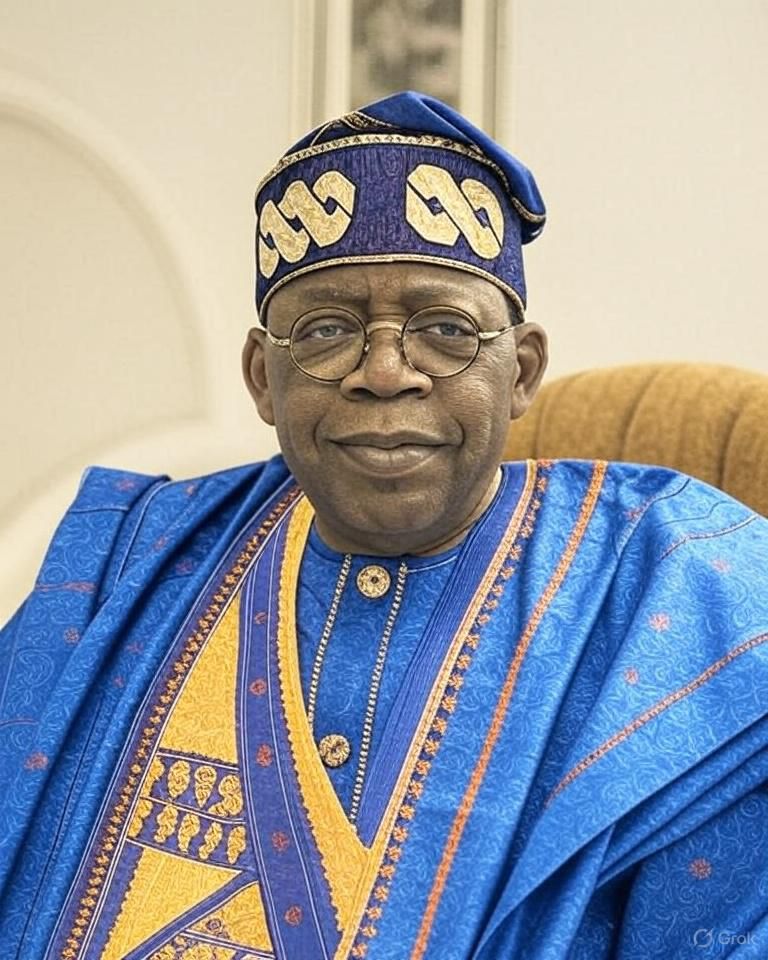
Two years into the administration of President Bola Ahmed Tinubu, Nigeria finds itself at the crossroads of structural reform and social tension. While macroeconomic indicators point to significant improvements, the experience of the average Nigerian remains mixed. This article assesses the administration’s major economic and social interventions—citing verifiable data from global and local sources—while offering a nuanced view of their impact.
Economic Reform: Stabilisation with Strain
Since assuming office in May 2023, President Tinubu has implemented one of the boldest sets of economic reforms in Nigeria’s recent history. Chief among these were the removal of fuel subsidies, the unification of the naira exchange rate, and a tight monetary policy aimed at curbing inflation. These decisions have earned praise from the international financial community for their discipline, but have also imposed significant short-term costs.
According to the World Bank’s May 2025 Nigeria Development Update, Nigeria’s economy grew by 3.4% in 2024, up from 2.9% in 2023, making it the country’s strongest GDP performance in nearly a decade. The growth was driven largely by services, ICT, and agriculture. In its Global Economic Prospects report (June 2025), the Bank projects an even higher 3.6% GDP growth in 2025.
However, inflation remains elevated at 22–24%, eroding purchasing power and intensifying hardship, especially for low-income households. This has sparked criticism of the administration’s lack of sufficient welfare buffers. Although initiatives such as N-Power, conditional cash transfers, and food security interventions have been deployed, their reach has so far been too limited to offset the impact of rising prices. Nonetheless, the administration has succeeded in narrowing the fiscal deficit from 5.4% of GDP in 2023 to around 3% in 2024—a substantial shift.
Currency and External Balances: Cleaning Up the Books
In a dramatic shift from the previous dual exchange rate regime, the Central Bank of Nigeria floated the naira in mid-2023. This removed arbitrage opportunities but triggered a sharp initial devaluation.
By 2024, the foreign exchange backlog, estimated at over $7 billion, was fully cleared. By the first quarter of 2025, Nigeria had posted a $6.8 billion balance of payments surplus, its first in over 25 years, according to Reuters and CBN reports. International reserves recovered to over $37 billion, while foreign investor confidence improved, as reflected in the doubling of stock market capitalisation between 2023 and 2025.
Public Infrastructure: Measurable Expansion, Slow Absorption
On the infrastructure front, the Tinubu administration has initiated over 70 federal road projects, including the ambitious Lagos-Calabar Coastal Highway and Sokoto-Badagry Superhighway. While these projects promise to improve connectivity and trade in the long term, public information on their current completion status remains scarce.
Similarly, a $3 billion national fibre-optic rollout is underway, aiming to enhance broadband penetration and digital access, especially in underserved regions.
In the energy sector, Nigeria has added nearly 1,500MW to its national grid in the past two years, equal to what was added over the preceding four decades. The World Bank-backed Nigeria Electrification Project (NEP) has helped connect 5.9 million Nigerians to power threw off-grid solar and mini-grid solutions, according to a 2025 NEP performance review.
Healthcare and Human Capital: Progress Amid Challenges
Healthcare investment under Tinubu has been substantial. The administration, in partnership with the World Bank, committed ₦45 billion (~$50 million) to upgrade 8,800 primary healthcare centres under the Primary Healthcare Provision Strengthening Programme.
Eight new medical universities have been approved to bridge the manpower gap in the health sector. However, the pace of implementation—including curriculum development and staffing—has been slow, and some analysts question whether state-level capacity can support the sustainability of these health facilities.
On education, perhaps one of the administration’s under-celebrated successes is the stability in federal university calendars, with no ASUU strikes recorded in two years. This is unprecedented since 1999. The introduction of NELFUND, the student loan fund, is a major step towards widening access, although actual disbursement and uptake data remain opaque.
Balancing Applause with Accountability
While President Tinubu’s administration has earned plaudits for its boldness, it must now deepen engagement with Nigerians most affected by reforms. The elimination of subsidies, though fiscally sound, hit transport, food, and education costs hard—particularly in rural areas. The absence of a robust and wide-reaching social protection framework risks alienating the very citizens reforms are meant to uplift.
Furthermore, transparency and communication are essential. The public deserves periodic reports on major infrastructure progress, NELFUND disbursements, and PHC upgrades—not just budgetary allocations.
Conclusion
Nigeria’s economy is experiencing a necessary correction, one that emphasizes stability over populism. Yet growth must be felt on the ground to be politically and socially sustainable. As the Tinubu administration enters its third year, its ability to translate macro success into household security will be the true measure of its legacy.
⸻
Dr E.F. Egbere is an Economic Development Specialist and Public Policy Analyst
