



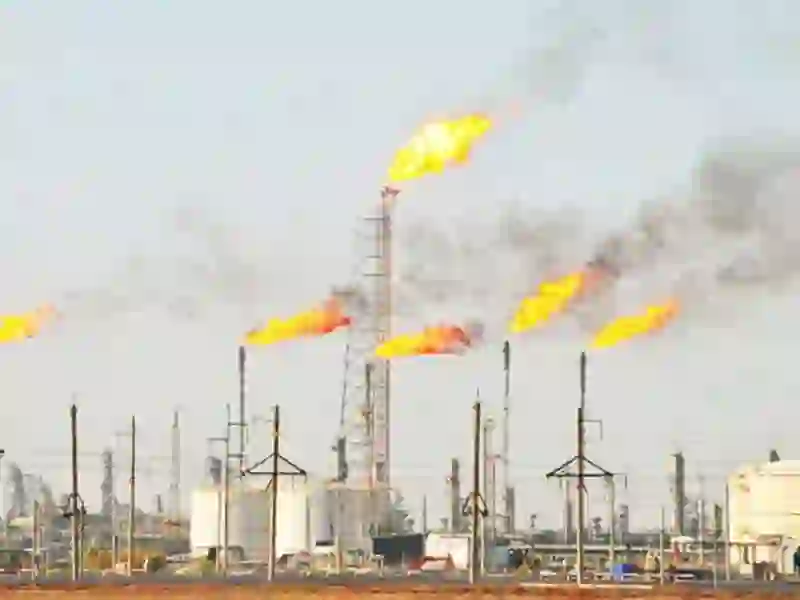
The federal government says four gas projects worth about $3.5 billion have reached Final Investment Decision (FID) under President Bola Tinubu, as it renews its push to turn Nigeria’s gas reserves into a driver of industrial growth.
Minister of State for Petroleum Resources (Gas), Ekperikpe Ekpo, made the disclosure in Abuja at the weekend during a media parley.
He named the projects as Iseni (about $122 million), Ubeta ($566 million), HI ($2 billion) and Ima ($800 million). The Brass Methanol Project, also valued at about $3.5 billion, has moved closer to execution after the resolution of its Gas Sales and Purchase Agreement (GSPA), he added.
Ekpo said the developments show investor confidence is returning to the sector, adding that government’s focus is now on raising production, speeding up infrastructure delivery and expanding domestic gas use.
“This administration will therefore remain accountable for turning these approvals, and Nigeria’s gas wealth, into reliable energy, stronger industries, more jobs and lasting prosperity,” he said.
Reserves and output
According to the minister, Nigeria’s proven 2P gas reserves rose from about 208.83 trillion cubic feet (TCF) in 2023 to 215.19 TCF as of January 1, 2026. Average production climbed from about 6.86 billion cubic feet per day (bcf/d) to roughly 7.5 bcf/d.
Domestic supply has crossed 2 bcf/d, with government targeting 10 bcf/d of production by 2027 and 12 bcf/d by 2030. He said the expansion is needed to meet rising demand from power plants, industries, fertiliser and petrochemical facilities, LNG and transportation.
NLNG recovery, Train 7
Ekpo said capacity utilisation at Nigeria LNG rose from about 59 per cent at the start of the administration in 2023 to about 87 per cent year-to-date in 2026. He credited the improvement partly to better stability in the Niger Delta and greater involvement of indigenous companies in upstream production.
The Train 7 project, now under construction and due for completion in June 2027, will add about 8 million tonnes per annum (MTPA) to the existing 22 MTPA, lifting total capacity to about 30 MTPA. He said this would boost gas-processing capacity, export potential and domestic LPG supply.
Decade of Gas, gas-to-power
The minister said the recently approved institutionalisation of the Decade of Gas initiative by Tinubu will provide a lasting framework for coordinating policy, implementation and accountability across the gas value chain.
On gas-to-power, he said the National Economic Council (NEC) approved about N185 billion to settle validated legacy debts owed to upstream gas producers. He said the payment is meant to restore commercial discipline, improve supply reliability and rebuild investor confidence, noting that some power plants that previously struggled to get gas are already seeing improvements.
Pipelines and infrastructure funding
Ekpo said the OB3 gas pipeline is now 100 per cent complete, with pre-commissioning done and first gas awaiting completion of the River Niger crossing. The pipeline can carry about 2 bcf/d and is expected to unlock over 500 million standard cubic feet per day (MMscf/d) of additional domestic supply.
The Ajaokuta-Kaduna-Kano (AKK) pipeline is about 95 per cent complete and is expected to be finished in 2027.
Through the Midstream and Downstream Gas Infrastructure Fund (MDGIF), N671 billion in public funds has attracted about N1.6 trillion in private investment, he said. The fund covers 31 projects and 205 infrastructure assets, which could deliver about 475 MMscf/d to the domestic market when fully operational. Government’s investment target for the sector is about $30 billion by 2030.
CNG and LPG
The minister said the number of CNG-powered vehicles has grown from about 11,000 in 2023 to over 120,000. The target is at least 1 million vehicles and up to 1,000 refuelling stations nationwide, with the private sector expected to lead and government providing regulation and support. Investors are also being backed to set up mobile and daughter CNG stations in areas without pipeline access.
On LPG, he said government wants to reach 5 million households by 2030, while the President has approved extending the National Grassroots LPG Penetration Programme to 2060, a path to over 10 million households.
Ekpo said Nigeria LNG and other producers have been directed to prioritise the domestic LPG market. He admitted that Chevron’s deep offshore LPG production remains a challenge because of its gas mix, adding that he has directed the NMDPRA to work out how to domesticate the volumes.
“What they are producing is not 80-20… I directed the NMDPRA to work out the way it should be done so that they will domesticate everything. And they are progressing,” he said.
Gas flaring
Ekpo said 42 companies have been awarded contracts to convert flare gas into energy, feedstock, LPG, CNG and power. About 20 have made significant progress, though some have faced resistance and technical difficulties in accessing flare sites.
Government remains committed to ending routine gas flaring by 2030, he said, noting that flared volumes have dropped significantly. Operators that keep flaring must either deploy technology to capture and commercialise the gas or give access to firms that can.
He also stressed that deep offshore producers are legally required to meet domestic gas obligations before exporting, with the Nigerian Upstream Petroleum Regulatory Commission (NUPRC) responsible for enforcement. Government, he said, will not intervene in disputes where operators challenge those obligations, since they are set by law.
Global positions
Ekpo noted that Philip Mshelbila took office on January 1, 2026 as Secretary General of the Gas Exporting Countries Forum (GECF), the first Nigerian to hold the post. He added that he is also President of the 2026 GECF Ministerial Meeting and Chairman of the West Africa Gas Pipeline (WAGP) Project Committee of Ministers for 2026.
He said Nigeria’s acceptance as an Association Country of the International Energy Agency (IEA) should deepen its role in global energy talks and could improve access to technology, funding and investment.
“We have made substantial progress, but progress is not the destination; it is the foundation for the work ahead. The true measure of policy is sustained delivery,” he said.
READ ALSO:
- Unidentified Man Found Dead In Lekki Gutter
- Video: Tinubu Recounts How ₦50,000 Request at 3:30 a.m. Almost Made Him Quit 2023 Race
- FG Says $3.5bn Gas Projects Reach FID, Gas Output Hits 7.5bcf/d
- Peter Obi Calls For Unifying Leader Ahead Of 2027 Election
- Zamfara Speaker: Eight Lawmakers Were Already Suspended Before Dumping APC
