



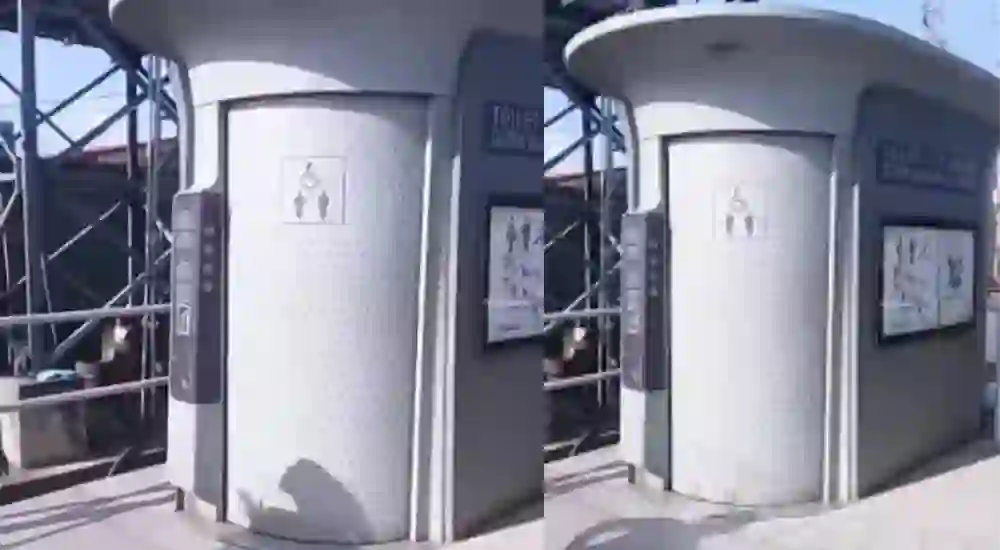
The Lagos State Government says it is building 200 additional public toilets as part of efforts to make the state open defecation-free (ODF).
The government disclosed that Lagos currently has over 1,769 functional public toilets. It added that construction is ongoing on 200 more toilets and 80 bathrooms, alongside 100 urinals and 160 handwashing basins to be provided across the state’s five divisions.
In a statement on Saturday signed by Kunle Adeshina, Director of Public Affairs at the Ministry of the Environment and Water Resources, the Special Adviser to the Governor on Environment, Engr. Olakunle Rotimi-Akodu, made the disclosure while delivering the keynote address at the 2026 World Toilet Day celebration in Alausa, Ikeja.
Speaking on the theme “Sanitation and Gender Equality,” Rotimi-Akodu said access to decent toilets goes beyond building infrastructure. He described sanitation as a basic part of human dignity, personal security, social inclusion and sustainable development.
He said poor sanitation affects women and girls the most, exposing them to insecurity, harassment and difficulties in managing menstrual hygiene. According to him, the lack of safe, private toilets in schools, workplaces, markets, transport terminals and health facilities can hurt girls’ school attendance, women’s productivity and overall well-being.
Rotimi-Akodu argued that true gender equality cannot be achieved without addressing unequal access to sanitation.
He said the Ministry of the Environment and Water Resources is carrying out interventions to close sanitation gaps, given the state’s rapidly growing population and urbanisation pressures.
The Special Adviser added that the government’s agenda is not only about building toilets but also ensuring they are well designed, strategically located, properly maintained and effectively managed. He said facilities must meet standards of safety, accessibility, privacy, cleanliness and gender responsiveness, with special attention to women, girls, children, older persons and people living with disabilities.
He called for menstrual hygiene management to be built into sanitation planning, especially in schools, markets, workplaces and public institutions. He also stressed the need for privacy, reliable water supply, working handwashing facilities and proper menstrual waste disposal in public toilets.
Rotimi-Akodu urged commercial establishments such as banks, eateries and filling stations to open their restrooms to the public to support government efforts. He also called for stronger partnerships among government agencies, the private sector, international development partners and non-governmental organisations to speed up the state’s sanitation drive.
Citing the WHO/UNICEF Joint Monitoring Programme, he said about 3.4 billion people worldwide lack safely managed sanitation services, while 354 million still practise open defecation. He urged residents to adopt responsible sanitation habits, noting that keeping toilets clean and functional is a collective responsibility.
In his welcome address, the Permanent Secretary of the Office of Environmental Services, Dr. Gaji Tajudeen, represented by the Director of Sanitation Services, Dr. Hassan Sanuth, described World Toilet Day as an important platform for highlighting sanitation challenges and their implications for public health and human dignity.
Tajudeen said this year’s commemoration aligns with Sustainable Development Goal 6, particularly Target 6.2, which seeks equitable access to adequate sanitation and hygiene for all and an end to open defecation by 2030.
He warned that poor sanitation contributes to water contamination and the spread of preventable diseases such as cholera and diarrhoea, while also undermining productivity, especially among children and vulnerable groups.
The Permanent Secretary called for stronger collaboration among government institutions, private organisations, development partners and communities to tackle sanitation challenges. He also urged residents to keep toilets in homes, schools, markets, motor parks and places of worship clean, safe and accessible, including to persons with disabilities.
READ ALSO:
- GOVERNOR DAUDA LAWAL PUTS RESCUE MISSION IN MOTION WITH FRESH EMPOWERMENT FOR TRANSPORT OPERATORS ACROSS ZAMFARA STATE
- FG Graduates 87,701 Nigerians in First TVET Cohort, Enrols 150,000 More
- Lagos Constructing 200 More Public Toilets, Targets Open Defecation-Free Status
- Kano Begins Drafting 20-Year Master Plan To End Water Shortages
- Obi Vows to Raise Power Generation to 10,000MW, Build 40,000 Classroom Blocks
