



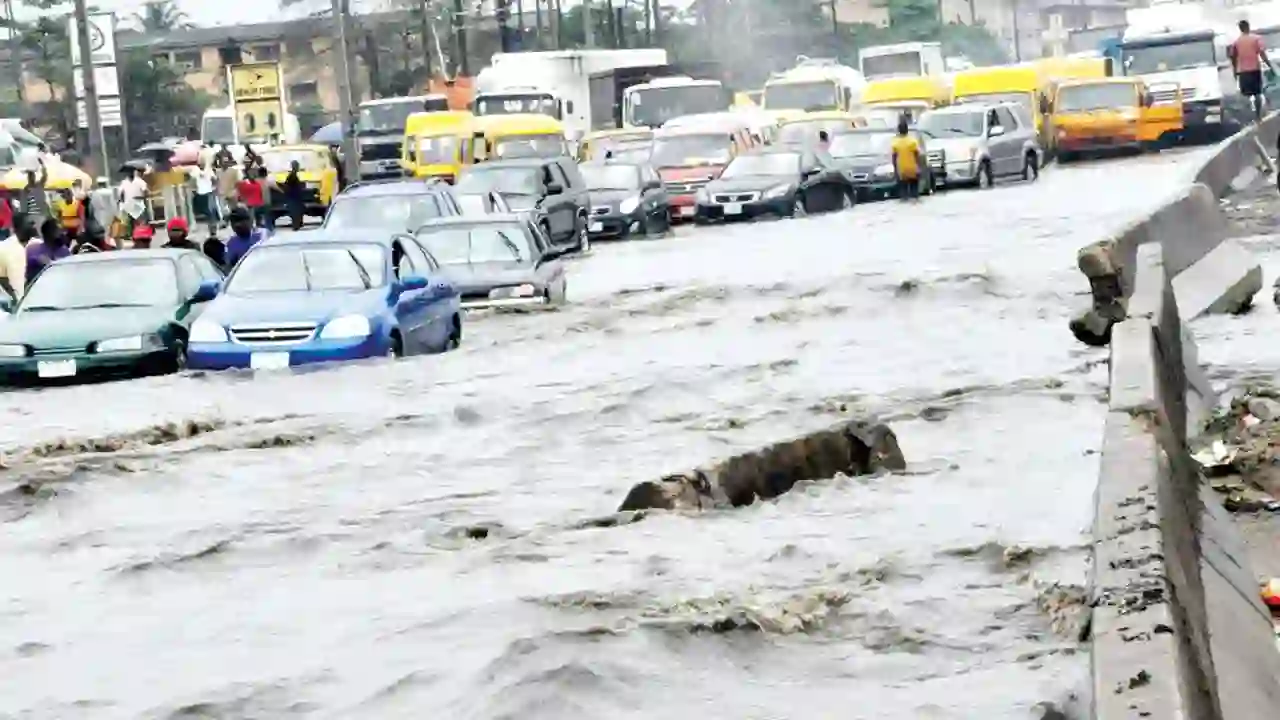
The Director-General of the Nigeria Hydrological Services Agency (NiHSA), Umar Mohammed, has said last week’s flooding in Lagos and other states was no surprise, insisting the agency had forecast the disaster but its warnings were ignored.
Mohammed said the rainy season, which typically runs from July to September, could bring even worse flooding than what residents have already experienced, with the situation expected to peak in August and September.
He also raised concerns about the safety of drinking water in flood-hit states, warning that supplies could become contaminated.
On Tuesday, torrential rain lasting over 12 hours submerged roads and property across Lagos, grounding commercial activity and vehicular movement. The downpour, which began on Sunday, left commuters stranded and forced residents to bail water from their homes. Many parents kept their children home from school over safety fears.
Areas worst hit include the Lagos-Oshodi Expressway, Abeokuta Expressway, Lekki-Epe Expressway, Victoria Island, Agege, Ikeja, Oworonshoki, Gbagada, Funsho Williams Avenue, and the Iwaya area of Yaba, among other coastal districts.
Explaining why Lagos is especially vulnerable, Mohammed noted that the state sits at the intersection of three flood types — urban, riverine, and coastal — because of its location by the ocean and a major river running through it. He said some parts of the city, particularly in Ikoyi, are at or below sea level, making it difficult for floodwater to drain naturally.
According to him, NiHSA’s assessments after last year’s rainy season had already shown that drainage channels across the state were filled with stagnant water, clogged with silt, sand, and plastic waste — a sign that flooding this year was inevitable once the rains returned.
He added that the Ogun River, which flows into Lagos and splits into smaller tributaries before reaching the ocean, is now compounding the urban flooding by adding volume to already overwhelmed drainage systems.
Mohammed said the floods are expected to persist in an on-and-off pattern through September, with a gradual decline starting in October and safer conditions only likely by November. He noted that some parts of Lagos are experiencing flooding for the first time this year.
The NiHSA boss lamented poor cooperation from state governments in acting on the agency’s annual flood forecasts, saying warnings are routinely dismissed until disaster strikes.
READ ALSO:
- FAAN To Shut Owerri Airport Runway For 25 Days From October 20
- Banky W Opens Up on Heartbreak of 2023 Election Defeat, Marks One Year as Pastor
- NAFDAC Disowns Viral List Of “Fake” Products, Urges Nigerians To Ignore It
- Oyo 2027: Alli Tasks Makinde, Security Agencies Over Alleged Attack on Wife
- NYSC ABDUCTION: MOTHER SAYS SHE PAID ₦6M RANSOM TO FREE SON
