


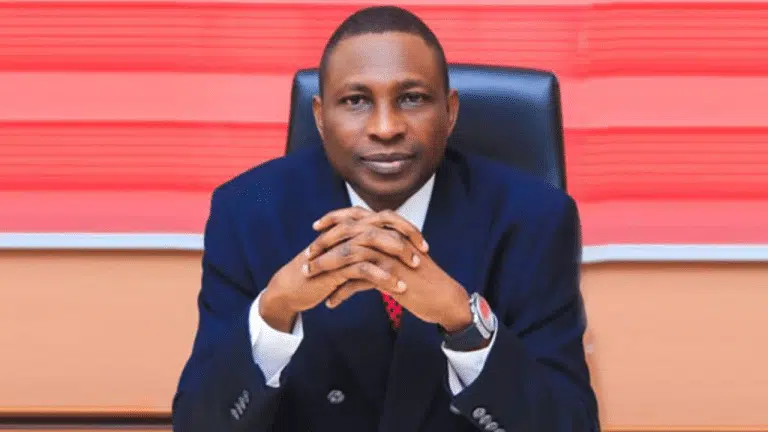
The Executive Chairman of the Economic and Financial Crimes Commission (EFCC), Ola Olukoyede, has charged religious leaders across Nigeria to continually preach sound doctrine capable of restoring the moral dignity of honest living among their followers.
He spoke on Wednesday in Abuja at the second 2026 Council Meeting of the Nigeria Inter-Religious Council (NIREC), where the Anti-Corruption Interfaith Manual for religious leaders was also launched.
Olukoyede noted that the event’s theme, “Shared Sacred Flourishing in Nigeria,” underscores a simple truth: the wellbeing of citizens depends on individual conduct, and corruption fractures that shared prosperity. He argued that one of the most consequential contributions religious leaders can make is helping restore the moral dignity of honest living.
Corruption, he said, privatizes what belongs to the commonwealth and enriches a few at the expense of the many — which is precisely why the EFCC exists: to defend that commonwealth. He added that both Christianity and Islam can retain their distinct traditions while working jointly toward justice, peace, and national wellbeing.
The EFCC boss disclosed that the Commission has, for years, engaged religious leaders through an interfaith framework, urging them to weave anti-corruption messaging into their sermons and teachings, since no religion, he insisted, condones fraud.
He revealed that the newly launched manual is the product of sustained engagement with Christian and Muslim leaders, compiling what various holy books say about corruption, as a practical preaching resource.
Olukoyede stressed that financial crime is not confined to any faith. Stolen public funds, he said, hurt Christians and Muslims alike — a poorly equipped hospital does not check a patient’s religion, and a collapsed road makes no distinction between travellers. Inflation and unemployment, he added, spare no denomination.
He described faith institutions as holding a responsibility the EFCC cannot replicate: while the Commission investigates conduct and prosecutes fraud, religious teaching shapes character and can help prevent corruption before it starts — something enforcement alone cannot do after the fact.
In his remarks, NIREC’s Executive Secretary, Professor Cornelius Afebu Omonokhua, said the manual — now in its second edition — was developed through the Interfaith Anti-Corruption Advisory Committee (IAAC) to help preachers share authentic religious teaching that promotes both peaceful coexistence and the fight against corruption. He commended Olukoyede for leading the anti-corruption conversation.
READ ALSO:
- No Faith Condones Fraud — EFCC Boss Olukoyede Tells Religious Leaders
- Umahi orders Tinubu’s portraits on First Niger Bridge as rehabilitation nears completion
- Milei Slams UN as ‘Useless Organisation’ Filled with ‘Arrogant Parasites
- Airtel Money Plans London Stock Exchange IPO
- Ship owners task Dangote, others on cargo deals for indigenous shipping
