


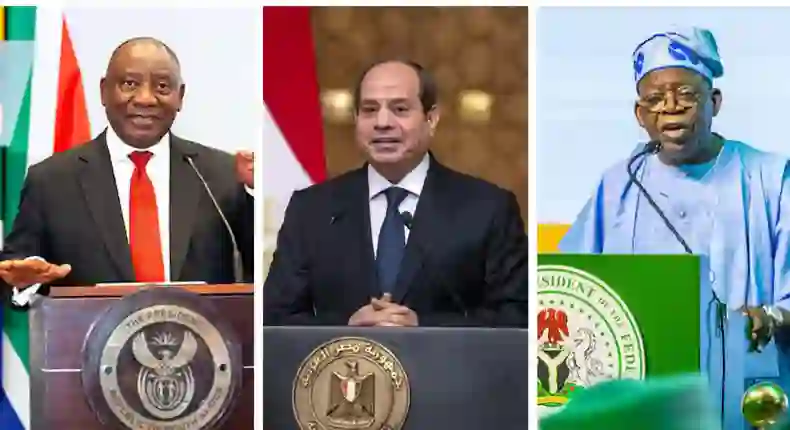
South Africa, Egypt and Nigeria — Africa’s three largest economies by nominal GDP — are all represented at the 81st United Nations General Assembly in New York this week, but not one of their presidents is attending in person.
The three economies are projected to be worth roughly $480 billion, $430 billion and $377 billion respectively in 2026, according to IMF figures, keeping South Africa, Egypt and Nigeria at the top of the continent’s economic rankings. Nearly 130 heads of state and government are in New York for the week, with the General Debate opened on September 22 under the theme “Restoring trust, managing transformation: A United Nations that delivers for all.”
Why it matters: The absences come as UNGA 81 tackles issues with direct stakes for Africa — UN reform, global financing, peace and security, climate action and development. African countries continue to lobby for permanent seats on the UN Security Council. Security is especially pressing for Nigeria, which recorded 171 terrorist attacks and 750 terrorism-related deaths in 2025, its highest toll since 2020, per the Global Terrorism Index. With President Tinubu absent, he won’t be making Nigeria’s case on counterterrorism cooperation in person.
South Africa: President Cyril Ramaphosa is skipping the summit after his office announced on September 16 that his medical team advised him to rest and recover. Foreign Minister Ronald Lamola is leading the delegation, with Pretoria pushing for UN reform, stronger multilateralism and permanent African representation on the Security Council. Lamola has argued the international system’s credibility depends on rules applying equally, regardless of a country’s power.
Egypt: President Abdel Fattah el-Sisi is also staying home. Prime Minister Mostafa Madbouly arrived in New York on September 21 to lead Egypt’s delegation on el-Sisi’s mandate, with a schedule of speeches, statements and high-level meetings with international organisations and global business leaders.
Nigeria: President Bola Tinubu is currently in France on a private vacation, according to the presidency. Vice President Kashim Shettima is leading Nigeria’s delegation and is set to deliver the national statement, alongside bilateral meetings and other high-level engagements.
The bigger picture: None of the three countries is scaling back its participation — each has sent senior officials with mandates to speak and negotiate. But the presidents’ absence means Ramaphosa, el-Sisi and Tinubu lose the chance to personally deliver national statements and work the extensive sideline diplomacy that defines High-Level Week — bilateral meetings, investment talks, regional diplomacy and negotiations on conflict, trade and development finance. Those conversations will still happen this year; the presidents just won’t be the ones having them.
READ ALSO:
- EFCC Declares Ex-Pension Boss Maina Wanted Over Stolen Property Allegations
- UNGA 81: Lagos Ready to Collaborate, Innovate, Lead — Wahab
- Gilded Mane Strands Sets a New Standard for Luxury Hair in Ghana
- Governor Dauda Lawal Joins VP Shettima at UNGA, Positions Zamfara as Investment Destination
- Masari: 40 Years in Politics, I’ve Seen No President With Better Plan Than Tinubu
