


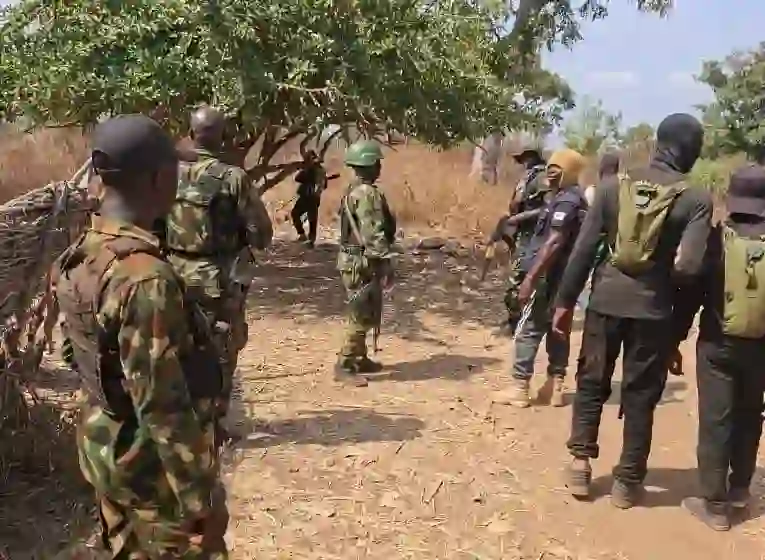
A fresh wave of relief has swept across Borno State, barely 24 hours after the rescue of 416 captives from Ngoshe community, as 11 women abducted seven months ago from Dille community in Askira/Uba Local Government Area were reunited with their families.
The women, who were seized while on a fishing expedition, were freed following coordinated operations by the Nigerian Army under Operation HADINKAI the same military offensive credited with liberating over 400 captives from Ngoshe and surrounding communities.
Their return triggered emotional scenes in Dille, with families who had endured months of uncertainty breaking into tears of joy and thanksgiving. Community sources said the returnees underwent comprehensive medical examinations before being reunited with relatives, in line with standard post-captivity procedures. During their ordeal, two of the women had managed to escape on their own, while two others were released by their abductors ahead of the final rescue operation.
Askira/Uba LGA Chairman Mada Saidu welcomed their return, saying: “We thank God for the safe return of our daughters and wives. We also appreciate the Nigerian Army, the Borno State government and all security agencies for their commitment and sacrifices toward ensuring their freedom and safety.”
Ngoshe Stakeholders Disown Kaigama
While relief was still unfolding in Askira/Uba, the Ngoshe Stakeholders Forum (NSF) held a press conference in Maiduguri to firmly reject claims by a group identifying itself as the “Borno South Youth Alliance,” allegedly managed by one Samaila Kaigama, which had publicly asserted a role in facilitating the release of the 416 captives.
Forum chairman Prof. Suleiman Bello said: “We wish to categorically dissociate ourselves from this self-acclaimed group. It is unknown to us, does not represent our people in any capacity, and was never mandated to speak or act on our behalf. Their claims are entirely false, misleading, and should be disregarded by the general public.”
The forum warned that such conduct risked undermining genuine peace and security efforts, cautioning the media, humanitarian actors and relevant stakeholders against engaging with unauthorised individuals falsely claiming to represent Ngoshe.
Despite the controversy, the NSF expressed gratitude to federal and state governments, security agencies and humanitarian institutions for their role in the rescue, and appealed for urgent post-conflict support — including reconstruction and resettlement assistance — as the rainy season begins.
The forum also noted that the 416 rescued residents have not returned to Ngoshe itself, but were taken to Pulka community to join relatives. As of Tuesday, no civilians remained in Ngoshe, which sits at the foot of the Mandara Mountains along the Nigeria-Cameroon border. The community was overrun by insurgents in March, forcing nearly 3,000 residents — who had only returned about two years ago after more than seven years of displacement — to flee once more. Troops have since regained control of the area, but a return of civilians is contingent on the community being declared fit for habitation.
Military Records Major Gains in May
Separately, the Defence Headquarters announced that troops recorded significant operational gains in May 2026, neutralising 317 terrorists, criminals, illegal miners and informants across various theatres of operation.
According to statistics released by the Defence Media Operations, 314 suspects were arrested for offences ranging from terrorism and criminality to illegal mining, while 18 insurgents surrendered under sustained military pressure. Troops also rescued 221 kidnapped hostages, destroyed three illegal refining sites, and recovered 21,910 litres of illegally refined petroleum products, along with 93 assorted firearms and ammunition.
Defence authorities described the results as a reflection of intensified pressure on criminal and terrorist networks, and urged citizens to continue providing timely intelligence to security agencies.
READ ALSO:
- ZAMFARA RELEASE OF FIRST BATCH OF SUCCESSFUL APPLICANTS NURSES & MIDWIVES RECRUITMENT
- 2027: I’ll campaign in Yoruba — Rhodes-Vivour
- FG fully settles N18.96bn PHCN pension arrears for 3,958 retirees
- EFCC’s Ban on Dollar Legal Fees Sparks Clash With Lawyers Nationwide
- UI Slams N2,500 Penalty on Graduates Who Delay Result Collection
