


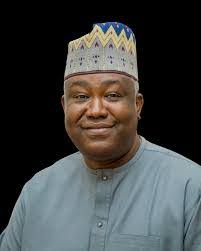
Accord Party presidential candidate, Dr Gbenga Olawepo-Hashim, has pledged that if elected in 2027, his administration will grant Dangote Refinery and other qualifying Nigerian refineries access to locally produced crude at a “strategic domestic price,” rather than pricing tied to international crude economics.
Hashim said the policy, which he has branded “Energy First,” is designed to give Nigerian refiners a cost advantage in African and global markets and to position the country as a major energy power rather than a raw crude exporter.
He unveiled the plan at the weekend in Ilorin, Kwara State, at a Diaspora Dialogue session titled “Fuel Subsidy and the Politics of 2027,” moderated by Prof. Farooq Kperogi, Prof. Moses Ochonu and Dr Osmund Agbo.
Crude as industrial tool, not just export commodity
Hashim argued that Nigeria has for decades exported crude and then repurchased the value created from it abroad, and said his policy would reverse that pattern by tying the country’s crude advantage directly to domestic industry.
He said refiners meeting efficiency, transparency and performance standards — not just Dangote — would qualify for the framework, describing it as a national industrial strategy rather than a subsidy for a single company.
“We are not creating one protected champion. We are going to create an army of Nigerian energy champions,” he said.
1 million bpd in new refining capacity
The candidate said an Accord government would expand domestic refining capacity by an additional one million barrels per day within three years, using direct government investment and joint ventures, with the goal of making Nigeria a refining and petrochemical hub for Africa.
He linked this to a separate proposal to recover roughly 3,000 shut-in oil wells and lift crude production to four million barrels per day within 24 months, arguing that increased output should power domestic industry rather than simply boost exports.
₦605/litre petrol price defended
Hashim reiterated his proposed starting petrol price of ₦605 per litre, describing it as a transitional figure that could eventually fall to between ₦200 and ₦300 per litre as production costs and exchange-rate conditions improve.
He said the lower costs would come from producing and refining more domestically, cutting waste, and capturing greater value locally — not from continued government subsidy payments.
Hashim also called for crude to be treated as feedstock for a wider industrial ecosystem beyond petrol, including diesel, aviation fuel, lubricants, plastics and fertiliser, and said government would need to build supporting infrastructure such as pipelines, ports, storage and power to back the plan.
He pointed to Dangote Refinery as proof that Nigerian private capital can execute large-scale industrial projects, saying government’s role should be to make such companies “less dependent on Nigeria’s limitations” rather than dependent on the state.
READ ALSO:
- Lagos traffic is part of our lifestyle — Hamzat
- Tinubu Hails Bishop Oyedepo at 72, Lauds Decades of Faith-Driven Development Work
- Oyebanji Dissolves Boards, Sacks Political Appointees Ahead of Second Term
- 2027: Hashim vows to give Dangote, other refineries crude at “strategic” price
- Passenger dies after jumping from bus in Ojuelegba crash, Surulere
