


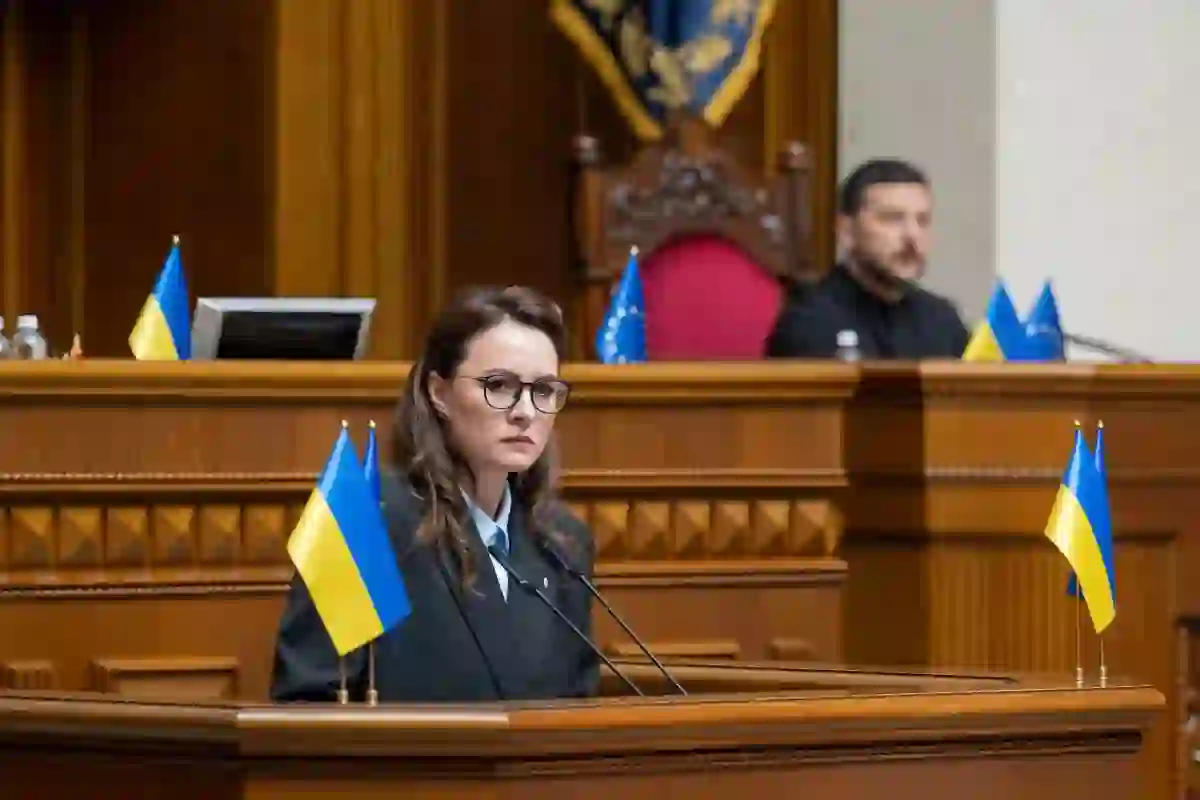
Ukraine’s Prime Minister, Yulia Svyrydenko, has resigned following a sweeping government reshuffle initiated by President Volodymyr Zelensky as the country seeks to adjust its political strategy amid the ongoing war with Russia.
Ukraine’s parliament approved Svyrydenko’s resignation on Tuesday, bringing an end to her one-year tenure after she assumed office in July 2025.
President Zelensky has not yet announced her successor but said the changes are aimed at addressing “new challenges and new tasks” facing the country. He explained that the reshuffle is intended to strengthen Ukraine’s political strategy by assigning new responsibilities across key areas of government.
Svyrydenko, who maintained strong ties with United States officials during her time in office, played a leading role in negotiating a minerals investment agreement with Washington following Zelensky’s high-profile meeting with former US President Donald Trump at the White House.
The cabinet changes come at a critical stage in Ukraine’s war with Russia, as Moscow intensifies ballistic missile attacks while Kyiv moves to expand domestic production of US Patriot air defence systems.
Over the weekend, Zelensky disclosed plans to appoint Svyrydenko to a new position focused on managing relations with one of Ukraine’s key international partners, although he did not specify which country.
While the prime minister oversees the government’s day-to-day administration, decisions on military strategy and frontline operations remain under the direct control of President Zelensky and Ukraine’s military leadership.
Reflecting on her time in office, Svyrydenko said her administration had achieved tangible results and shared a photograph of herself making a heart gesture during her address to parliament.
Local media have identified Sergiy Koretsky, the chief executive of Ukraine’s state-owned energy company Naftogaz, as the leading candidate to replace her.
Zelensky met with Koretsky over the weekend and praised his leadership in the country’s energy sector, describing it as highly effective despite the challenges posed by the war.
Ukraine’s energy infrastructure has suffered repeated attacks from Russian forces, leading to extensive damage to the national power grid and widespread electricity outages, particularly during the winter months.
READ ALSO:
- PSC Publishes List of Successful Applicants for 50,000 Police Constable Recruitment
- NESCAFÉ Next Level Promo Rewards Over 41,000 Nigerians With Cash, Business Grants
- Economy Stabilising After Three Years of Reforms, Tinubu Tells Deloitte Africa
- Court Grants Ex-CCT Chairman Danladi Umar ₦100m Bail Over Corruption Charges
- Senate Approves ₦50m For Families Of Slain Teachers, Soldiers In Oyo Abduction
