


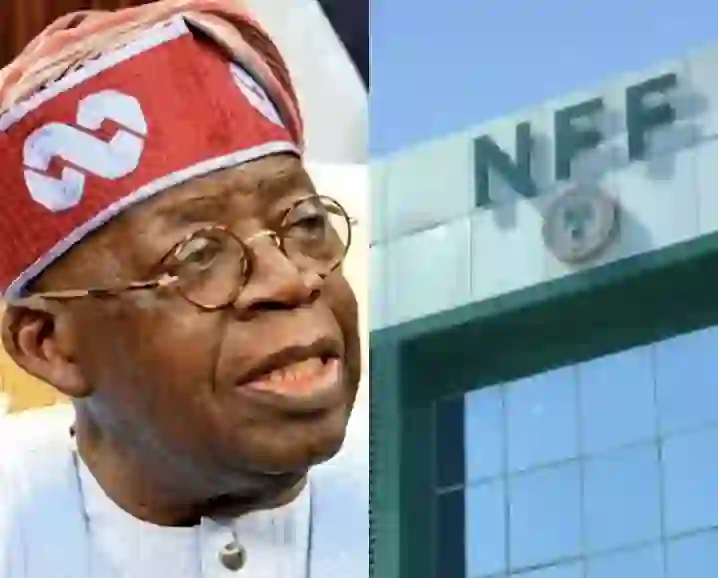
Football stakeholders and former internationals have called on President Bola Tinubu to lead sweeping reforms of Nigeria’s football governance structure, following the Super Eagles’ back-to-back failure to qualify for the World Cup.
The Super Eagles missed out on the 2022 tournament after losing to Ghana on away goals, and were again eliminated from the 2026 World Cup following a penalty shoot-out defeat to DR Congo in the CAF playoff final. It is the first time since Nigeria’s World Cup debut in 1994 that the country has missed two consecutive editions.
Despite the setback, no official of the Nigeria Football Federation (NFF) has resigned or been removed. Instead, the federation is preparing for elective congress on September 26, 2026, in Lafia, Nasarawa State, having already amended its statutes, constituted a 12-member Electoral Committee, and passed a vote of confidence on the executive committee led by Ibrahim Musa Gusau.
This is in sharp contrast to how other football federations across the world responded to elimination from the ongoing World Cup. Côte d’Ivoire’s FA president resigned live on television after his country’s Round of 16 exit. Senegal sacked coach Pape Thiaw, while Algeria dismissed Vladimir Petković following their Round of 32 exit to Switzerland.
Tunisia’s federation fired coach Sabri Lamouchi a day after a 5-1 defeat to Sweden and swiftly replaced him with Hervé Renard. Uruguay’s football board was dissolved and fresh elections called after a shock exit to Cabo Verde. Portugal’s Roberto Martínez resigned as coach, and was promptly replaced by 71-year-old Jorge Jesus on a four-year deal.
Former Super Eagles captain John Obi Mikel had earlier called on the NFF board to resign, describing Nigeria’s non-qualification as a “disaster.” Chairman of the Nigeria Olympic Committee, Segun Odegbami, has also described the federation as a “cabal” holding Nigerian football to ransom, while sports journalist Tana Ayejina questioned what more damage the board could cause after over a decade of alleged mismanagement.
Former international Efe Sodje criticised the federation’s administrative failures and lack of structure, while ex-Super Eagles striker Odion Ighalo said poor decision-making at the top contributed significantly to the qualification failure. Former Chelsea and England captain John Terry, who played alongside Mikel, said Nigeria’s absence was a major loss to the tournament given the country’s football heritage.
Odegbami has threatened legal action to stop the September elections, arguing that the current NFF constitution unlawfully restricts voting rights to state FA chairmen, many of whom are politicians, rather than genuine football stakeholders.
Stakeholders say the federation’s continued hold on power, despite presiding over the failures of the Super Eagles and age-grade teams, reflects the absence of consequences that other countries have imposed on their football administrators after World Cup disappointments.
READ ALSO:
- Trump Threatens Higher Canada Tariffs Over Wildfire Smoke Choking US Cities
- Tinubu: FCT Better Off Under Wike 50 Years After Creation
- Plateau Violence: Youth Coalition Says 200 Killed in Five Months, Demands Stronger Security Response
- Nigeria, Ghana Agree to Push Afrophobia Onto AU Summit Agenda
- Cyberattack Forces ECNBA to Delay NBA Presidential Election
