


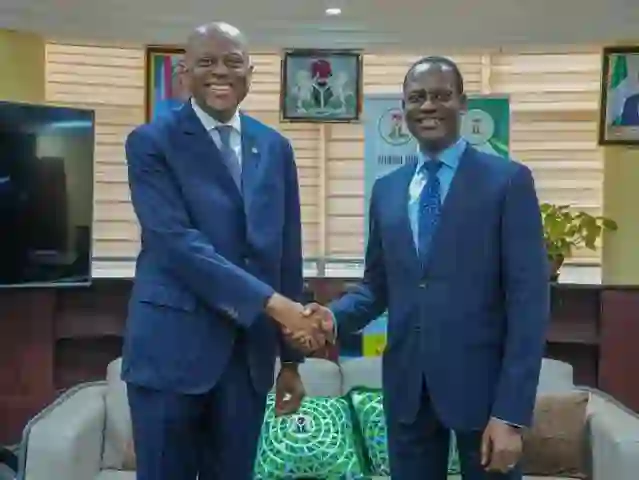
The Central Bank of Nigeria (CBN) and the Federal Ministry of Finance have signed a Memorandum of Understanding (MoU) on Monetary-Fiscal Policy Coordination, aimed at tightening collaboration between the two institutions to support macroeconomic stability and long-term economic growth.
CBN Governor Olayemi Cardoso signed on behalf of the apex bank, while Finance Minister and Coordinating Minister of the Economy, Taiwo Oyedele, signed for the ministry, at a ceremony held Monday at CBN headquarters in Abuja.
Cardoso described the agreement as a formal expression of the two bodies’ shared commitment to working together in the nation’s economic interest. He noted that fiscal and monetary policy function as complementary tools of economic management — fiscal policy shaping activity through spending, taxation and borrowing, while monetary policy anchors price stability through control of liquidity and interest rates. Their combined effect, he said, exceeds what either can achieve alone.
He was careful to stress that the MoU does not mark the start of a new relationship. The CBN and the finance ministry, he said, have collaborated for decades on issues ranging from inflation control and debt sustainability to exchange rate management and crisis response.
What the MoU changes
According to Cardoso, the value of the new agreement lies in formalising what had largely depended on individual office holders’ discretion. It sets out a structured framework for consultation and information-sharing, covering government cash management, debt issuance planning, liquidity forecasting and macroeconomic analysis.
“It transforms a relationship built on practice into one anchored by clear processes and enduring institutional commitment,” Cardoso said, adding that predictable engagement mechanisms would improve decision-making and reduce policy uncertainty.
He linked the timing of the pact to the CBN’s ongoing shift toward an inflation-targeting framework, noting that such frameworks succeed only when backed by a supportive fiscal environment.
For his part, Oyedele emphasised that closer coordination does not compromise the institutional independence of either body. “Good economic management requires independent institutions, but independence does not mean isolation,” he said, pointing to the interconnected effects of government borrowing, monetary policy, tariffs and spending on the wider economy.
He noted that coordination mechanisms already exist — including the Economic Management Team and the National Economic Council — and that the MoU strengthens these existing linkages rather than replacing them, through better information sharing, aligned macroeconomic assumptions and clearer channels for resolving policy conflicts.
READ ALSO:
- Governor Lawal’s Quiet Turnaround and the Case for a Second Term | By Bala Bitrus
- Coalition Defends NSCDC Commandant-General, Rejects Calls for His Removal Over Minna Detainee Deaths
- Ogun Guber: PDP Campaign Train Storms Ijebu-Ode, Odogbolu
- EFCC Arrests Olori Tejuoso Over Alleged N600m Fraud
- Peter Okoye Moves Birthday From November 18 To November 30, Says Date Became ‘Worst Day Of My Life
