


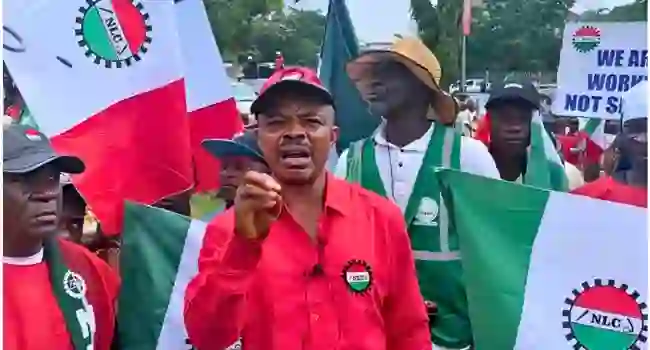
The Nigeria Labour Congress (NLC) and civil servants under the Joint National Public Service Negotiating Council (JNPSNC), Trade Union Side, have demanded a new minimum wage of N500,000 and a reduction in petrol price to N500 per litre, citing worsening economic hardship among workers and their dependents.
In a letter to President Bola Tinubu, JNPSNC National Secretary (Trade Union Side), Olowoyo Gbenga, said workers are also demanding the immediate constitution of a committee to negotiate a new national minimum wage ahead of January 2027.
The council described the demands as realistic and legitimate, noting that the recent rise in fuel prices to N1,430 per litre and above in some areas has deepened the cost-of-living crisis. Workers gave the Federal Government until Wednesday, September 30, 2026, to act, warning that the hardship is fuelling rising tension nationwide.
JNPSNC, which brings together unions including the Nigerian Civil Service Union, the Medical and Health Workers Union, the Association of Senior Civil Servants of Nigeria, and the National Association of Nigerian Nurses and Midwives, among others, said the removal of fuel subsidy three years ago triggered a sharp rise in fuel prices with knock-on effects on the cost of essential goods.
Other unions in the council include the Amalgamated Union of Public Corporations, the Civil Service Technical and Recreational Employees (AUPCTRE), the Nigeria Union of Public Service, Reportorial, Secretarial, Data Processors and Allied Workers (NUPSRAW), the National Union of Printing, Publishing and Paper Products Workers (NUPPPPROW), and the National Union of Agriculture and Allied Employees (NUAEE).
The council said the situation has made life increasingly difficult for workers, arguing that food palliatives are not a sustainable response to the crisis. It described such interventions — bags of rice, noodles, vegetable oil and garri — as inaccessible to most Nigerians and largely limited to political associates, calling instead for fuel prices to be brought down to N500 per litre for a broader, more sustainable economic impact.
Government should look inward — Labour
On fuel pricing, the workers urged government to stabilise prices at an affordable minimum, stressing that fuel remains a critical commodity with wide-reaching effects on the economy. They noted that the current price of premium motor spirit — as high as N1,430 or more per litre in some locations — is unbearable for workers.
The council called for an intervention fund to stabilise fuel prices and eventually bring the pump price down to N500 per litre, adding that government could use a different name for the intervention if “fuel subsidy” was considered politically unacceptable. It argued that such a fund would benefit all Nigerians, including those in the most remote parts of the country.
The council also backed a position previously credited to NLC President Joe Ajaero, who argued that Nigeria has sufficient local refining capacity — largely in private hands — and, as an oil-producing nation, deserves some buffer against global price shocks. Ajaero called for government to sell crude to local refineries in naira and expand national storage capacity to meet energy security needs, saying this would create jobs and address emerging security challenges.
The NLC maintained that there was nothing wrong with government subsidising citizens’ needs during emergencies, noting that no major oil-producing country has failed to intervene during similarly difficult periods. It also pointed to Nigeria’s extra earnings from crude sold above its budgeted benchmark price — reportedly $35–$40 per barrel — translating to trillions of naira monthly, and criticised local refineries for continuing to import crude despite the country’s refining capacity.
On wages, the council demanded an immediate wage award for workers at the federal, state and local government levels, along with an upward review of salaries and allowances across the public service. It proposed that the minimum monthly salary for an officer on Grade Level 01, Step 1, be set at N500,000 under the 2027 salary template, and called for harmonised wages across ministries, departments and agencies (MDAs), with similar reviews encouraged at state and local government levels.
JNPSNC urged President Tinubu to direct the National Salaries, Incomes and Wages Commission (NSIWC) to begin discussions with the NLC, the Trade Union Congress of Nigeria (TUC), JNPSNC and other stakeholders on the proposed wage award and salary review.
Demands realistic and long overdue — NLC
Backing the civil servants, NLC Acting General Secretary, Benson Upah, described the demands as realistic and long overdue, urging government to act without delay.
He said workers’ wages have remained stagnant even as inflation continues to erode their value, leaving many unable to afford basic transportation to work, let alone feed their families. He called for urgent government intervention, noting that rising fuel prices affect nearly every aspect of daily life — from transport to school fees to the cost of essential goods.
Upah added that the hardship extends beyond workers to the wider Nigerian population, particularly the less privileged, and reiterated that the demands from civil servants remain realistic, legitimate, and deserving of prompt government action.
READ ALSO:
- Trump Launches “Trump TV” as White House Bars CNN, MS NOW, Politico Over Coverage Dispute
- “Not A Threat, But A Promise” — IPOB Renews 2027 Election Boycott Threat Over Kanu
- Peter Mbah Appoints Nollywood Actress Rachael Okonkwo, 100 Others As Special Advisers, Aides
- Fuel Price: FG Summons Refiners, Marketers Over ₦1,450 Petrol
- Nigerian, Ghanaian-trained teachers barred from UK’s QTS route
