


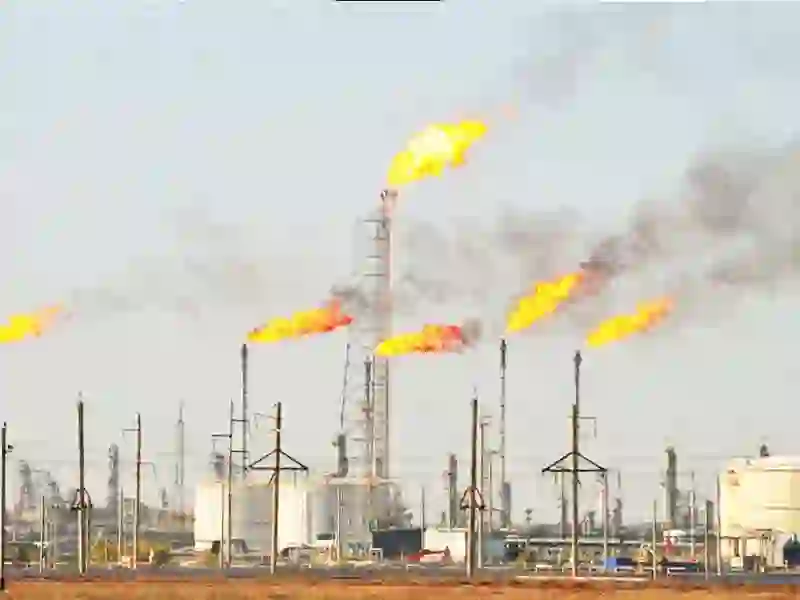
Nigeria lost an estimated 3,100 gigawatt-hours (GWh) of electricity generation potential to gas flaring by oil companies in May 2026, raising fresh doubts about the Federal Government’s plan to build a gas-driven economy by 2030.
This is as the Nigerian Upstream Petroleum Regulatory Commission (NUPRC) and the National Oil Spill Detection and Response Agency (NOSDRA) released conflicting figures on how much gas was flared during the month.
While NUPRC put the volume at 17.6 million standard cubic feet (MMSCF), NOSDRA’s data placed it much higher, at 30.7 million standard cubic feet (MSCF).
NOSDRA’s latest report also valued the flared gas at $107.5 million, with defaulting firms — including International Oil Companies (IOCs) — facing penalties of $61.4 million.
A breakdown by oilfield showed onshore flaring rose sharply by 62.3 per cent to 22.3 MSCF, far outpacing the 8.4 MSCF flared offshore. The agency said the volumes released an estimated 1.6 million tonnes of carbon dioxide into the atmosphere.
NOSDRA noted that despite decades of intervention efforts, gas flaring has persisted in the country since the 1950s, continuing to emit harmful gases.
The development comes even as the Federal Government maintains its commitment to the “Decade of Gas” initiative, launched in 2021 to position Nigeria as a gas-powered economy by 2030 through improved electricity supply, industrial gas use, and higher exports.
A government report seen by Vanguard listed “increasing gas utilisation for power generation and incentivising investments in the gas value chain” among its top priorities.
However, findings showed that gas flaring has remained high despite rising investment in the sector, suggesting that capital inflows have not translated into matching gains in gas production and utilisation. Vanguard also gathered that Nigeria’s persistent failure to generate up to 4,000 megawatts (MW) of electricity is partly tied to poor gas supply to power generation companies (GenCos).
Meanwhile, the Renevlyn Development Initiative (RDI) has called on the Federal Government to enforce an outright ban on gas flaring, insisting that oil companies in the Niger Delta find it cheaper to pay penalties than to stop the practice.
The group cited data from the Nigerian Oil Spill Monitor covering 2012 to 2025, which showed that oil companies paid about $646 million in gas flaring penalties in 2025 — the highest in five years.
READ ALSO:
- The Zamfara Masterminds: Loyalty, Structure and the Unstoppable Engine of the 2027 APC Campaign | By Adeola Agoro
- From ₦20 to ₦1,000+: The 27-Year Journey of Petrol Prices in Nigeria
- Trump Appoints Atiku’s US Lobbyist To White House Commission
- FBI Report Campaign: House Rep Says Opposition Risks Nigeria’s Global Image
- JAMB, WAEC Introduce ₦4,000 One-Time Fee for O’Level Result Verification
