



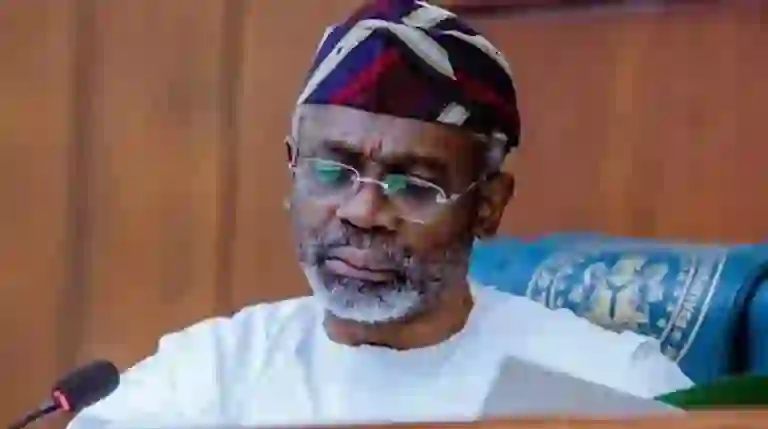
The Chief of Staff to President Bola Tinubu, Femi Gbajabiamila, has admitted that the removal of the petrol subsidy and other economic reforms have made life harder for Nigerians, saying the hardship should not be ignored or played down.
He maintained, however, that Tinubu acted in the country’s long-term interest by confronting deep-rooted economic problems instead of dodging difficult choices for short-term political gain.
Gbajabiamila spoke on Tuesday in Abuja at the presentation of the administration’s 2027–2031 electoral roadmap, titled “From Reforms to Prosperity Agenda.”
He said scrapping the petrol subsidy and unifying the foreign exchange market were necessary to correct structural weaknesses and lay a more sustainable foundation for the economy. While conceding the strain on households, he argued that keeping the old policies would have deepened the country’s economic troubles.
“Now, those decisions have placed real pressure on households. We must speak honestly about that experience because the people living through it deserve to be heard. And nobody should have to pretend that life is easy at the moment,” he said.
The former Speaker of the House of Representatives drew a line between politicians who chase electoral victory and statesmen prepared to take hard decisions for the future. According to him, Tinubu could have kept the existing arrangements to avoid public anger but chose to tackle long-standing distortions in the economy.
“If he came in as a politician and decided to govern as a politician, he would have continued on the cruise, on the path that we were taking.
“But instead, knowing full well the immediate consequences, he decided he would govern as a leader,” he said.
Gbajabiamila said the reforms would ultimately be judged by whether they improve living standards and open up better economic opportunities for Nigerians.
He described the roadmap as an ambitious reflection of Tinubu’s governing philosophy, aimed at building an economy where citizens can earn decent livelihoods through hard work and have equal opportunities to prosper.
Calling a manifesto an agreement between elected leaders and the electorate, he said government policies should allow citizens to benefit from their own efforts.
“At the heart of this manifesto is my abiding conviction that every Nigerian should be able to share. Your country should give your best efforts a fair chance.
“A manifesto, in its strictest sense, is simply a contract between the people and the leader,” he said.
He also pointed to the administration’s interventions in education, social welfare, taxation and electricity as efforts to widen access to economic opportunities. Among them were N-Power and the student loan scheme, which he said are meant to equip young Nigerians with opportunities and ease their financial burden.
On taxation, he said the reforms were designed to make the system fairer by easing the burden on low-income earners and eligible small businesses.
He also cited the Electricity Act, which allows state governments to set up and regulate electricity markets within their jurisdictions, describing it as an important step towards attracting investment and expanding access to power.
According to him, the administration wants an environment where young people can pursue their ambitions without depending on political patronage or personal connections.
Gbajabiamila urged members and stakeholders of the All Progressives Congress (APC) to take responsibility for explaining government policies and defending the administration’s record ahead of the next general election.
He said the ruling party must be ready to account for its performance and win over Nigerians with achievements rather than promises.
“The party asking to continue in government must be prepared to answer the people whose mandate it seeks.
“We must earn support through the quality of work, through the quality of our case and the seriousness of our conduct,” he said.
He added that the 2027 general election would give Nigerians the chance to decide whether the current administration should continue its reform programme or whether the country should try alternative approaches to governance.
READ ALSO:
- Fashola: Nigeria Cannot Escape Global Shocks Driving Cost-of-Living Crisis
- Holy Ground, Unholy Hardship and Tinubu’s 2027 Headache | By BLAISE UDUNZE
- Ferotex: FCC Commissioner Peter Eze Mourns a Mentor, Philanthropist and Enugu Icon
- Trump, Xi, Putin Hold First Trilateral Summit, Discuss Nuclear Arms Cuts
- Irresponsible Communication Endangers Democracy, Lives, Says Okonkwo
