


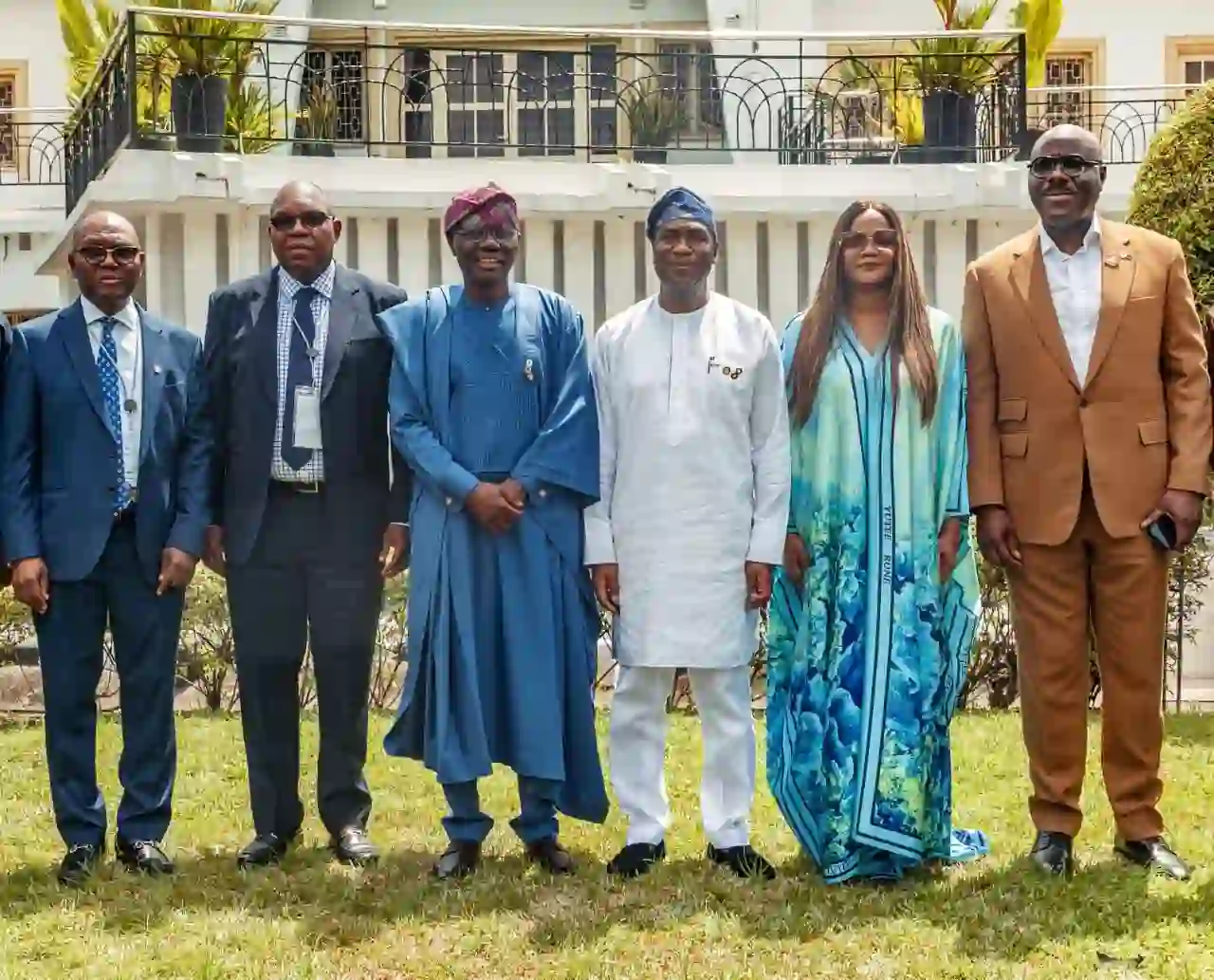
Lagos State Governor, Babajide Sanwo-Olu, has praised the Lagos State Internal Revenue Service (LIRS) for its strong performance, describing it as a key driver of the state’s economic growth, while also advocating increased autonomy for tax agencies nationwide.
The governor made the remarks on Wednesday at the State House in Marina while hosting members of the Joint Revenue Board (JRB) during its 159th meeting, which commenced on April 20, 2026.
The JRB—formerly known as the Joint Tax Board—comprises the Executive Chairman of the Nigeria Revenue Service, heads of the 36 state internal revenue services, the Federal Capital Territory chairman, and representatives from key institutions such as the Federal Ministry of Finance, National Identity Management Commission, Revenue Mobilisation, Allocation and Fiscal Commission, Nigeria Customs Service, Nigeria Immigration Service, and the Federal Road Safety Corps.
Sanwo-Olu highlighted that Lagos has recorded consistent growth in internally generated revenue (IGR), attributing the success to deliberate reforms implemented by LIRS. According to him, IGR now contributes over 60 percent of the state’s annual budget.
He revealed that Lagos generated N1.3 trillion in IGR in 2024, marking a 45 percent increase from the previous year. The growth, he said, was driven by investments in digital tax systems, expansion of the tax base, and improved engagement with taxpayers.
The governor stressed that similar progress in other states would require granting tax agencies operational independence, free from political interference. He urged governors across the country to allow revenue authorities complete tenure and the freedom to function effectively, warning that frequent leadership disruptions could weaken efficiency and erode public trust.
Sanwo-Olu also noted that taxes collected in Lagos are being translated into visible development projects, positioning the state as a model for linking revenue generation to infrastructure and social development. He cited projects such as the Blue and Red Rail Lines, road expansions, healthcare facilities, and new universities, adding that Lagos is building an integrated transport system combining rail, water, and road networks.
Earlier, LIRS Chairman, Ayodele Subair, said the Joint Revenue Board plays a critical role in strengthening Nigeria’s tax system through coordination and reform implementation. He noted that the introduction of new tax laws has made collaboration across all levels of government even more important.
Subair added that Lagos hosting the meeting again after five years reflects its position as Nigeria’s economic hub.
Representing the JRB Chairman, Zacch Adedeji, the Executive Secretary, Olusegun Adesokan, commended Lagos for its impressive revenue performance and governance reforms. He described LIRS as the leading subnational revenue authority in the country and noted that Lagos’ revenue has grown significantly over the years due to sustained reforms.
Adesokan said the state’s achievements demonstrate how effective revenue management can translate into tangible benefits for citizens, adding that Lagos has become a benchmark for tax administration in Nigeria.
Also speaking, the Executive Chairman of Akwa Ibom State Internal Revenue Service, Okon Okon, appreciated the Lagos State Government for hosting the meeting. He highlighted the positive experience of JRB members in the state, including a ride on the Blue Rail Line and a visit to Eko Atlantic City.
READ ALSO:
- Nigeria pushes for two permanent UN Security Council seats for Africa, with veto rights
- Okpebholo: Nigeria will soon reach economic ‘cruising level’ despite reforms
- Jonathan Warns Politicians Against Election Rigging, Says Politics Has Rules
- 2027 Ogun Guber: PDP’ll Win By Wide Margin — Sowunmi-Kolapo
- Drew Uyi Named Speaker at Africa Football Business Summit 2026 in Ghana
