



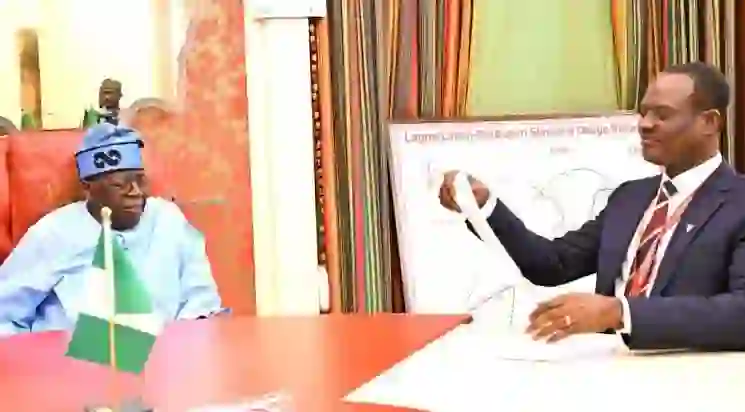
Finance Minister and Coordinating Minister of the Economy, Taiwo Oyedele, says the removal of fuel subsidy and reforms in the foreign exchange market have generated ₦15.8 trillion in resources for the federation between June 2023 and December 2025.
Oyedele disclosed this on Wednesday while unveiling the Federal Government’s “Nigerians’ Reform Scorecard,” a document designed to assess the costs, benefits and impact of the administration’s economic reforms.
He explained that the ₦15.8 trillion did not appear as a direct credit to the Federation Account tagged “subsidy savings.” Instead, the gains showed up through higher revenue collections linked to the reforms, particularly increased naira value of dollar-denominated customs duties and other government earnings following the liberalisation of the FX market.
According to the minister, the old exchange-rate regime had become a channel for arbitrage and corruption rather than a tool for economic stability.
“We were subsidising the exchange rates, and that subsidy was not going to the ordinary person or manufacturers; it was going to rent seekers,” Oyedele said.
Breakdown of the ₦15.8trn
Oyedele said the Federal Government’s share of the total stood at ₦5.4 trillion, while ₦10.4 trillion went to states and local governments through the federation allocation system.
He added that the Federal Government also raked in an extra ₦3.1 trillion in independent revenue during the period, largely from increased remittances by government-owned entities.
Borrowing figures
The minister disclosed that the government borrowed an additional ₦11.9 trillion between June 2023 and December 2025, but insisted the figure would have been far worse without the reforms.
“The additional borrowing that the Federal Government took for that period of time, June 2023 to December 2025, amounted to N11.9tn,” he said, adding that it “would have been far higher and economically destabilising without the fiscal space the reforms created.”
READ ALSO:
- GOV. DAUDA LAWAL JOINS FG’S DELEGATION FOR NIGERIA-ETHIOPIA LEADERSHIP EXCHANGE IN ADDIS ABABA
- Zulum Commissions 86km of Roads, Bridges in Gombe, Praises Yahaya’s Infrastructure Drive
- Tinubu Declares Three-Day National Mourning After NAF Plane Crash Kills 32 in Ondo
- Wike: I think about Tinubu’s re-election every time I sleep
- CIS Appoints Adesoji Adesugba to Advocacy and Policy Committee
