



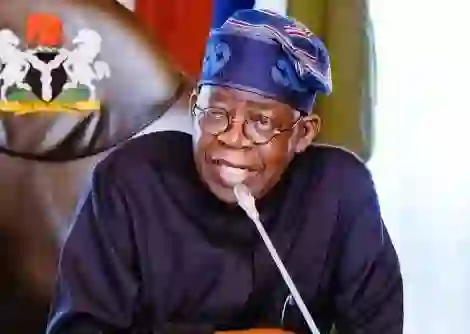
President Bola Tinubu on Sunday defended his administration’s economic reforms, pointing to stronger growth, rising foreign reserves and higher revenues for states. He welcomed a World Bank report that shows steady economic expansion in Nigeria.
He also said the federal government had forgone more than N3.3 trillion in fuel taxes and duties to soften the impact of rising petrol prices. He highlighted the expansion of compressed natural gas (CNG) transportation as part of efforts to cut the cost of living.
His comments came as Nigeria ranked among the top 10 recipients of the $112 billion in private capital mobilised by the World Bank Group in the year ended June 2026.
Separately, the presidency again dismissed the fuel production subsidy proposed by former Vice President Atiku Abubakar, the African Democratic Congress (ADC) candidate in the January 2027 presidential election, calling it unrealistic.
Reforms “beginning to yield results”
In a statement by his Special Adviser on Information and Strategy, Bayo Onanuga, Tinubu said the World Bank’s October 2026 Nigeria Development Update confirmed that the hard decisions taken since 2023 were paying off. The report is titled “Beyond the Federal Purse: How Higher Revenues Reshaped State Priorities.”
He said removing the petrol subsidy, unifying the foreign exchange market and tightening fiscal discipline had raised revenues, stabilised the economy and given all tiers of government room to invest.
“The dividends of reform are becoming visible. But more work remains to ensure they fully translate into better living standards for every household, starting with lower food prices and decent jobs for our young people,” he said.
“Our administration will stay the course of reform and redouble its focus on inclusive growth under the Renewed Hope Agenda.”
What the report says
- Nigeria’s economy grew by 4.2 per cent in the first half of 2026, up from 3.9 per cent in the same period of 2025, despite the fallout from the Middle East conflict. The World Bank projects average growth of at least 4.4 per cent between 2026 and 2028.
- Federation revenues rose by 69 per cent in real terms between 2023 and 2025, with states the biggest beneficiaries. State capital expenditure rose by 151 per cent in real terms over the period, mostly on roads and transport, agriculture, energy and housing.
- Twenty-nine of 33 states shifted spending towards economic infrastructure, while real per capita social spending rose in all but one state.
- Internally generated revenue (IGR) grew in real terms in 31 of 35 states, while 21 states cut their debt-to-GDP ratios between 2021 and 2025. Overall public debt is projected to fall from 40 per cent of GDP in 2025 to 38.1 per cent in 2026.
- Inflation fell from 27.6 per cent in January 2025 to 15.2 per cent in December 2025. Higher global fuel prices tied to the Middle East conflict have slowed disinflation, but the bank expects inflation to ease to about 12 per cent by 2028.
- The current account surplus rose to $12 billion, or 7 per cent of GDP, in the first half of 2026, from $8.6 billion a year earlier. Gross external reserves climbed from $45.5 billion at the end of 2025 to $53.8 billion at the end of August 2026.
- Poverty has stabilised for the first time since 2019, and the bank expects a gradual decline as growth outpaces population growth.
Cash transfers, CNG push
Tinubu said the government would expand targeted cash transfers, which he said had reached over 10 million households, while speeding up CNG rollout and improving agriculture, healthcare and education.
He urged state governments to spend their higher revenues prudently on projects that improve living standards, health and education. He also commended the Economic Management Team, led by the Minister of Finance and Coordinating Minister of the Economy, state governors and other stakeholders for their cooperation.
“I assure Nigerians that the best is yet to come under the Renewed Hope Agenda 2.0,” he said.
In a message on X, the president also pointed to the benefits of government-backed CNG transportation, reacting to a documentary on the programme. He cited commuters who said the fuel had cut their travel costs:
- Blessing’s trip from Masaka to Berger in the Federal Capital Territory now costs N500, down from N1,500.
- Ada and Abigail pay N1,600 from Enugu to Nsukka instead of N4,000.
- A taxi driver, Kabir, said N10,000 worth of CNG gave him three extra return trips compared with colleagues using petrol.
- Tinubu said he had received reports of commuters in Borno paying as little as N50 per trip on CNG and electric vehicles.
“When we removed the petrol subsidy, I knew the decision would bring difficulties for many households. With that decision came a responsibility to provide practical alternatives that would ease transportation costs,” he said.
He said the government was working with states through the Nigeria Governors’ Forum (NGF) and private investors to expand the National Affordable CNG Transportation Programme. Ekiti has received 15 buses, Lagos 20 and Akwa Ibom has 50 ready for service. Katsina introduced 30 CNG hybrid buses and 200 electric tricycles, Kano received 30 CNG buses and five electric buses, and Edo is next in the rollout.
Kaduna’s 100 CNG buses have carried over 3 million passengers, he added, while more than 400 certified centres have converted over 120,000 vehicles to CNG. The government is also expanding refuelling infrastructure.
Fuel tax waiver, price ceiling
“I also recognise the pressure rising petrol prices place on families and businesses. To cushion the impact, we have waived over N3.3 trillion in fuel taxes and duties,” Tinubu said.
He said NNPC Retail is forgoing its profit margin for 30 days, prioritising public transport operators, while the government works towards a N1,350-per-litre ceiling on wholesale petrol supply costs to curb price volatility.
Opponents must explain costs
Tinubu challenged opposition politicians seeking office to explain the cost and sustainability of their proposals.
“Every commitment must be sustainable and backed by a credible plan. Anyone seeking to lead Nigeria should be prepared to explain what their promises will cost, how they will deliver them, and whether they can sustain them,” he said.
“Promises are easy to make when the costs can be postponed, leaving Nigerians and future generations to pay the bill.”
Nigeria among top recipients of $112bn private capital
The World Bank Group mobilised a record $112 billion in private capital in the year ended June 2026, up from $69 billion the previous year. Group President Ajay Banga disclosed this in a Reuters interview ahead of the IMF and World Bank annual meetings.
Nigeria was listed with Brazil, India, Turkey, Romania, Argentina, South Africa, Bangladesh, Mexico and Chile among the top recipients. The private capital came on top of $123 billion from the bank’s own resources, bringing total financing to $235 billion. Africa drew $22 billion, Latin America and the Caribbean $36.3 billion, Europe and Central Asia $21.3 billion, and South Asia $19.2 billion.
Banga said the bank was in talks with 30 to 40 countries on possible crisis assistance as higher energy and fertiliser prices tied to the Middle East conflict add to economic pressure. The bank initially made $25 billion available when the conflict began in late February, with another $35 billion accessible by redirecting funds from approved projects.
“There is pressure, and so I think maybe over the coming months, more countries will come for some slice of that first $50 to $60 billion,” he said. He added that the bank could make as much as $100 billion available if conditions worsen, more than the $70 billion it disbursed during the COVID-19 pandemic.
Presidency rejects Atiku’s subsidy plan
The presidency also criticised Atiku’s proposed fuel production subsidy, saying Nigeria lacks the crude volumes to fund it and calling the plan “a dangerous mathematical fantasy wrapped in political deceit.”
In a statement titled “Atiku’s Demagoguery in the Face of Tinubu’s Logical Policies,” presidential spokesperson Sunday Dare described Atiku’s recent Abuja news conference as “a seminal example of shallow, election-laced demagoguery.”
Atiku had called the 30-day NNPC Retail petrol discount and the price modulation framework a “panic-driven gimmick,” and claimed Tinubu copied his economic plan without the production subsidy that made it work.
Dare cited Finance Minister Taiwo Oyedele as saying Nigeria produces about 1.8 million barrels of crude per day for over 200 million people. He said the country does not own all of it: joint ventures and production sharing contracts, with their costs, royalties and profit-oil splits, leave fewer than 700,000 barrels per day of unencumbered crude.
“To propose a blanket ‘targeted production subsidy’ on crude without the physical, unencumbered volume to back it up is pure economic illiteracy,” the statement said, adding that it invites opacity, round-tripping and fiscal losses of the kind that crippled the old subsidy regime.
The presidency said refineries such as Dangote need more feedstock than the state can freely supply without breaching international supply contracts, which is why Dangote and other domestic refiners also import crude. It rejected comparing crude allocation to farm produce like garri or cassava, saying this misrepresents commodity markets.
It also noted that the United States produces over 10 million barrels per day for 330 million people yet sells petroleum at market prices, while Qatar had to cut energy subsidies significantly despite large gas reserves and a population under 500,000.
On NNPC Retail’s discount, the presidency said Atiku’s attempt to portray it as a return to subsidy was “a deliberate mischaracterisation designed to mislead the public.” It said NNPC offered the discount to mark the 66th Independence anniversary and merely extended it by 30 days.
“The administration’s intervention is a market-smoothing price modulation framework, not a return to unbudgeted federal spending,” the statement said, adding that the interim N1,350-per-litre ex-gantry ceiling is “a structural shock absorber, not price control.” Under it, refiners and importers absorb short-term cost spikes above the ceiling and recover them when global crude prices ease or exchange rates adjust.
The presidency said ending the petrol subsidy and unifying the exchange rate stopped a multi-trillion-naira drain on public funds, which now flows to states and local governments through allocations. It also claimed fuel queues have been eliminated nationwide and that the gap between official and parallel exchange rates, which it said once let political elites profit from cheap official dollars, has been closed.
READ ALSO:
- LCCI urges 20% petrol price cut within six months
- US report faults Nigeria over official complicity in human trafficking, lists it among 14 countries using child soldiers
- Ex-DIG Frank Mba Opens Law Firm In Abuja Months After Leaving Police
- Enugu Govt Alleges Opposition Plot to Import Thugs Ahead of 2027 Polls
- NLC, TUC Split on Fix for Cost of Living as Labour Piles Pressure on Tinubu
