


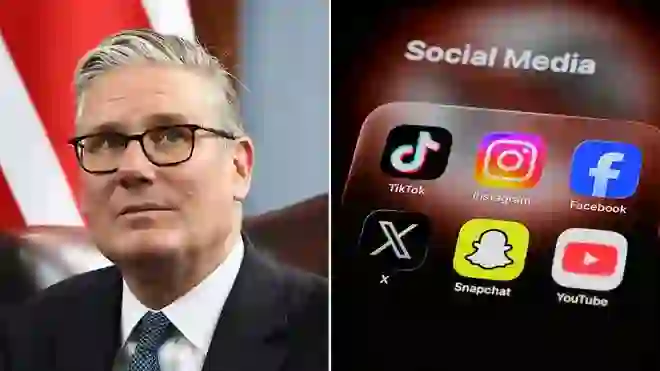
The United Kingdom is set to ban children under the age of 16 from accessing social media platforms, Prime Minister Keir Starmer has announced, citing concerns over poor mental wellbeing and exposure to harmful content among young users.
Starmer made the announcement on Monday, stating that the proposed restrictions would cover major platforms such as Snapchat, TikTok, YouTube, Instagram, Facebook and X.
He said the government hopes to pass the legislation before the end of the year, with the ban taking effect by spring next year.
The Prime Minister said social media companies were exposing children to harmful material through platforms designed to keep users engaged for long periods.
“We will ban access to social media for all children under the age of 16,” Starmer said.
He argued that many of the platforms were “making children unhappy,” exposing them to dangerous content and encouraging addictive behaviour.
However, messaging apps such as WhatsApp will not be affected by the proposed ban.
Starmer added that the government was considering additional measures to protect young people online, including overnight curfews for minors, mandatory breaks in infinite scrolling features, and tighter regulations for gaming and livestreaming platforms. More details on these proposals are expected in July.
“We’re taking action on gaming services and live streaming platforms that allow strangers to contact children,” Starmer said, drawing a comparison to the offline world. “Is there a situation in the offline world where you would just let your child pair up with a stranger? An adult that you don’t know about? No. So we’re taking action on that.”
The British government said its decision was influenced by Australia, which became the first country to introduce a nationwide social media ban for under-16s in December.
The announcement follows a government-led consultation in which British teenagers tested social media restrictions and app time limits. The consultation drew about 116,000 responses, making it the second-largest public consultation in British history. More than 83 per cent of participating parents said the risks of social media outweighed the benefits, while 91 per cent backed setting the minimum age for social media use at 16.
Reacting to the proposal, YouTube warned that a blanket ban could push children towards less regulated and potentially more dangerous online services. Despite this, the Labour government maintained that tech companies have a responsibility to protect children online.
The announcement comes a week after the UK government warned major tech firms, including Apple and Google, to introduce safeguards preventing children from sending, receiving or accessing nude images on their devices. Britain’s Interior Ministry said the companies had three months to implement the safety features or face legislation forcing them to comply.
The government said the measures are aimed at combating online abuse, coercion, sextortion and child exploitation, and at strengthening restrictions on children’s access to pornography while making it harder for predators to target minors. It cited Internet Watch Foundation data showing that 91 per cent of online child sexual abuse reports recorded in 2024 involved self-generated content created by children themselves.
Britain joins a growing list of countries tightening rules on children’s social media access. Canada has introduced legislation to bar under-16s from opening social media accounts and to require AI chatbot services to limit harmful content. Indonesia began enforcing a similar restriction for under-16s in March, while several European governments are weighing comparable measures amid growing concern over digital platforms’ impact on young people’s safety and mental health.
READ ALSO:
- Tinubu, Macron Renew Nigeria-France Ties at Élysée Dinner
- Atiku Slams APC PCC, Says Mambilla Tribunal Never Found Him Guilty
- ADC Demands Probe Into Deaths Of 37 Miners In Niger Custody
- Joseph Momodu Lists Requirements for Joining US Army, Warns Against Scams
- Charly Boy celebrates as daughter Adaeze gets engaged to female partner
