



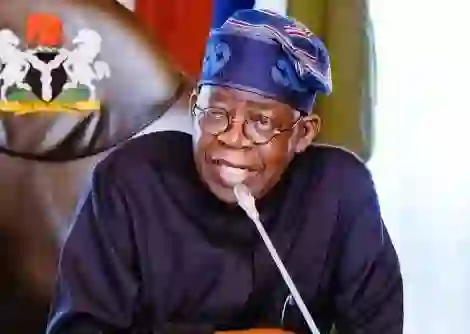
President Bola Tinubu could still win re-election in 2027 despite public frustration over insecurity, economic hardship and his government’s performance, according to London-based magazine The Economist.
The opposition has rejected that assessment. The African Democratic Congress (ADC) said the cost-of-living crisis, not religion or ethnicity, will decide how Nigerians vote. The Nigeria Democratic Congress (NDC) said Tinubu has no route to victory without rigging. The Presidency, for its part, defended his reforms.
What The Economist said
In an article titled “Nigerians Dislike Their President, But May Re-elect Him Anyway,” the magazine said Tinubu appears unbothered about his re-election chances. It noted that he returned from Paris on September 29 after a month-long stay in Europe, having extended his “working holiday” by several days.
“On the face of it, Mr. Tinubu’s cool is surprising,” it said, citing near-daily kidnappings and killings by bandits and insurgents.
The magazine said his economic reforms, though praised by investors, have yet to improve life for most of Nigeria’s 240 million people. It added that some of his challengers are more popular in parts of the north hit by insecurity and deprivation.
Using Borno State as an example, it described an insurgency lasting two decades, with jihadist factions fighting the government and each other while profiting from kidnapping, extortion and the looting of farmers. Young people are leaving, it said, and traders have no customers. A 27-year-old Maiduguri resident said he had to travel to Chad to sell grain because people at home could no longer afford it.
The Economist said Tinubu’s campaign rests on reforms such as fuel subsidy removal, which it credited with bringing “a degree of stability.” It listed falling inflation, higher government revenue and improving investment as gains. But it said annual inflation was still about 15 per cent in August, with food inflation near 20 per cent, and that a poor harvest, aid cuts and higher energy costs have worsened conditions in Borno.
Tinubu won 54 per cent of the vote in Borno in 2023, but the magazine, citing SBM Intelligence polling, said he is now less popular there than Peter Obi and Atiku Abubakar. Some Maiduguri residents, it said, are ready to “fight back” at the ballot box in January.
Even so, it argued that unpopularity alone may not remove him. Its reasons:
- Incumbency: Ruling-party machinery and “plentiful cash to dole out goodies” have favoured incumbents in recent elections.
- Divided opposition: Obi and Atiku have not formed a joint ticket, so the anti-APC vote may be split. Joachim MacEbong of Control Risks said the vote is “not coalesced into a single vote.” Some Maiduguri voters reportedly did not know who else was on the ballot.
- Religion: Tinubu and running mate Kashim Shettima are both Muslims, as are most northerners. SBM’s Cheta Nwanze said the Muslim-Muslim ticket “resonates with quite a number of people.” Obi, a Catholic, could be ruled out by some voters despite his Muslim running mate.
- Political cynicism: MacEbong said that where there has been “no real security, no real health care, no real schools,” expectations fall over time. One Maiduguri woman said she would vote Tinubu as a “thank you” for medicine from a government hospital.
- Low turnout: Turnout in Borno was below 20 per cent in 2023, against 27 per cent nationally. Insecurity could keep voters away again, and many may stay disappointed but not vote against the incumbent.
- Regional loyalty: Many in the south, especially Lagos, may vote for their “son” despite their frustrations.
“No wonder Mr. Tinubu feels safe enough to take extended holidays in Paris,” the magazine concluded. It said economic growth is expected to reach 4.1 per cent this year.
Tinubu, Atiku (ADC) and Obi (NDC) are the three leading candidates in the January 2027 election.
ADC: Cost of living will decide the poll
ADC National Publicity Secretary Bolaji Abdullahi said the Economist’s story rests on faulty assumptions.
“We agree with the story that President Tinubu is universally disliked, but we disagree that he could win the election,” he said. He called the focus on religion and ethnicity overstated, saying Nigerians across all divides are united by the cost-of-living crisis.
He added that if Tinubu is indeed not worried about losing, “then he doesn’t understand the mood of the country.”
“The only way the APC could think of winning the election is to rig it. We know that and we have our strategy to stop them,” he said.
NDC: No path without manipulation
NDC National Publicity Secretary Osa Director questioned how the magazine could acknowledge Tinubu’s unpopularity and still predict he would win.
“The article decided to leave many things unsaid. Its conclusion was not based on facts and statistics that itself identifies as Tinubu’s Achilles heels,” he said.
“We don’t see any pathway to victory for Tinubu save outright rigging and manipulation,” the party said, adding that “Nigerians are ready to resist this time around.” The statement offered no independently verified evidence of planned rigging.
Presidency defends reforms
Presidential spokesman Bayo Onanuga defended the administration’s reforms in a post on X, pointing to Tinubu’s October 1 Independence Day address. Tinubu argued in it that past governments postponed hard decisions and let economic distortions deepen.
Onanuga said previous administrations “focused on symptoms while allowing the disease to take hold deep within the fabric of our society.” He said critics ignore the President’s point that the reforms did not create Nigeria’s economic weaknesses but confronted them.
Quoting Tinubu, he added that as “certain influential but regressive voices” push for a return to “addictive subsidies,” Nigerians “must resist their siren song.”
In the address, Tinubu said the economy had grown by more than four per cent this year, with oil and non-oil sectors both contributing. He likened the pre-reform economy to a cancer patient choosing between painful treatment and painkillers, saying past leaders “chose morphine while praying for a miracle that never came.”
Onanuga also accused some politicians who criticised the speech of preparing their reactions before it aired on Thursday morning, suggesting they had not properly listened to it. He highlighted what he called “immutable truths” in the address, including the defence of the reforms and the warning against returning to the subsidy regime.
READ ALSO:
- Economist: Why Tinubu Could Win 2027 Election Despite Public Anger
- Fare Relief Uneven as Kwara, Ekiti, Plateau, Enugu Deploy Buses, Lagos Yet to Announce Cut
- Iran executes man over shooting at police during anti-government protests
- 19 Abducted Corps Members: Kidnappers Demand ₦50m Each, ₦950m in Total
- ‘Tinubu’s Policies Killed My Mother’ – Amaechi Blames Economic Hardship for Her Death
