



Several states have begun deploying CNG and government-subsidised buses to cut transport costs, following the federal government’s directive that Nigerians should start seeing reduced fares from October 1. However, the response has been uneven, with commercial operators in many states refusing to lower their charges.
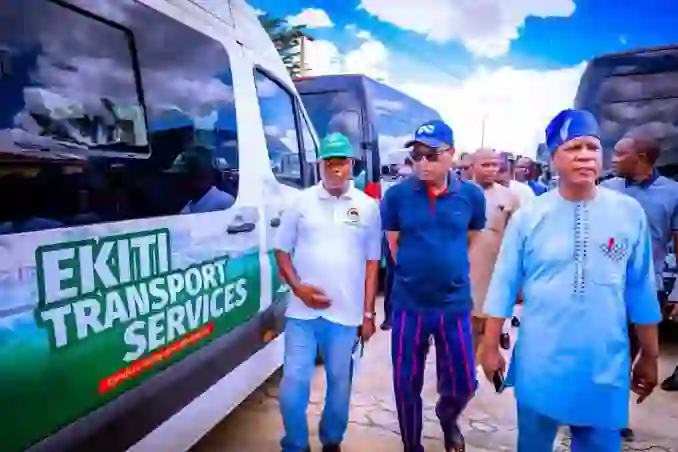
Kwara, Ekiti, Plateau and Enugu have started or expanded subsidised bus services. Lagos has received additional CNG buses but has yet to announce when a new fare-reduction scheme under the National Affordable CNG Transit Programme will begin.
The directive followed President Bola Tinubu’s August 27 meeting with governors, after which he asked the 36 states to speed up implementation of the programme. He said Nigerians should see “measurable reductions in transportation costs” from October 1, and urged states to work with transport unions and operators, support vehicle conversion and fleet deployment, and provide the needed infrastructure.
The Presidential Initiative on CNG and Electric Vehicles said more than 120,000 vehicles have been converted and over 90 refuelling stations set up nationwide. It added that October 1 marks the start of federal monitoring of the rollout, not a deadline for every state to cut fares at once, and that fares have already dropped on some routes.
A THISDAY review of several states showed wide differences in how they are responding.
States with government-backed schemes
Kwara: Transport Commissioner Aliyu Sabi said the federal government supplied 20 CNG buses, now running from motor parks on routes including Ilorin-Abuja, Ilorin-Lagos and Ilorin-Enugu. He said 10 more buses are expected to serve workers, students and other residents.
Ekiti: Governor Biodun Oyebanji flagged off 15 federal-donated CNG buses in Ado Ekiti, as the state moves to cut fares by 50 per cent. He said the fleet would be expanded. Ekiti Transportation Agency DG Tajudeen Akingbolu said routes have been mapped from Ado Ekiti to Lagos, Ibadan, Onitsha and Abuja.
Enugu: Fares on routes covered by government-owned CNG buses have fallen by over 50 per cent, but commercial operators have not followed.
Plateau: The state is relying on its Tin City Metro Bus scheme while it works towards CNG adoption. Transport Commissioner Davou Gyang Jatau said passengers pay N200 for the roughly 23km trip between Anguldi and Farin Gada, and N400 for the 46km return journey. The state has agreed with the National Institute for Transport Technology, Zaria, to set up a conversion centre in Jos, but Jatau cited inadequate refuelling infrastructure as a major obstacle. Plateau is exploring a “mother-and-daughter” station model for gas distribution.
Lagos: The state received 20 more high-capacity CNG buses from the federal government, raising the number in its regulated system to about 170 from roughly 150, according to LAMATA Managing Director Abimbola Akinajo. The buses are meant to boost capacity on routes with gaps, including Ikorodu-Tafawa Balewa Square. The state has not announced a new fare structure, start date or routes.
Operators push back
In several states, transporters say fuel and operating costs make cuts impossible.
In Enugu, RTEAN PRO Ralph Edeh said it is “wishful thinking” to expect operators to slash fares while fuel and spare-parts costs remain high.
In Rivers, NURTW chairman Boma Tom-George said fares will only come down when petrol prices do. “We sell as we buy,” he said.
In Ogun, transporter Jamiu Sofela said the Abeokuta (Kuto) to Lagos fare remains N6,000, and converting a vehicle to CNG costs about N1.3 million. He added that some passengers fear CNG vehicles.
In Benue, state-owned Benue Links has raised fares marginally, citing higher fuel, tyre and spare-parts costs, according to General Manager Alexander Fanafa.
In Sokoto, Zamfara and Kebbi, union officials rejected immediate cuts, with petrol selling between N1,440 and N1,490 per litre. Sokoto NURTW chairman Dan Takatuku said fuel takes up over 70 per cent of some drivers’ daily earnings. In Zamfara, union member Abdullahi Suleiman said the government’s CNG buses cannot serve millions of commuters. In Kebbi, Balarabe Sani said some drivers have parked their vehicles over high costs.
Delivery gaps
Niger reportedly received 100 CNG buses, but not all have been mobilised. The Ministry of Information said some run on the Suleja-Gwagwalada and Suleja-Abuja routes, while the rest are held up by road construction in Minna.
In Anambra, RTEAN chairman Joseph Nwabueze said the union has not been told of any incentive for drivers, and that 100 CNG vehicles allocated to the state under an earlier arrangement have not arrived.
In Taraba, NURTW chairman Ahmodu Musa said the state has yet to take any step to cut fares, citing the absence of CNG facilities.
In Kano, NURTW Secretary Ahmad Khalid said members are yet to see the promised buses. He said the union was assured Kano would be prioritised, and that the state needs over 500 buses.
The review showed that while the federal government reports progress on conversion and infrastructure, relief for commuters depends on bus availability, refuelling stations, conversion centres, road conditions, fuel prices and operators’ willingness to cooperate.
Atiku urges FG to copy Germany
Separately, former Vice President and ADC presidential candidate Atiku Abubakar urged the Tinubu administration to follow Germany, which recently cut fuel taxes.
In a statement by Phrank Shaibu, Director of Strategic Communication of the ADC Presidential Campaign Council, Atiku said the government had failed to protect Nigerians from economic hardship. He faulted Tinubu’s Independence Day address, saying it spoke of prosperity while defending policies that made fuel and essentials costlier, and dismissed subsidies as “addictive.” He also disputed the President’s claim that salaries and pensions are paid on time and in full, citing delays for federal workers and pensioner protests.
Atiku said Germany has cut gasoline and diesel taxes by €0.17 per litre from October to December at an estimated cost of €2.5 billion, and that pump prices have started to fall.
He said the ADC would restore targeted, budgeted support for fuel refined in Nigeria, with strict auditing to ensure pump prices fall. The support, he said, would not apply to imported fuel and would be funded by cutting waste.
“To every Nigerian forced to choose between feeding a family, paying for transport or meeting another basic need, I am deeply sorry,” he said.
READ ALSO:
- Ojudu Recounts How He and Tinubu Survived Third Mainland Bridge Crash
- CAF Confirms Lagos As Host City For 2026 Awards
- Tinubu And His Allies Are Ingrates To El-Rufai, Says Buba Galadima
- Zamfara State Governor, Dauda Lawal, Flags Off Road in Tsafe, Says Infrastructure Will Enhance Connectivity, improve local economy
- Economist: Why Tinubu Could Win 2027 Election Despite Public Anger
