



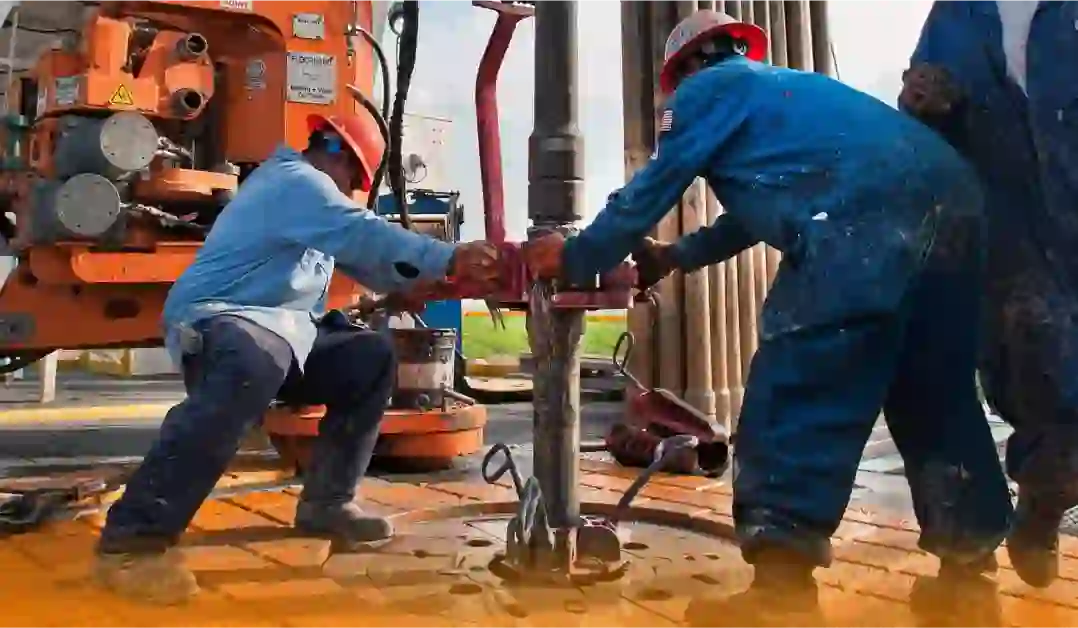
The Federal Government has announced a significant increase in domestic petrol production, revealing that local refining capacity has grown from virtually zero in 2023 to approximately 48 million litres per day.
The disclosure was made by Mrs. Olu Verheijen, Special Adviser to President Bola Tinubu on Energy, during the Nigerian-British Chamber of Commerce Energy Day 2026 held in Lagos. Details of her presentation were released to journalists on Tuesday.
Speaking on the theme, “Energy in Nigeria: From Potential to Reality,” Verheijen said Nigeria had reached a milestone where most of the petrol consumed in the country is now refined locally.
According to her, the development has reduced the nation’s dependence on imported fuel and eased pressure on foreign exchange demand.
“For decades, importing petrol created a constant demand for scarce foreign currency and placed a burden on the naira. As local refining has increased, that pressure has reduced significantly,” she stated.
She noted that petrol import costs dropped sharply from about ₦2.3 trillion in the first quarter of 2025 to less than ₦90 billion within a year, helping to strengthen the local currency.
Verheijen also highlighted improvements in the upstream oil sector, stating that crude oil and condensate production averaged 1.64 million barrels per day in 2025. She said this represented an increase of roughly 400,000 barrels per day compared to 2023 and marked the highest onshore production level recorded in two decades.
The presidential adviser further disclosed that more than $4 billion worth of international oil company divestments had been successfully concluded. She explained that the transactions had expanded indigenous participation in onshore operations, while major international firms shifted their focus to deepwater exploration and integrated gas projects.
She added that pipeline availability has improved considerably, while incidents of illegal refining have declined.
“Every additional barrel produced contributes to government revenue, job creation, and overall economic stability,” she said.
Reflecting on the state of the sector when the current administration took office in 2023, Verheijen said Nigeria’s energy industry faced major challenges, including unsustainable fuel subsidy costs, foreign exchange distortions, low production levels, and mounting debts in the power sector.
Despite the country’s vast energy resources, she noted that the system struggled to translate those assets into meaningful economic value.
To address the situation, she said the Tinubu administration implemented key reforms, including the removal of fuel subsidies and exchange-rate adjustments aimed at restoring fiscal stability.
Describing the measures as difficult but necessary, Verheijen said they have already yielded positive results, with total federation revenue rising from about ₦12 trillion in 2023 to approximately ₦21 trillion in 2024.
She also maintained that despite the deregulation of the downstream sector, the government has largely avoided the widespread fuel shortages and long queues that previously plagued the country.
READ ALSO:
- Unidentified Man Found Dead In Lekki Gutter
- Video: Tinubu Recounts How ₦50,000 Request at 3:30 a.m. Almost Made Him Quit 2023 Race
- FG Says $3.5bn Gas Projects Reach FID, Gas Output Hits 7.5bcf/d
- Peter Obi Calls For Unifying Leader Ahead Of 2027 Election
- Zamfara Speaker: Eight Lawmakers Were Already Suspended Before Dumping APC
