



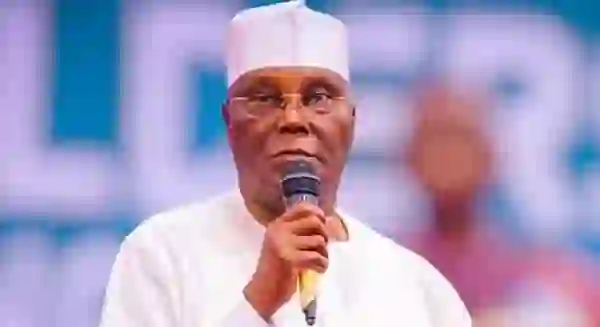
The 2027 presidential race got off to a fiery start this week as former Vice President Atiku Abubakar reignited the contentious fuel subsidy debate, a policy that has come to define President Bola Tinubu’s administration since its removal in May 2023.
Atiku, the African Democratic Congress (ADC) presidential candidate, had earlier signalled his intention to bring back a form of petrol subsidy if elected in 2027. The Presidency swiftly hit back, branding the proposal “retrogressive” and accusing him of making a desperate campaign promise.
However, Atiku moved on Thursday to clarify his position, insisting he does not intend to bring back the old subsidy regime but rather a fresh approach to lowering petrol prices.
“My proposal is not to resurrect the old subsidy regime. We will move subsidy from importation to production, from middlemen to Nigerian refineries, and from unverifiable claims to verifiable barrels. The principle is simple: the subsidy will follow the barrel,” Atiku said.
He explained that his administration would introduce a capped, transparently budgeted and independently audited production subsidy, tying benefits directly to domestic refining rather than fuel imports. According to him, every subsidised barrel would be tracked from allocation through refining to final delivery to Nigerian consumers, closing loopholes for “phantom cargoes” and “fictitious imports.”
“If you receive subsidised Nigerian crude, you must refine it in Nigeria, supply the agreed products to Nigerians and pass the benefit to Nigerians. Otherwise, you do not qualify,” he stated.
The proposal is contained in a policy document titled the Atiku Economic Recovery Plan (AERP) 2027, released by his Senior Special Assistant on Public Communication, Phrank Shaibu.
Presidency Fires Back
Reacting on Thursday, Special Adviser to President Tinubu on Information and Strategy, Bayo Onanuga, dismissed the proposal as a return to a system that was “wasteful, corruption-ridden and financially burdensome.” He accused Atiku of reversing his earlier position, noting that the former vice president had championed subsidy removal ahead of the 2023 election.
“Desperate for power, he needed to make a promise that he knew, if he were candid with our people, does not make fiscal sense, is retrogressive, and is against the genuine interest of the people,” Onanuga said.
He also disputed Atiku’s claim that government had failed to account for roughly N30 trillion in subsidy-related savings, insisting the figure did not reflect actual subsidy proceeds. Onanuga pointed to the rise of local refining capacity, particularly the Dangote Refinery, as evidence that Nigeria’s fuel landscape had shifted significantly since 2023, warning that restoring the old subsidy could hurt domestic refiners.
He challenged Atiku to explain how the new subsidy would be funded, noting that if petrol were sold below its economic cost of roughly N1,200 to N1,300, someone — ultimately the public purse — would have to absorb the difference.
Reactions Trail the Debate
The Yoruba Ronu Leadership Forum commended Atiku’s position, with its president, Akin Malaolu, arguing that subsidy removal had worsened transportation and food costs, hurting households and businesses.
But the Northern Christian Association (NCA), through its chairman, Reverend Joseph John Hayab, urged Nigerians to scrutinise campaign promises rather than accept them at face value, pointing to Atiku’s inconsistent stance on the issue since 2023.
FCT Minister Nyesom Wike also weighed in, accusing Atiku of flip-flopping on subsidy policy and dismissing both Atiku and Peter Obi as weak contenders against Tinubu in 2027. “I have told people this will be the easiest election… you have no opposition,” Wike said, insisting the opposition remains more fragmented than it was in 2023.
Dispute Over Savings Figures
Separately, the Allied Peoples’ Movement (APM) rejected the Federal Government’s claim that only N15.8 trillion was realised from subsidy removal, insisting the actual figure exceeds N27 trillion. The party, through its National Publicity Secretary, Abubakar Yusuf, described the government’s account as a “litany of lies,” citing an apparent contradiction with a November 2024 statement by former Finance Minister Wale Edun, who had put savings at about $20 billion (N26.9 trillion).
Meanwhile, the Nigeria Employers’ Consultative Association (NECA) called on state and local governments to account publicly for their share of the N10.4 trillion in subsidy savings, with Director-General Adewale-Smatt Oyerinde likening the demand to standard corporate financial reporting practices.
The Minister of Finance, Taiwo Oyedele, had disclosed that government received N15.8 trillion in subsidy savings but spent N30.64 trillion on incremental expenditure between June 2023 and December 2025.
READ ALSO:
- Aiyedatiwa pledges full support for NAF crash recovery in Ondo
- Climate change puts Nigeria’s food production under growing pressure
- World Bank warns high fuel prices will slow Nigeria’s poverty reduction
- EFCC asks court to disregard Diezani’s UK acquittal in asset forfeiture case
- Ogun Pays ₦3.5bn Severance to Former Council Officials, Beneficiaries Praise Abiodun
