


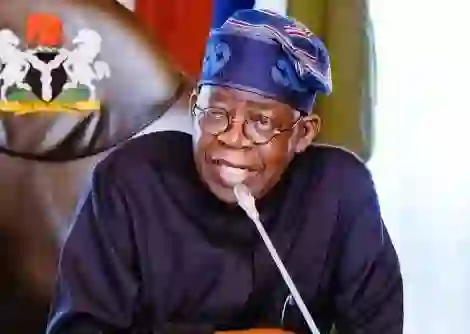
President Bola Tinubu has again called for a sweeping overhaul of the United Nations, insisting that any reform must begin with restructuring the Security Council to give Africa permanent representation.
He argued that Africa can no longer be confined to the sidelines of the Council’s decision-making, stressing that the global power arrangement drawn up in 1945 no longer fits the realities of 2026.
Tinubu’s address was delivered by Vice President Kashim Shettima on his behalf during the general debate at the 81st Session of the UN General Assembly, currently underway in New York. He specifically called for Africa to be granted at least two permanent Security Council seats — complete with full voting rights and veto power — plus five non-permanent seats.
“The reform of this institution must begin with the reconstitution of the Security Council, for the world of 2026 cannot remain captive to the distribution of power in 1945. Africa cannot continue to fill the Council’s agenda while remaining absent from its permanent membership,” he said.
Citing the Ezulwini Consensus and the Sirte Declaration, Tinubu said Nigeria’s demand includes veto power “for as long as it exists,” adding that “the authority to speak for humanity carries an obligation to represent it.”
Beyond UN reform, the President pressed world leaders to end ongoing global conflicts and pushed back against the growing wave of nationalism worldwide. He cautioned that the international order is at a tipping point, urging nations to abandon unilateral aggression and recommit to the founding ideals of the UN Charter through renewed multilateral cooperation.
Tinubu warned global leaders against treating conflicts — whether far away or close to home — as isolated from their own national interests, noting that the UN has a responsibility to rebuild trust in institutions designed to settle disputes and advance shared global goals.
“The persistence of conflict across the world recalls the purpose for which the United Nations was founded: to spare succeeding generations the devastation of war. We must therefore return to the founding principles of dialogue, mutual respect and collective responsibility,” he said. “Nigeria stands by the Charter and its promise of a world in which diplomacy prevails over coercion, cooperation over isolation and international law over the arbitrary exercise of power.”
He pointed to Nigeria’s peacekeeping record across Africa — including missions in Liberia, Sierra Leone, Darfur, Mali, and The Gambia — as proof of the country’s readiness to take on greater responsibility in restoring peace on the continent. “Through ECOWAS, the African Union and our Gulf of Guinea partnerships, we continue to advance mediation, democratic governance, counter-terrorism and maritime security,” he said, linking Nigeria’s foreign policy approach to the discipline behind its domestic economic reforms.
Tinubu said Nigeria is delivering on its sustainable development commitments through prudent macroeconomic management, stronger institutions, private-sector-led growth, and targeted public investment.
He tied Nigeria’s national progress directly to Africa’s broader development and the country’s wider duty to promote peace and prosperity globally, noting that domestic gains count for little if external threats are ignored — stressing that geography offers no protection from the fallout of a fractured world. He added that public trust in government is built only through decisions that tangibly improve people’s lives, and warned that no nation is truly shielded from global instability, urging leaders to confront security and climate challenges directly rather than assume borders provide safety.
READ ALSO:
- Sowore Joins Free Palestine Protesters In New York, Condemns Israel’s Gaza War
- Nigeria to UN: No Nation Is Safe From Global Threats Behind Its Borders
- Amnesty International demands scrapping of ICE over rights abuses
- Tinubu Tells UN: 1945 World Order Can’t Govern 2026
- 2027: Elections Must Be Decided at the Polls, Not in Court — Onaiyekan, Osigwe
