


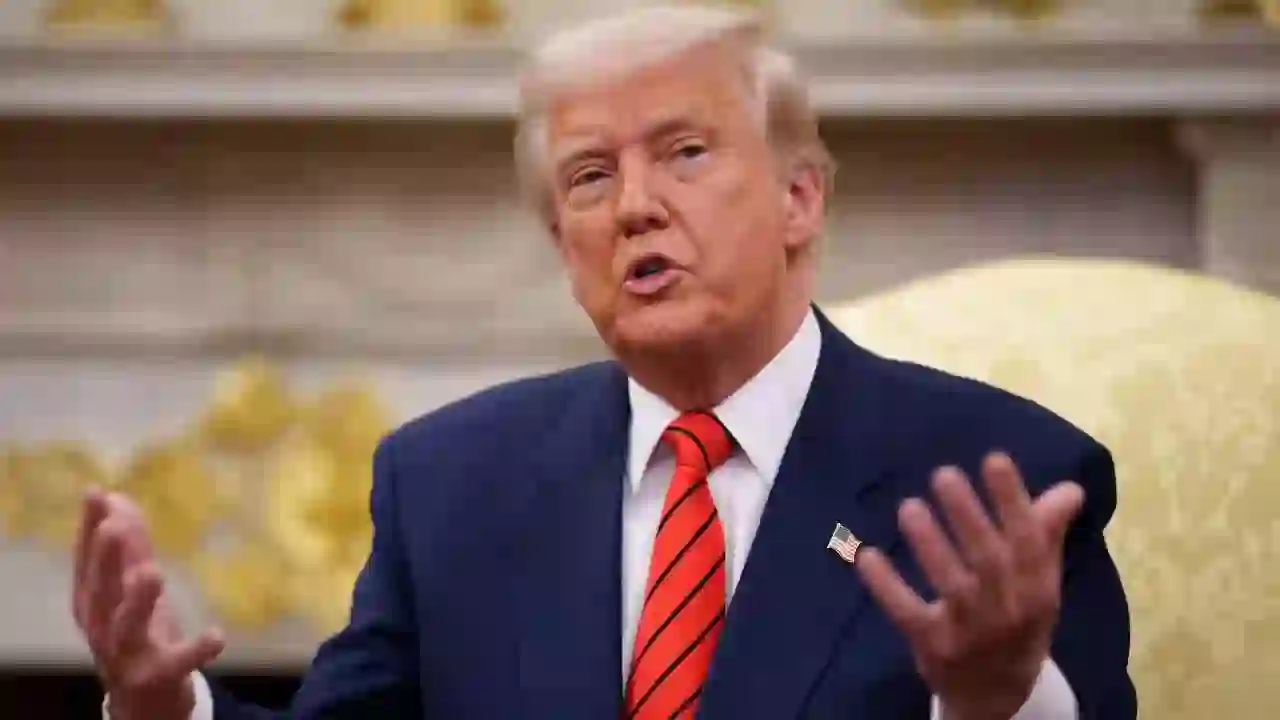
US President Donald Trump has written to his Nigerian counterpart, Bola Tinubu, pledging continued American support in the fight against terrorism, particularly the violence affecting Christian communities in Nigeria.
In a letter dated July 6, Trump commended Tinubu’s leadership on Nigeria’s security challenges, describing it as an honour to stand with the administration against terrorists and help strengthen the country.
Trump noted that the US-Nigeria relationship has grown stronger, with both countries collaborating closely on security issues. He pointed to the 2026 Defence Cooperation Roadmap as a framework guiding joint efforts, and confirmed the deployment of US Special Operations Forces to train Nigerian troops and share intelligence.
The letter follows a November agreement between both leaders to set up a Joint Working Group led by the national security advisers of both countries, which has since coordinated training, intelligence-sharing and joint military operations. A key outcome of that partnership was the May 16 strike on ISIS positions in the Lake Chad area that killed top commander Abubakar Al-Minuki and several of his lieutenants.
Last week, US Assistant Secretary of State for Africa, Frank Garcia, visited Abuja and met with government officials to reinforce bilateral cooperation.
US warns jihadist threat persists despite gains
Separately, the US State Department said jihadist groups remain a global security threat despite years of counter-terrorism campaigns, and pledged to sustain efforts through diplomacy, financial pressure and military cooperation with partners including Nigeria.
Ambassador Gregory D. LoGerfo, the State Department’s Counter-terrorism Coordinator, made the disclosure following a ministerial meeting convened by Secretary of State Marco Rubio in Washington, attended by delegations from 66 countries. The meeting addressed growing concerns around far-left political terrorism alongside ongoing threats from narco-terrorists and Islamic jihadist groups.
LoGerfo said counter-terrorism efforts over the past 25 years have centred on combating Islamic terrorism, with continued military action against jihadist groups in Nigeria, Somalia and Syria carried out under Trump’s directive. He added that partner nations agreed to align legal frameworks, deepen intelligence sharing and tighten protections around critical infrastructure to prevent terrorist networks from relocating across borders.
Rubio also announced new visa restrictions barring members of far-left terrorist groups and their supporters from entering the US.
OPHK strike kills 20 ISWAP fighters, chief propagandist in Lake Chad
Meanwhile, a fresh battle damage assessment from Operation HADIN KAI confirmed that at least 20 ISWAP fighters were killed in a precision drone strike at Kila Bariya in the Southern Lake Chad area on Tuesday.
Among those eliminated was Abu Salim al-Barnawi, a former Boko Haram/ISWAP raid commander who had been reassigned to lead the group’s media and propaganda wing. The July 21 strike also destroyed a terrorist logistics hub, more than 30 motorcycles, and a major food storage facility believed to have been stocked with supplies seized from local farming communities.
Military sources said the operation dealt a significant blow to ISWAP’s mobility and ability to sustain prolonged attacks in the Marte, Ngala and Dikwa areas, where the group has continued efforts to regroup.
Captain Mohammed Goni of Operation HADIN KAI said Abu Salim was killed alongside other members of ISWAP’s media team, Abu Umar Khattab and Abu Khalid Usman, during a failed infiltration attempt in Kukawa Local Government Area on July 12. He said the terrorist group’s decision to publish an obituary for Abu Salim confirmed the mounting pressure from sustained military operations, adding that the loss of experienced operatives continues to weaken the group’s propaganda machinery and command structure.
READ ALSO:
