



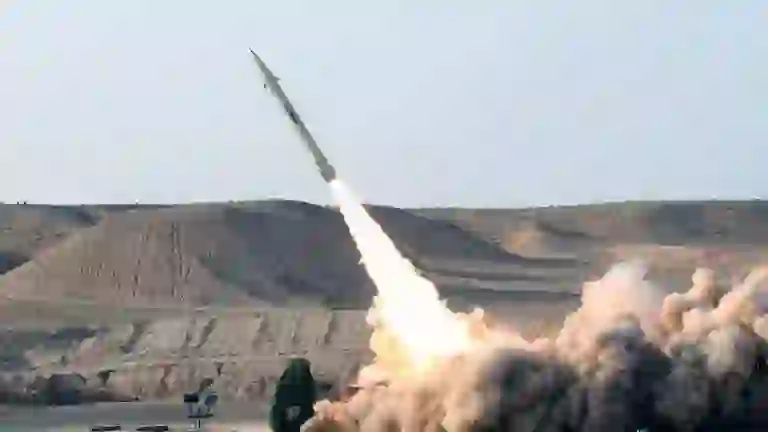
The United Arab Emirates (UAE) has announced the suspension of trade, commercial exchanges and financial transactions with Iran following accusations that Tehran launched ballistic missiles towards the country.
The decision comes amid renewed tensions between the two neighbouring countries after the UAE said its air defence systems detected two ballistic missiles launched from Iran on Tuesday.
According to Afra Al Hameli, communications director at the UAE Foreign Ministry, Abu Dhabi took the measure because of what it described as continued attacks on UAE-linked tankers in recent weeks.
“In light of regional escalations, all trade, commercial exchanges, and financial transactions with Iran have been halted until further notice,” Al Hameli said.
The UAE has historically maintained significant commercial and cultural ties with Iran, with the Emirates hosting a large Iranian community and serving as an important trading hub for the country despite international sanctions against Tehran.
Relations between the two countries have, however, deteriorated since the outbreak of the wider Middle East conflict.
Earlier in the year, the UAE recalled its ambassadors and introduced measures targeting institutions linked to Iran. In March, authorities ordered the closure of an Iranian state-affiliated hospital in Dubai, alongside Iranian-linked schools and a community centre.
A UAE official had said at the time that institutions directly connected to the Iranian government and the Islamic Revolutionary Guard Corps (IRGC) would be closed as part of targeted measures over alleged violations of UAE laws.
The latest escalation followed the UAE’s claim that two ballistic missiles were fired from Iran towards its territory on Tuesday. The UAE said one missile fell outside its territorial waters, while the other landed within the country’s territorial waters.
A subsequent statement from the UAE authorities said the missiles were allegedly aimed at maritime navigation before falling into the sea.
Iran, however, has denied the accusation.
Iranian Foreign Ministry spokesman Esmaeil Baqaei categorically rejected the UAE’s claim that Tehran had launched a missile towards the country, describing the allegation as damaging to regional trust and diplomatic efforts aimed at improving security.
The reported missile incident also triggered an alert warning residents of a potential missile threat. It was the first such warning since earlier alerts in June and July, although those incidents did not result in missiles entering UAE territory.
The UAE’s latest action also comes amid reports that tankers operated by the country’s state-owned oil company, ADNOC, have been targeted in several incidents in recent weeks.
When the wider Middle East conflict began on February 28, the UAE was among the countries heavily affected by Iranian attacks, with thousands of missiles and drones reportedly launched towards the country.
Tensions later eased following a memorandum of understanding between Iran and the United States in June, but the arrangement has since broken down, raising concerns about a renewed escalation across the Gulf region.
READ ALSO:
- N460.75M FRAUD TRIAL: COURT ORDERS PRODUCTION OF ABSENT REAL ESTATE MOGUL, ADJOURNS CASE
- GOV. DAUDA LAWAL JOINS FG’S DELEGATION FOR NIGERIA-ETHIOPIA LEADERSHIP EXCHANGE IN ADDIS ABABA
- Zulum Commissions 86km of Roads, Bridges in Gombe, Praises Yahaya’s Infrastructure Drive
- Tinubu Declares Three-Day National Mourning After NAF Plane Crash Kills 32 in Ondo
- Wike: I think about Tinubu’s re-election every time I sleep
