


Politics often reveals an uncomfortable truth about human nature: we remember words faster than we remember works.
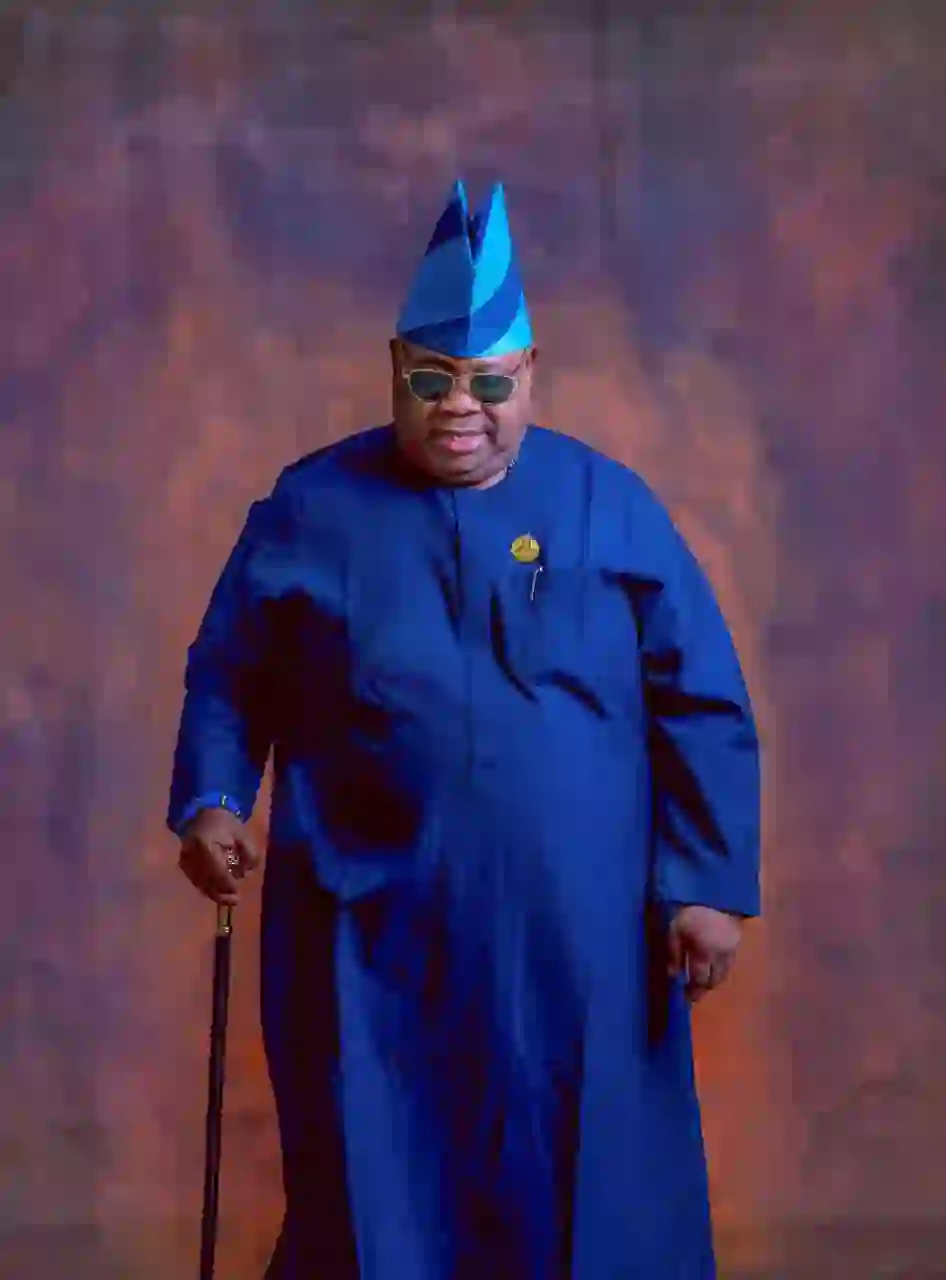
In the last few days, Governor Ademola Adeleke found himself at the centre of a storm after a viral video captured him describing Iwo as a village and suggesting that his administration’s road dualisation projects had ushered in a new wave of civilisation.
For some indigenes of Iwo, the statement landed like a wound. To others, it was merely an off-the-cuff remark that should not eclipse years of public service.
But perhaps the bigger question is this: Should one statement erase an entire record of governance?
I am from Iwo.
And I say this with a clear conscience: criticism is healthy in a democracy, but gratitude should not become a casualty of emotion.
Can a single sentence write off a man many have described as accessible, generous and deeply connected to the people he governs?
I work in the aviation industry. On several occasions when Governor Adeleke has passed through the airport, I have watched from a professional distance. Beyond the cameras and the political colours, I have seen humility. I have witnessed comradeship. I have observed confidence without arrogance, generosity without spectacle, and a sincere affection for the people of Osun State.
These are personal observations, not political endorsements.
Truthfully, I was never among Governor Adeleke’s earliest admirers. Like many Nigerians, I watched cautiously from the sidelines.
Then, a few weeks ago during the Sallah celebration, I travelled home to Iwo.
Something unexpected happened.
I missed my way.
The Iwo I thought I knew had changed.
Roads had expanded. New projects had altered familiar landmarks. Areas once associated with congestion and neglect now carried signs of deliberate planning. It felt as though the town had quietly begun rewriting its own story.
The same Iwo that has dominated conversations because of a controversial statement has also witnessed the construction of its first-ever dual carriageway, stretching through strategic parts of the town. Government records indicate that the administration approved the dualisation of the Adeeke–Odo Ori corridor in phases, linking major commercial and residential districts. (Radio Nigeria Ibadan)
Beyond that, officials have highlighted the expansion of Iwo’s central business district, ongoing rehabilitation of the Iwo Waterworks, reconstruction of internal roads, upgrades to healthcare infrastructure, the rebuilding of Adeeke Bridge, and the provision of boreholes across communities. (Osun State Official Website)
Outside Iwo, the Adeleke administration has embarked on major road projects across Osun State, including dualisation initiatives and strategic flyover constructions aimed at improving connectivity and stimulating economic activity. (Osun Spring)
This does not mean the governor is beyond criticism.
No leader is.
Citizens have every constitutional right to challenge public officials, question their words and demand accountability. That is the essence of democracy.
However, fairness demands that we judge leaders in the totality of their actions rather than in the heat of a single viral moment.
History is filled with statesmen who occasionally miss the mark with their words, yet leave behind enduring legacies through their works.
The people of Osun are wise enough to separate disappointment from destruction.
I do not believe this episode will diminish the affection many hold for Governor Adeleke. Neither do I think it should prevent constructive conversations about how leaders communicate with the communities they serve.
As for me, I choose to evaluate both the man and the milestones.
If I were to rank governors based on visible impact and my personal observations, Governor Babajide Sanwo-Olu of Lagos would occupy the first position. Governor Ademola Adeleke would come immediately after.
That is my opinion.
I express it freely, not as a partisan actor, but as a Nigerian exercising the constitutional right to freedom of expression.
After all, roads can be measured in kilometres.
But fairness is measured in conscience.
Rahman Olayinka
Public Affairs Person
WHEN A SINGLE SENTENCE OVERSHADOWS MILES OF ASPHALT
By Rahman Olayinka
Politics often reveals an uncomfortable truth about human nature: we remember words faster than we remember works.
In the last few days, Governor Ademola Adeleke found himself at the centre of a storm after a viral video captured him describing Iwo as a village and suggesting that his administration’s road dualisation projects had ushered in a new wave of civilisation.
For some indigenes of Iwo, the statement landed like a wound. To others, it was merely an off-the-cuff remark that should not eclipse years of public service.
But perhaps the bigger question is this: Should one statement erase an entire record of governance?
I am from Iwo.
And I say this with a clear conscience: criticism is healthy in a democracy, but gratitude should not become a casualty of emotion.
Can a single sentence write off a man many have described as accessible, generous and deeply connected to the people he governs?
I work in the aviation industry. On several occasions when Governor Adeleke has passed through the airport, I have watched from a professional distance. Beyond the cameras and the political colours, I have seen humility. I have witnessed comradeship. I have observed confidence without arrogance, generosity without spectacle, and a sincere affection for the people of Osun State.
These are personal observations, not political endorsements.
Truthfully, I was never among Governor Adeleke’s earliest admirers. Like many Nigerians, I watched cautiously from the sidelines.
Then, a few weeks ago during the Sallah celebration, I travelled home to Iwo.
Something unexpected happened.
I missed my way.
The Iwo I thought I knew had changed.
Roads had expanded. New projects had altered familiar landmarks. Areas once associated with congestion and neglect now carried signs of deliberate planning. It felt as though the town had quietly begun rewriting its own story.
The same Iwo that has dominated conversations because of a controversial statement has also witnessed the construction of its first-ever dual carriageway, stretching through strategic parts of the town. Government records indicate that the administration approved the dualisation of the Adeeke–Odo Ori corridor in phases, linking major commercial and residential districts. (Radio Nigeria Ibadan)
Beyond that, officials have highlighted the expansion of Iwo’s central business district, ongoing rehabilitation of the Iwo Waterworks, reconstruction of internal roads, upgrades to healthcare infrastructure, the rebuilding of Adeeke Bridge, and the provision of boreholes across communities. (Osun State Official Website)
Outside Iwo, the Adeleke administration has embarked on major road projects across Osun State, including dualisation initiatives and strategic flyover constructions aimed at improving connectivity and stimulating economic activity. (Osun Spring)
This does not mean the governor is beyond criticism.
No leader is.
Citizens have every constitutional right to challenge public officials, question their words and demand accountability. That is the essence of democracy.
However, fairness demands that we judge leaders in the totality of their actions rather than in the heat of a single viral moment.
History is filled with statesmen who occasionally miss the mark with their words, yet leave behind enduring legacies through their works.
The people of Osun are wise enough to separate disappointment from destruction.
I do not believe this episode will diminish the affection many hold for Governor Adeleke. Neither do I think it should prevent constructive conversations about how leaders communicate with the communities they serve.
As for me, I choose to evaluate both the man and the milestones.
If I were to rank governors based on visible impact and my personal observations, Governor Babajide Sanwo-Olu of Lagos would occupy the first position. Governor Ademola Adeleke would come immediately after.
That is my opinion.
I express it freely, not as a partisan actor, but as a Nigerian exercising the constitutional right to freedom of expression.
After all, roads can be measured in kilometres.
But fairness is measured in conscience.
Rahman Olayinka
Public Affairs Person
READ ALSO:
- Terrorism sponsored to blackmail Tinubu as was done to Jonathan — Bishop Kawas
- “Invest ₦100k, Become a Millionaire in Two Years” — Dangote Tells Nigerians on Refinery IPO
- 2027: APC Governors Reject Parallel Structures, Back Tinubu’s Re-election
- Iran Rejects Talks With US, Says Conditions Must Be Met
- China Unveils Sweeping Travel Ban Rules to Guard “National Security,”
