


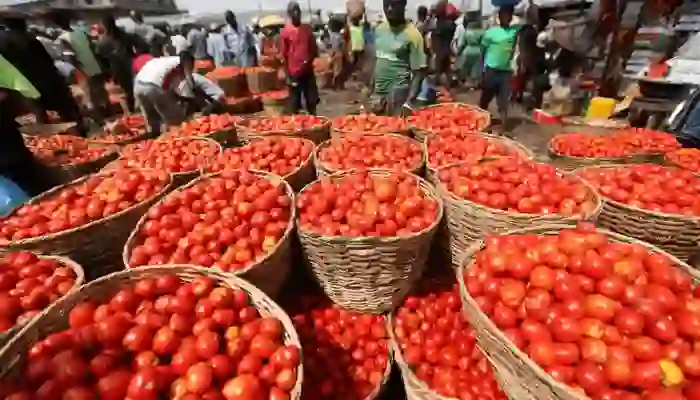
Nigeria may face shortages of rice, tomatoes and other staple foods within the next three months, the President of the Organisation for Technology Advancement of Cold Chain in West Africa (OTACCWA), Alexander Isong, has warned.
Isong, who is also country director of the Nigeria World Agriculture Forum, said the projected shortages could deepen food inflation and pile more pressure on households already battling high food prices.
Rice production is projected to fall by 6 per cent to about 8.3 million tonnes, while the area under cultivation could shrink by 7 per cent to 4.2 million hectares, he said in an interview with the News Agency of Nigeria (NAN) on Sunday in Lagos.
“Rice is the big one. Production is projected to drop six per cent to 8.3 million tonnes. The area planted is down seven per cent to 4.2 million hectares. The United States Department of Agriculture confirms a five per cent decrease year-on-year. Tomatoes are another headache,” Isong said.
He said tomato shortages could persist until the late harvest season expected in October, while maize, sorghum and millet may also face supply pressure following reduced planting in 2025.
Transport costs have compounded the problem. Isong said moving a tonne of grain from Kano to Lagos now costs N70,000, up from N45,000, with fares on some routes doubling or tripling.
Onions and peppers are also in short supply in major producing areas, driving sudden price increases, he said. Nigeria will continue to depend heavily on wheat imports, with about 7.2 million tonnes expected to be brought in.
Isong blamed insecurity, falling production, supply chain disruptions and poor storage infrastructure for the worsening food supply outlook. He said thousands of farmers have been displaced across northern Nigeria, disrupting farming and cutting output.
“Insecurity in major food-producing areas must be addressed. Farmers cannot produce enough food if they are unable to access their farms safely,” he said, calling for stronger security in food-producing belts, particularly in the north, and investment in rural roads and rail freight to cut logistics costs.
He noted that stronger agriculture GDP growth recorded in the first quarter of 2026 has not translated into improved food supply, as gains are being offset by post-harvest losses, reduced planting and insecurity.
“To avert shortages of rice, tomatoes, peppers, onions and other staple foods over the next three months, Nigeria needs coordinated action from the federal government, state governments, the private sector and development partners. This is not a problem that can be solved by one institution alone,” he said.
Isong urged government to prioritise cutting post-harvest losses, which he put at 30 to 50 per cent of perishable produce, and to speed up delivery of improved seeds, fertiliser, irrigation support and affordable credit ahead of the 2026/2027 planting season.
He called on state governments to invest in aggregation centres, cold rooms, processing facilities and produce markets near farming communities, and urged private investors to expand cold chain infrastructure, food processing and contract farming through affordable financing.
“Nigeria produces enough food in many sectors, but too much of it is lost before it reaches consumers. If we reduce post-harvest losses, improve logistics, secure farming communities and support farmers, we can reduce shortages and stabilise food prices,” he said.
READ ALSO:
- Davido Mocks MC Oluomo Over Rejection Of Adeleke’s NURTW Ban
- Three-storey hostel collapses in Anambra, trapping students
- BBNaija: UK-Trained Temi Nkem Blasts Housemates Over ‘Poor English’
- Coup Suspect Admits Calling Tinubu “Scared” After Parade Cancellation
- US Embassy Tells Dual Citizens To Stop Using Foreign Passports To Enter, Exit America
