


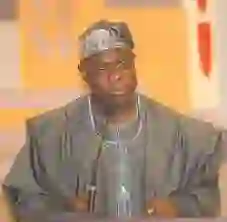
Former President Olusegun Obasanjo has criticised the administration of Bola Tinubu, stating that any government unable to guarantee the safety of lives and property has effectively lost its right to govern.
In a recent interview on Soni Irabor Live on News Central, Obasanjo blamed Nigeria’s current challenges on what he described as poor leadership. He argued that the country has lost its influence on the global stage and is no longer actively involved in key international discussions.
The former leader also took issue with how the present government has handled regional affairs, particularly within the Economic Community of West African States (ECOWAS). According to him, Nigeria’s declining influence in the sub-region reflects deeper governance problems.
Obasanjo lamented the normalization of insecurity, stressing that crimes such as kidnapping should never be accepted as part of everyday life. He recalled a time when Nigerians could travel freely across the country without fear, contrasting it with the current situation.
He maintained that the primary duty of any government is to ensure the security of its citizens, warning that failure in this regard strips such a government of its legitimacy.
Tracing the roots of Nigeria’s security crisis, Obasanjo pointed to the post-civil war era, noting that inadequate control of weapons contributed to the problem. He added that the situation has since deteriorated due to years of poor governance.
He also linked the crisis to both domestic and external factors, including the return of armed fighters following the سقوط of Muammar Gaddafi in Libya, as well as the use of armed groups for political purposes within Nigeria.
The former president further warned that the growing number of out-of-school children—estimated at around 20 million—poses a serious future threat, as many could be drawn into criminal or extremist activities.
Expressing concern about the country’s trajectory, Obasanjo said he sees little evidence of meaningful progress under the current administration. He also criticised the weakening of democratic processes, arguing that elections are no longer fully reflective of the will of the people.
On foreign policy, he faulted the government’s handling of the crisis in Niger Republic following the recent coup. He said measures such as border closures, electricity cuts, and financial restrictions have strained long-standing relations between the two countries.
Reaffirming his position, Obasanjo stated that the inability of a government to protect its citizens ultimately invalidates its claim to power.
READ ALSO:
- WAEC Releases 2026 WASSCE Results
- US Embassy, Consulate Announce Remaining 2026 Public Holiday Closures in Nigeria
- Ooni Donates N100m, Hilux to Support Sunday Igboho’s Iru Ekun Security Network
- Osun Poll: Adeleke Alleges Plot to Freeze State Government Accounts
- Abuja National Stadium Closed Indefinitely After Police Raise Security Alert
