



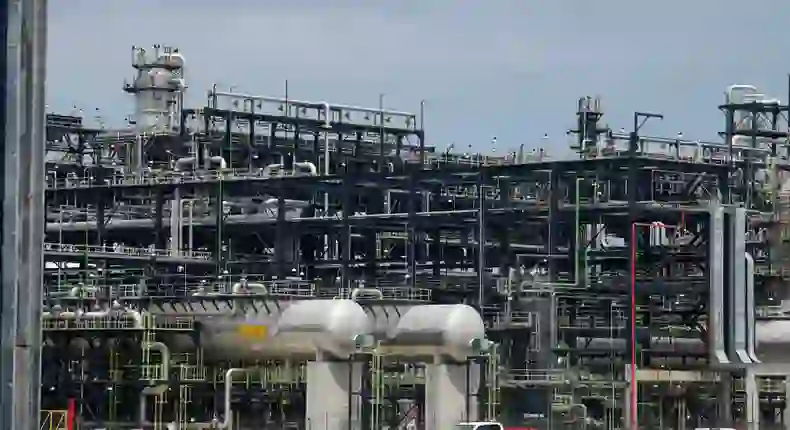
Nigeria has, for the first time in decades, become a net exporter of petrol, marking a historic shift for a nation long dependent on imported fuel despite its vast crude oil resources.
The breakthrough was recorded in March 2026, largely driven by rising output from the Dangote Petroleum Refinery, which continues to reshape the country’s downstream oil sector.
Data from energy analytics firm Kpler shows Nigeria exported about 44,000 barrels per day (bpd) of petrol during the month, slightly exceeding imports and creating a net surplus of around 3,000 bpd.
For years, Nigeria relied heavily on fuel imports due to inefficient state-owned refineries, a trend that drained foreign exchange and left the economy vulnerable to global supply shocks. That pattern is now reversing as domestic refining capacity strengthens.
Crude supply to the Dangote refinery climbed to approximately 565,000 bpd in March—one of its highest levels since operations began—while petrol imports dropped sharply to about 41,000 bpd, the lowest ever recorded. This reflects a rapid shift from import dependence to local production.
The refinery is also opening new export routes. In March, Nigeria shipped a 317,000-barrel cargo of petrol to Mozambique, its first export to East Africa, with another shipment expected soon.
This signals a broader change in regional fuel trade, as East African countries begin to diversify away from traditional Middle Eastern suppliers amid global supply uncertainties.
For Nigeria, the impact could be far-reaching. Increased exports are expected to boost foreign exchange earnings, reduce pressure on the naira, and strengthen energy security through greater reliance on domestic supply.
Globally, Nigeria’s entry into the petrol export market may intensify competition, particularly in Europe where supply remains high.
The development highlights a long-awaited structural shift—moving from exporting crude oil and importing refined products to processing more resources locally. At the heart of this transition is the refinery owned by Aliko Dangote.
Dangote is also considering listing the refinery on multiple African stock exchanges in what could become the continent’s first pan-African initial public offering, a move aimed at attracting wider investment.
Overall, the milestone signals a new phase for Nigeria’s oil sector—one defined by stronger domestic capacity, reduced reliance on imports, and growing influence in regional energy markets.
READ ALSO:
- ZENITH BANK SET TO HOST SIXTH EDITION OF ANNUAL TECH FAIR
- Senate Orders Probe Of Travel Agencies Over Trafficking Of Nigerians In Libya
- 37 suspected miners died of overcrowding and heat in NSCDC cell, Kure-led panel finds
- New book maps path from Nigerian laboratories to markets, with 10-year road map
- MTN Explains Why Nigerians’ Data Finishes Quickly, Denies Stealing Subscribers’ Data
